The Great Suffolk Loop: Linseed, Lizards (Well, Foxes), and Three Lost Churches
There are two types of people in this world: those who see a beautiful, sunny Saturday and think of a perfectly flat couch, and those who say, “Hey, let’s drag our legs across 12.9 kilometers of Suffolk countryside.“ Naturally, we chose the latter.
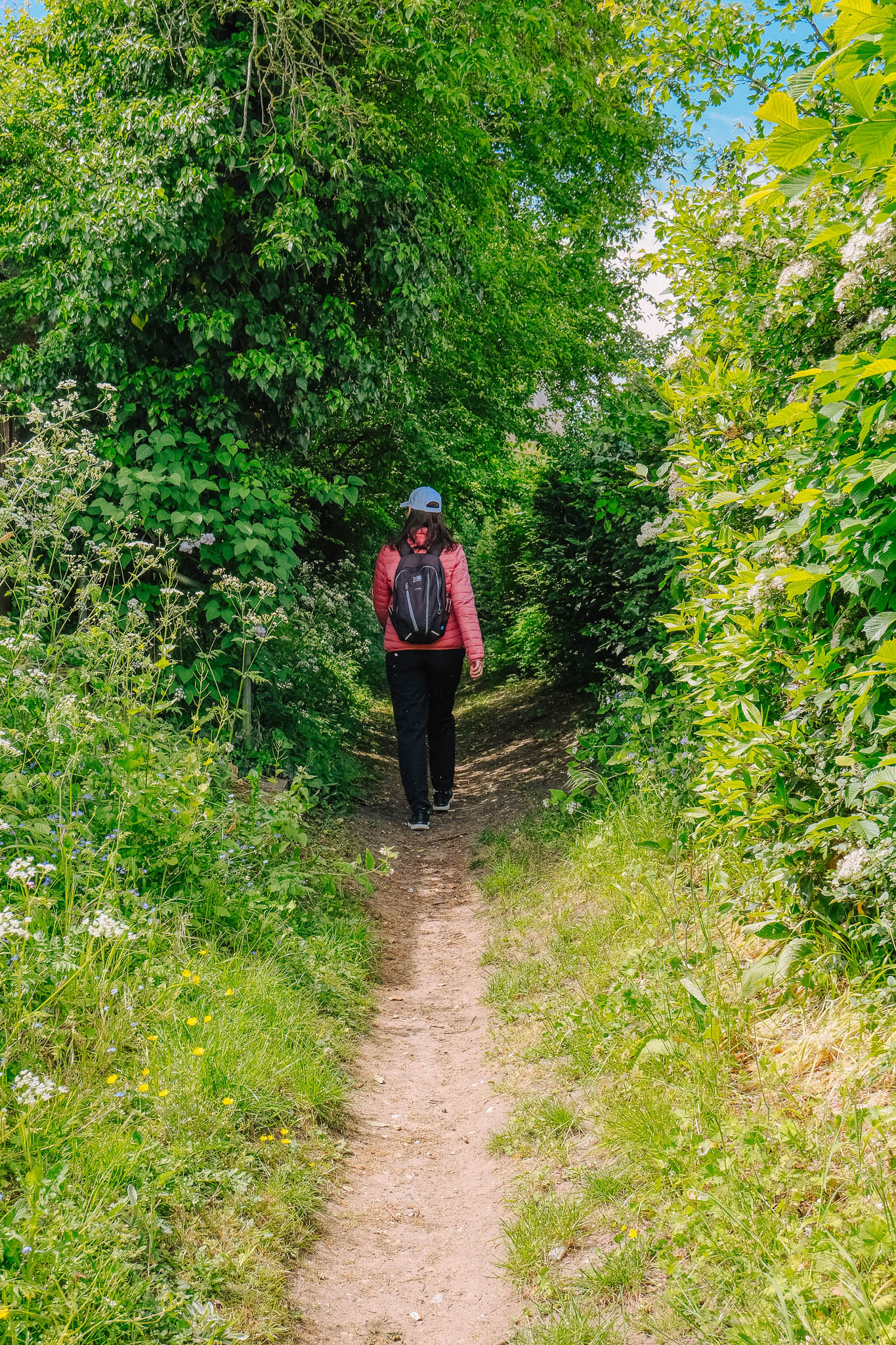
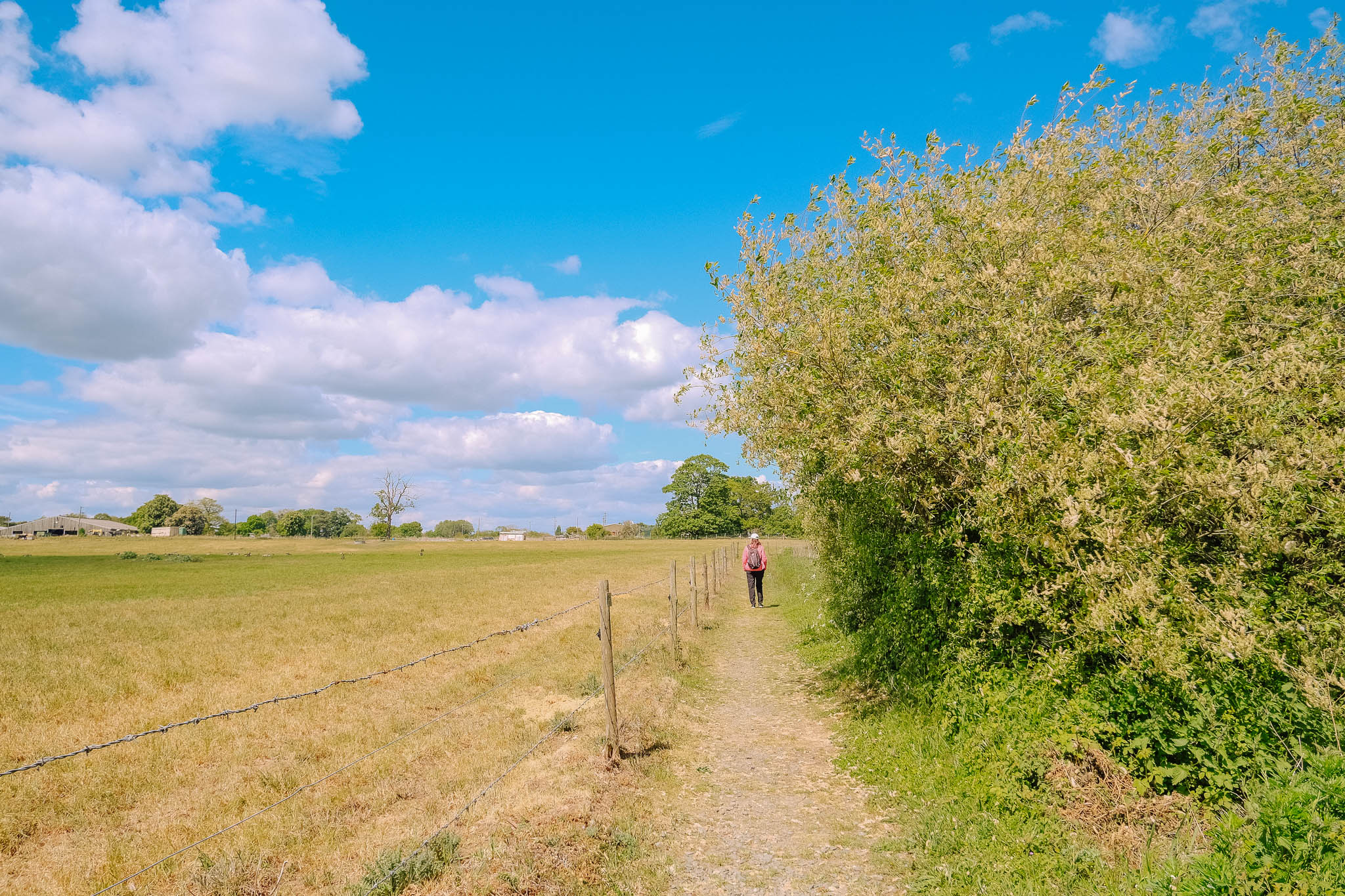
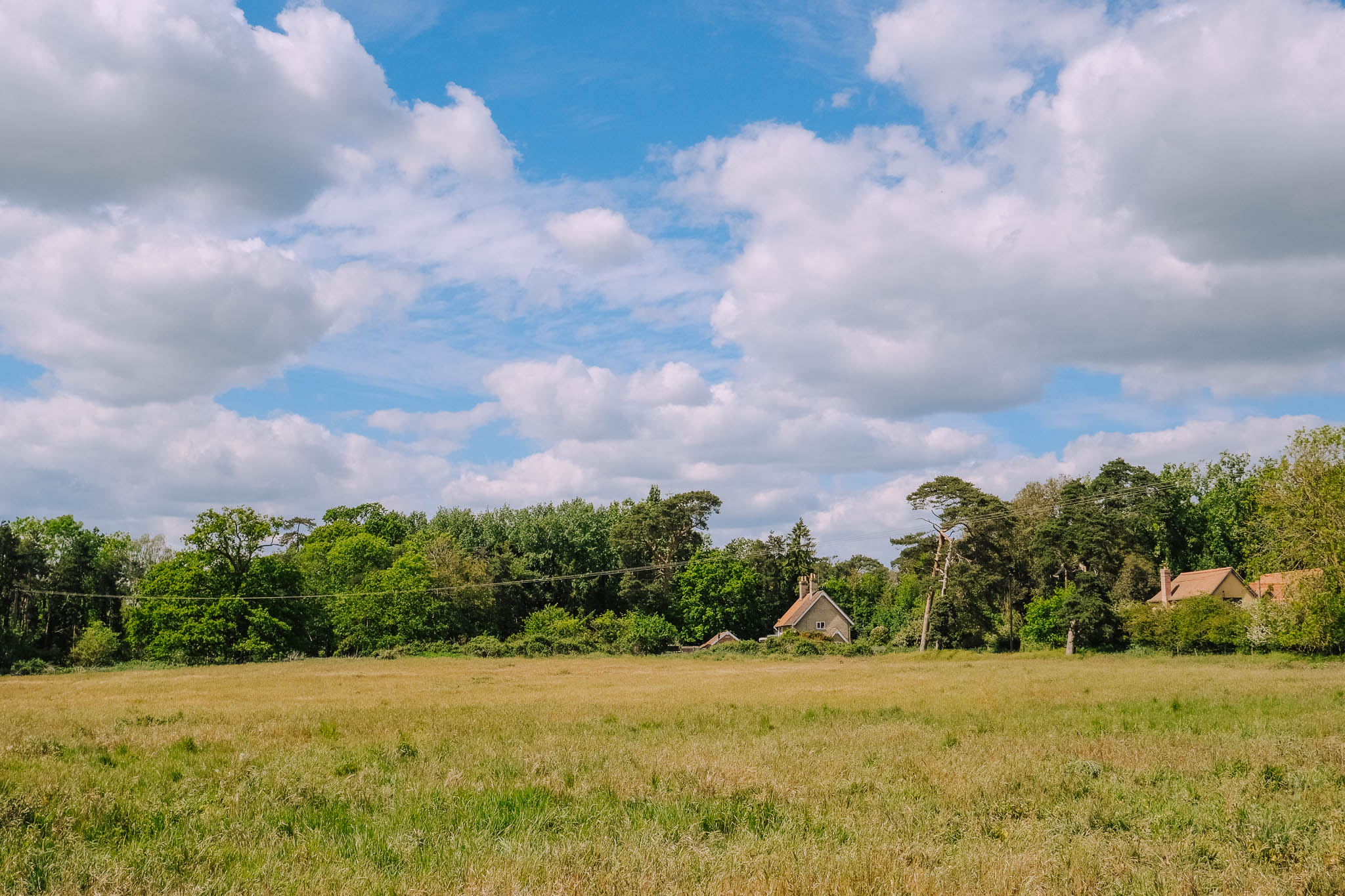
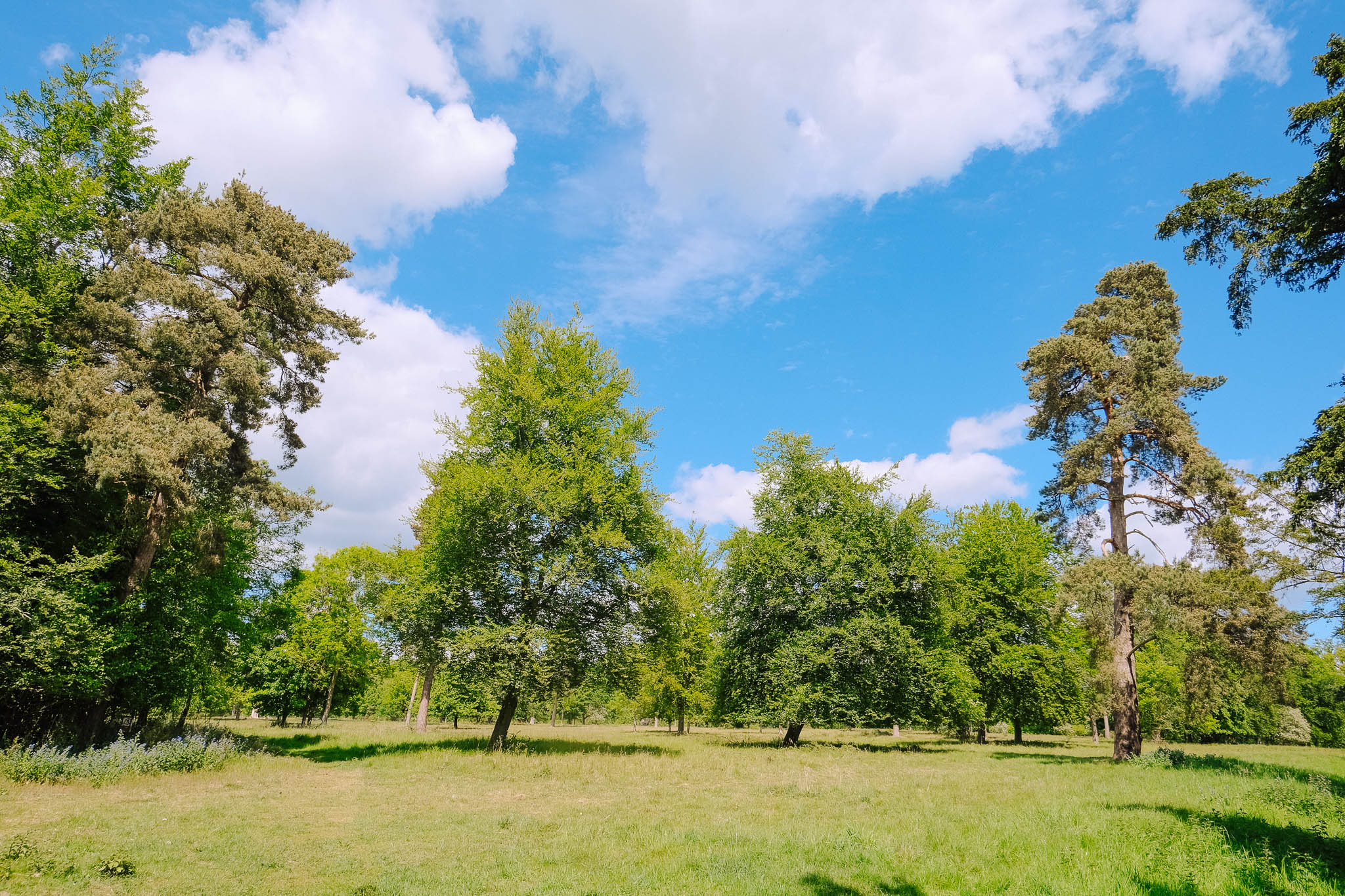
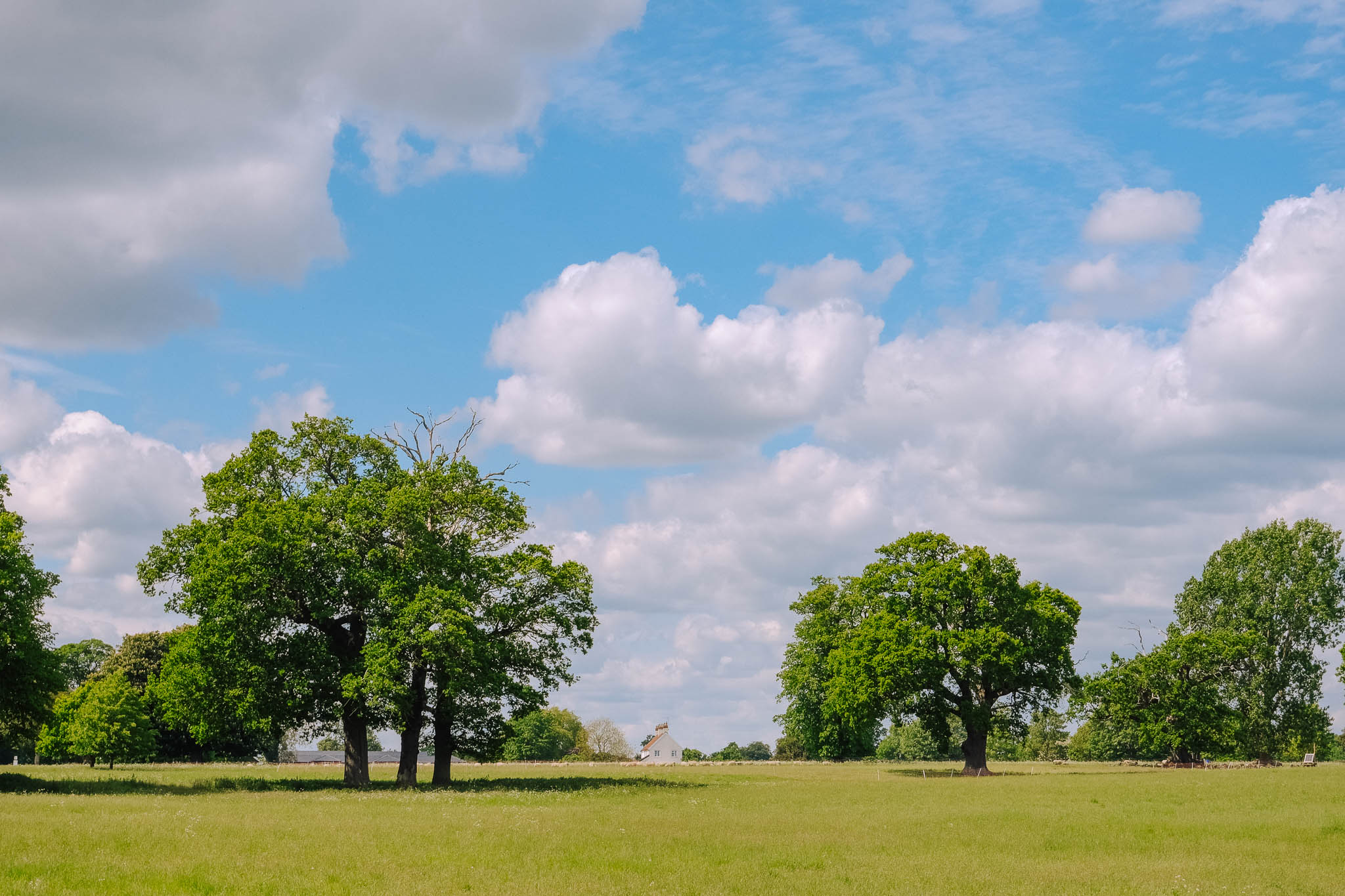
🌿 Armed with nothing but optimism, a taste for adventure, and a suspicious lack of mapping accuracy, we set off from Claydon. The Suffolk sky was absolutely showing off—flaunting the kind of dramatic, fluffy white clouds that make you think a Renaissance painter was hovering overhead with a massive paintbrush. Everything was wrapped in shades of vibrant, aggressive green, looking so fresh you could almost hear the grass photosynthesis-ing at maximum volume. Maybe even too vibrant for photos.
The Gipping and the art of not falling In
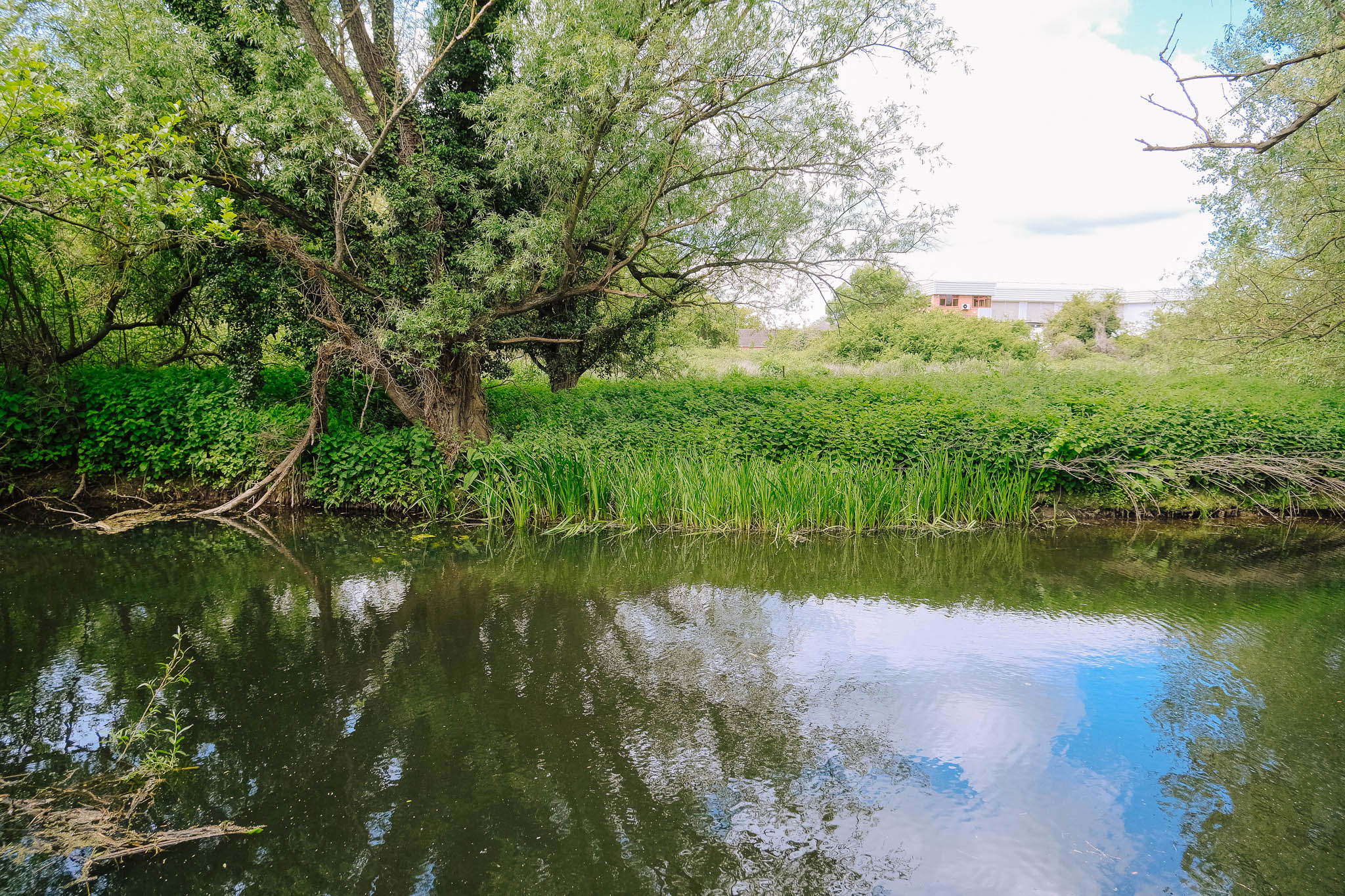
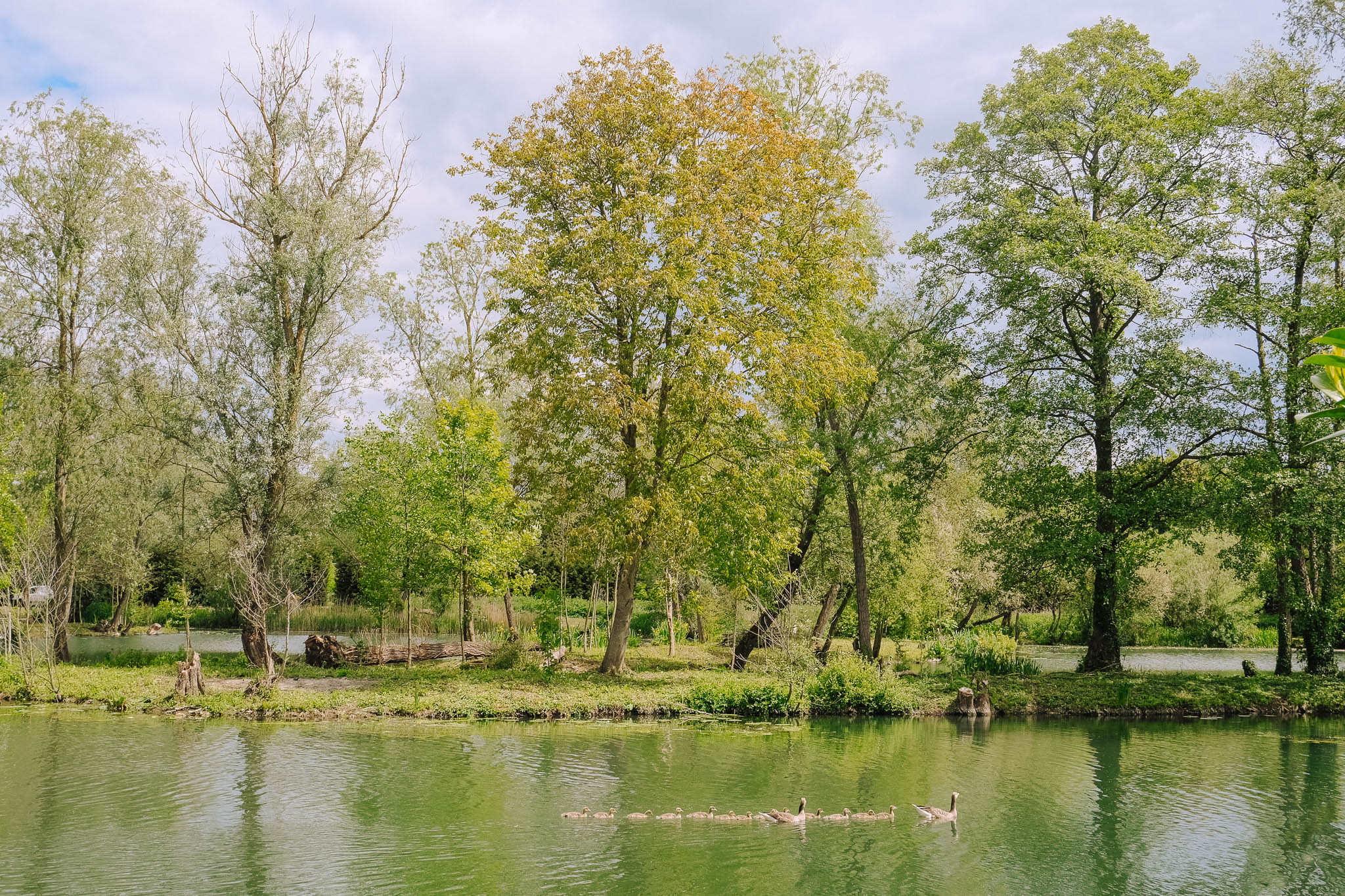
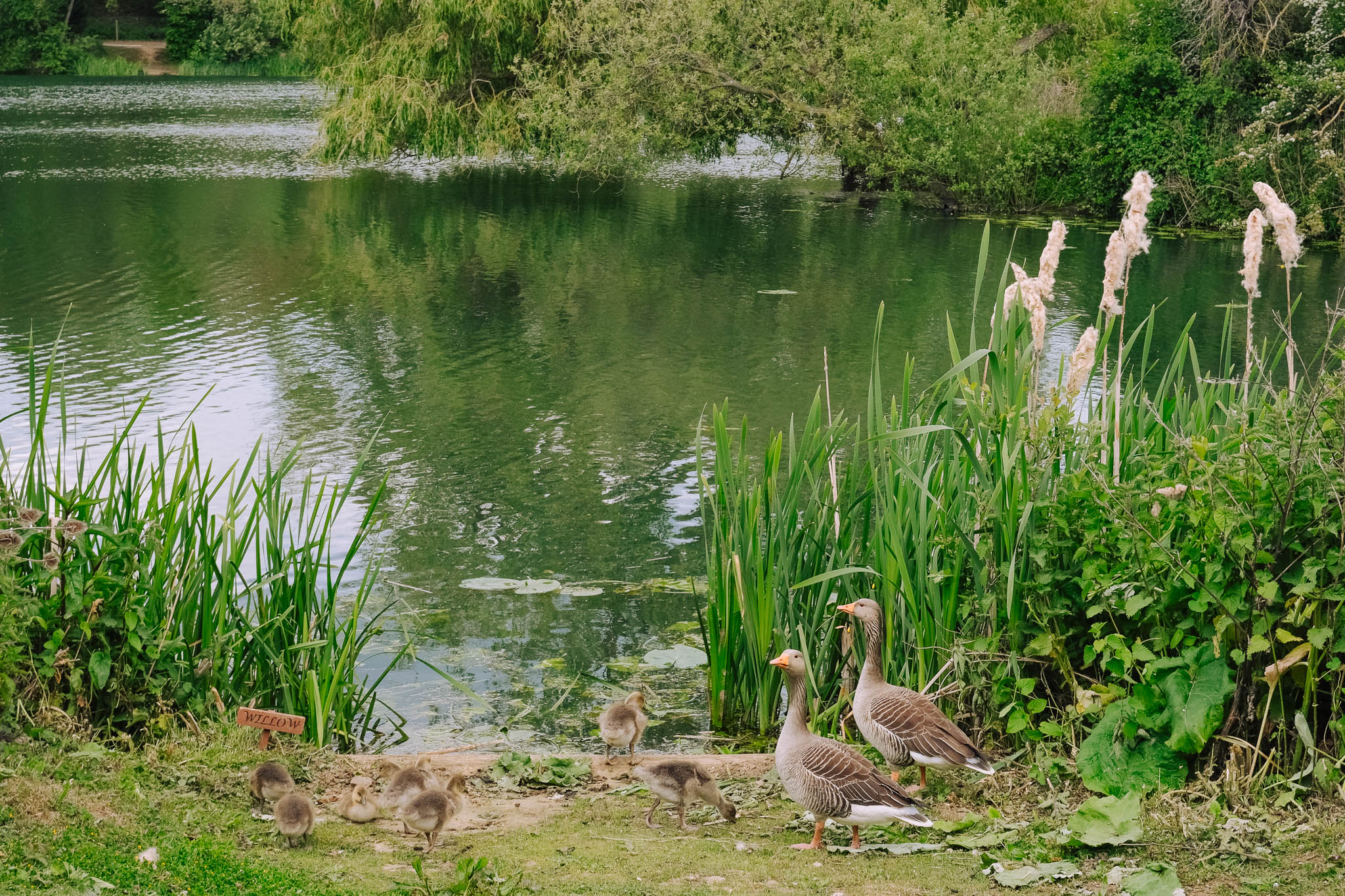
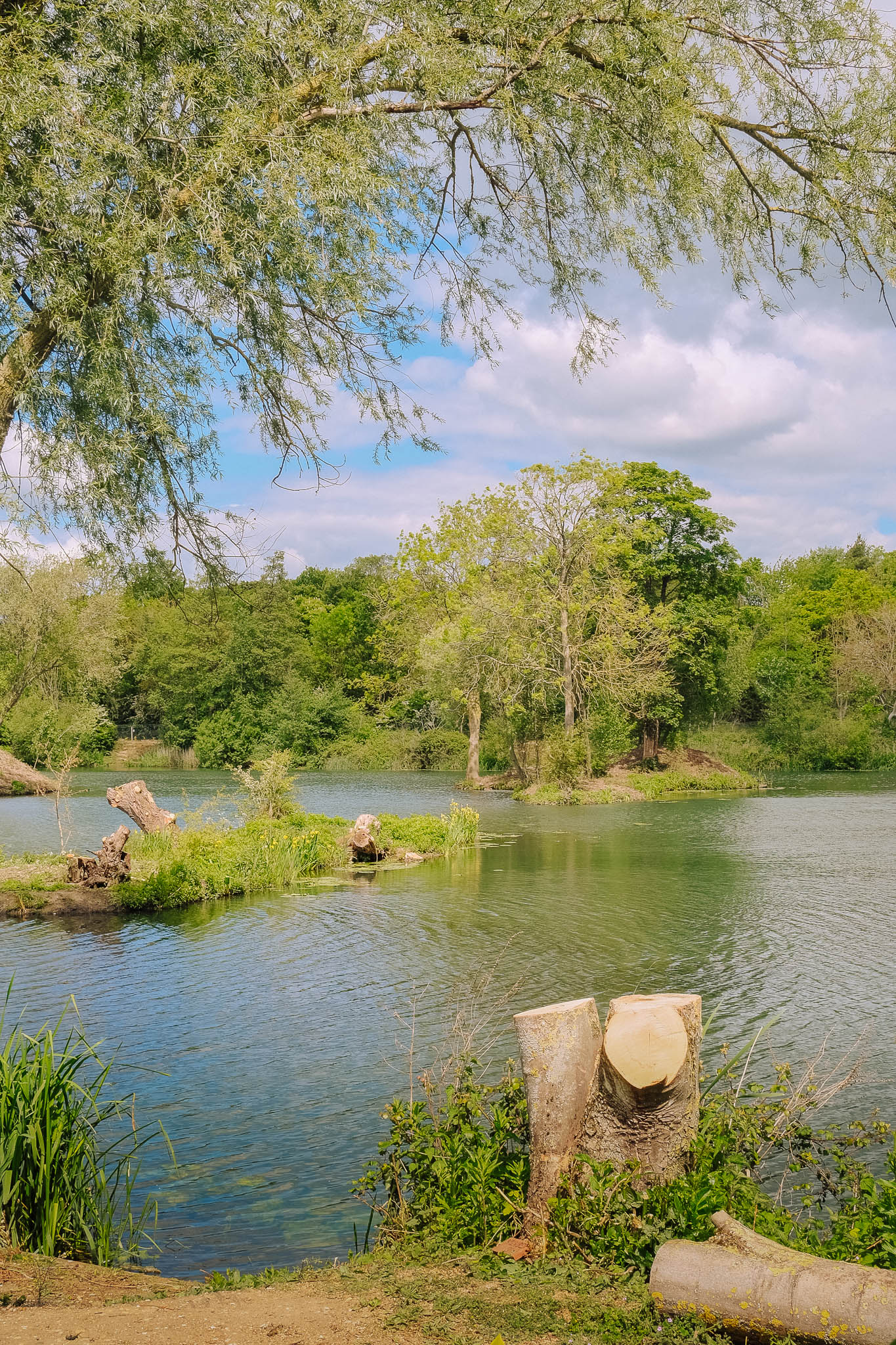
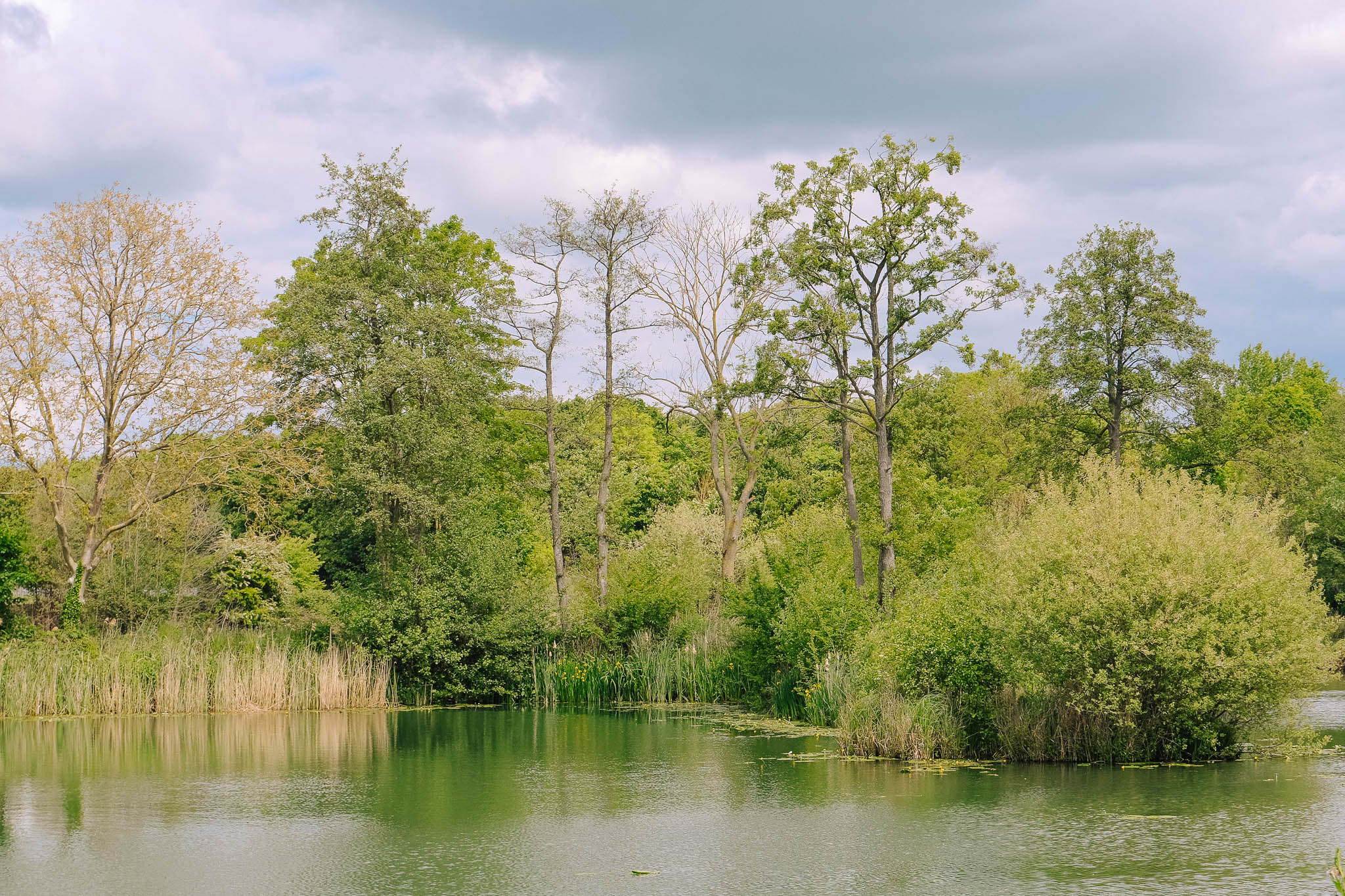
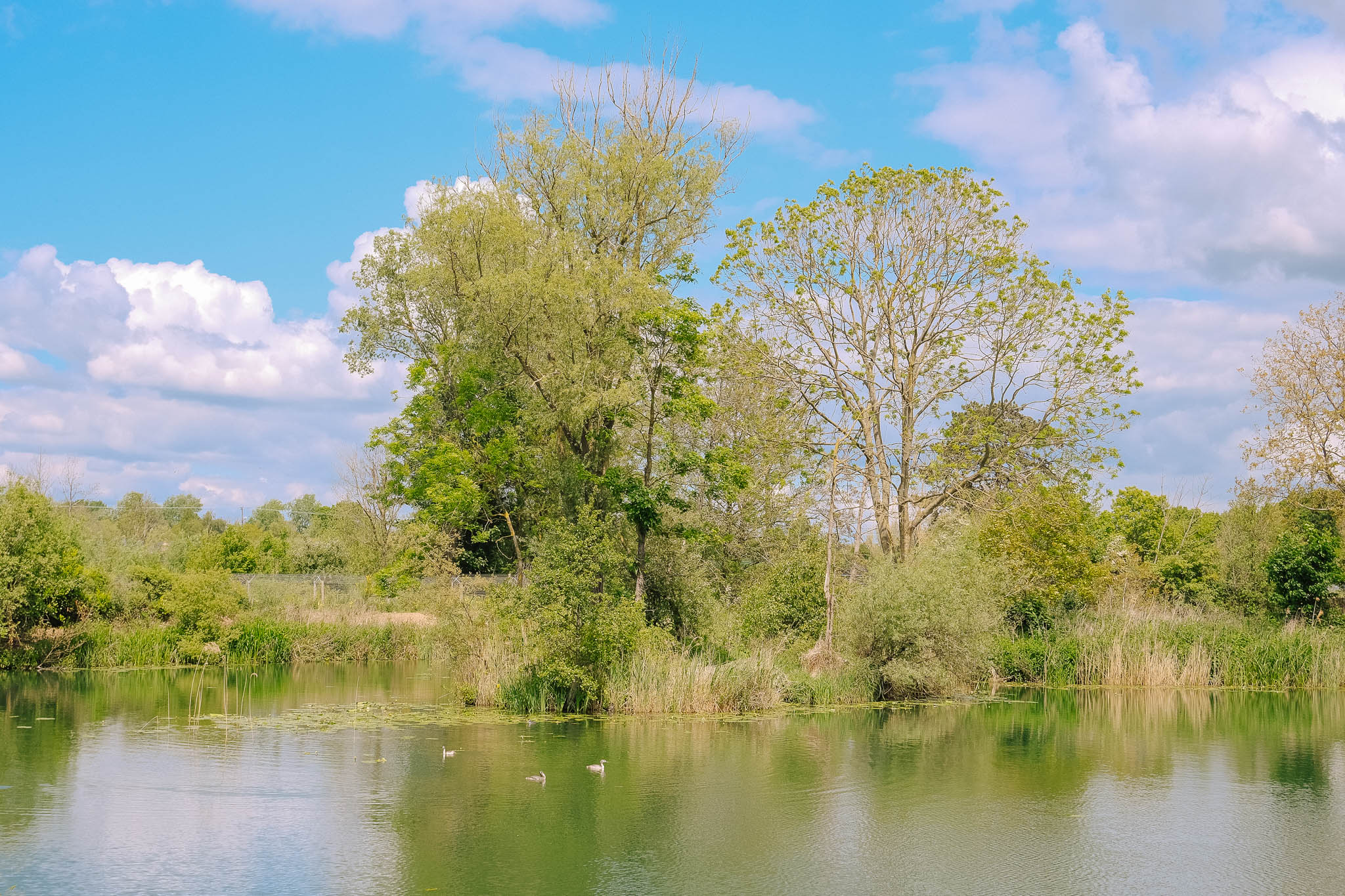
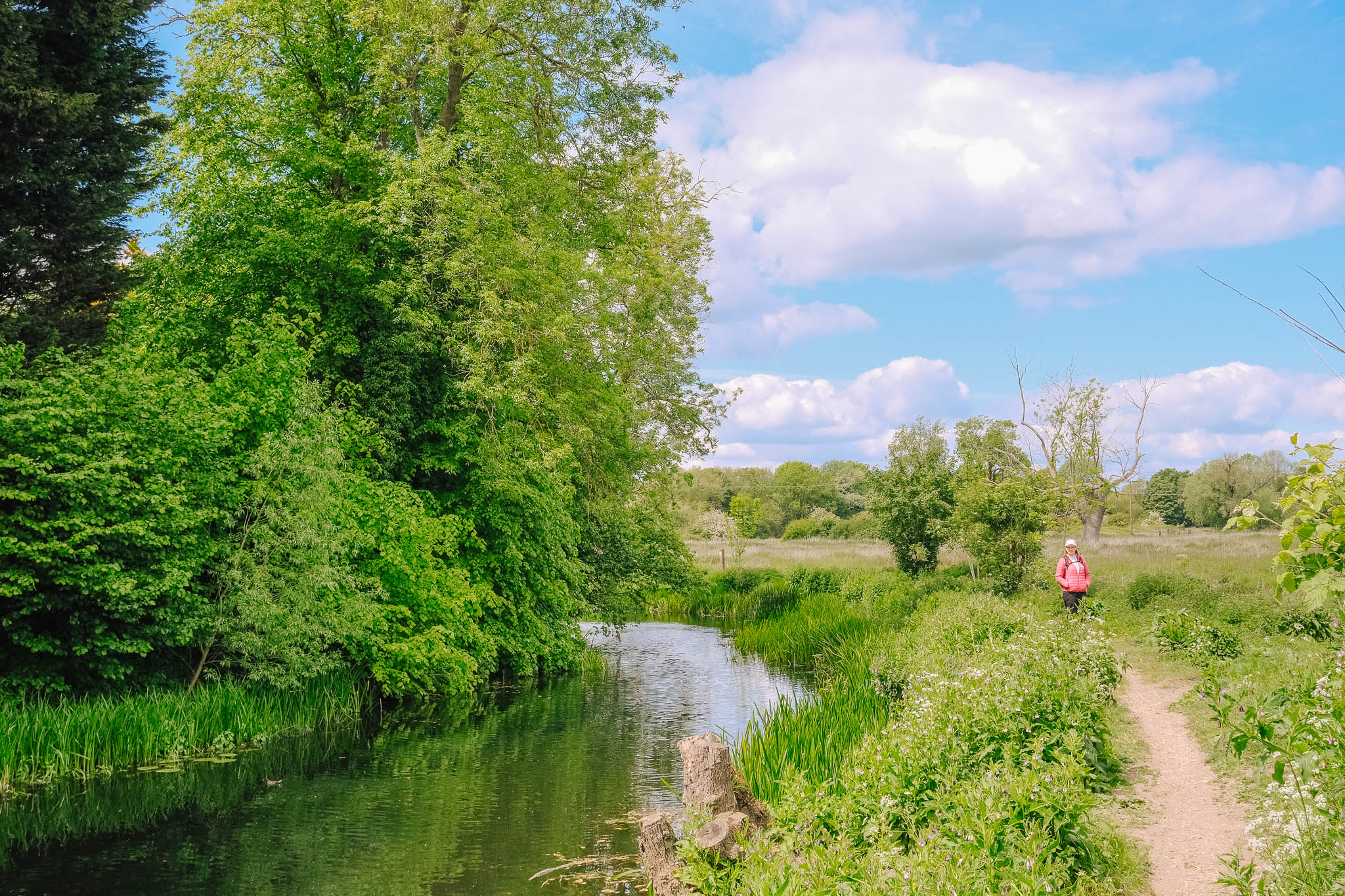
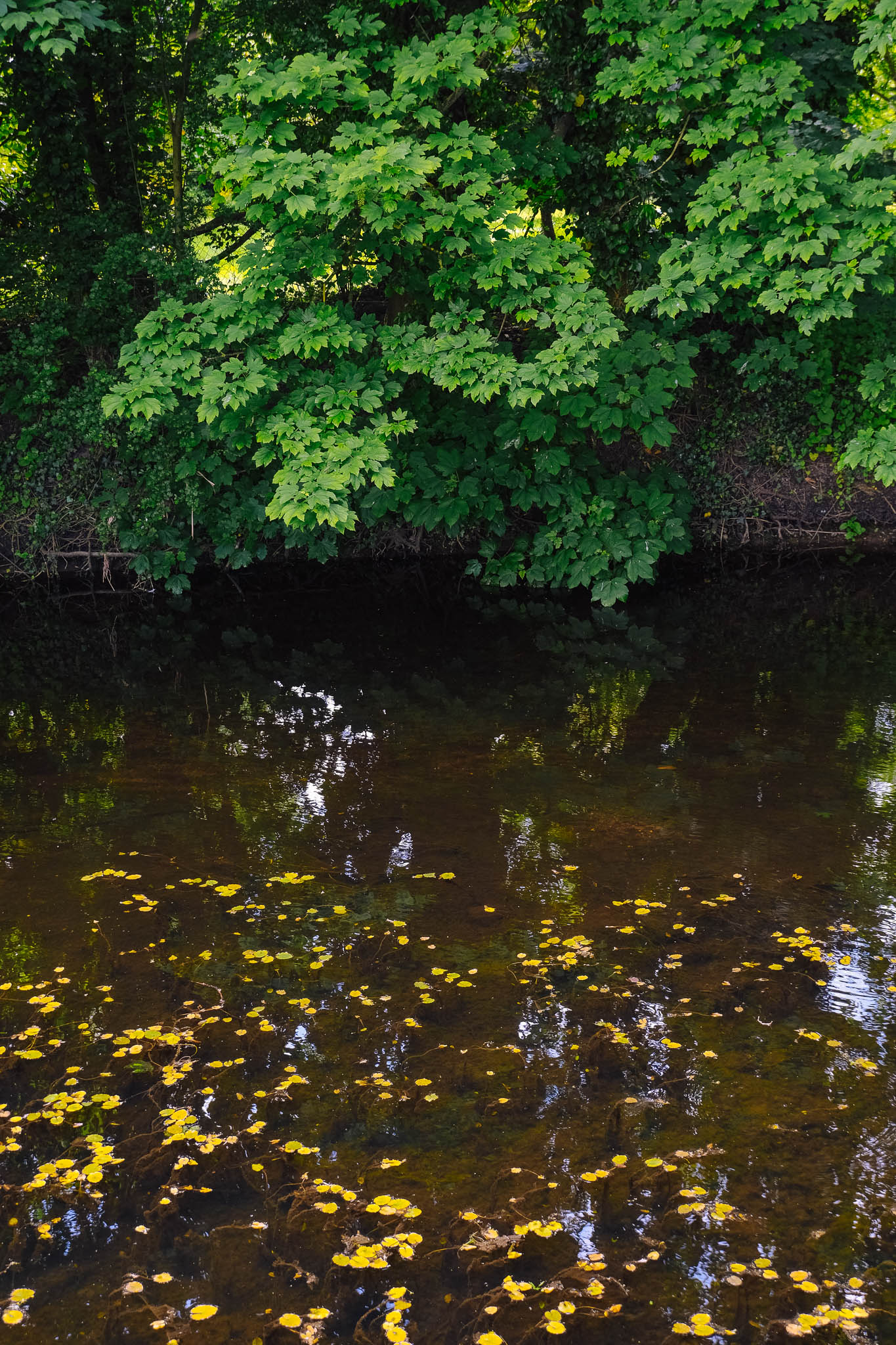
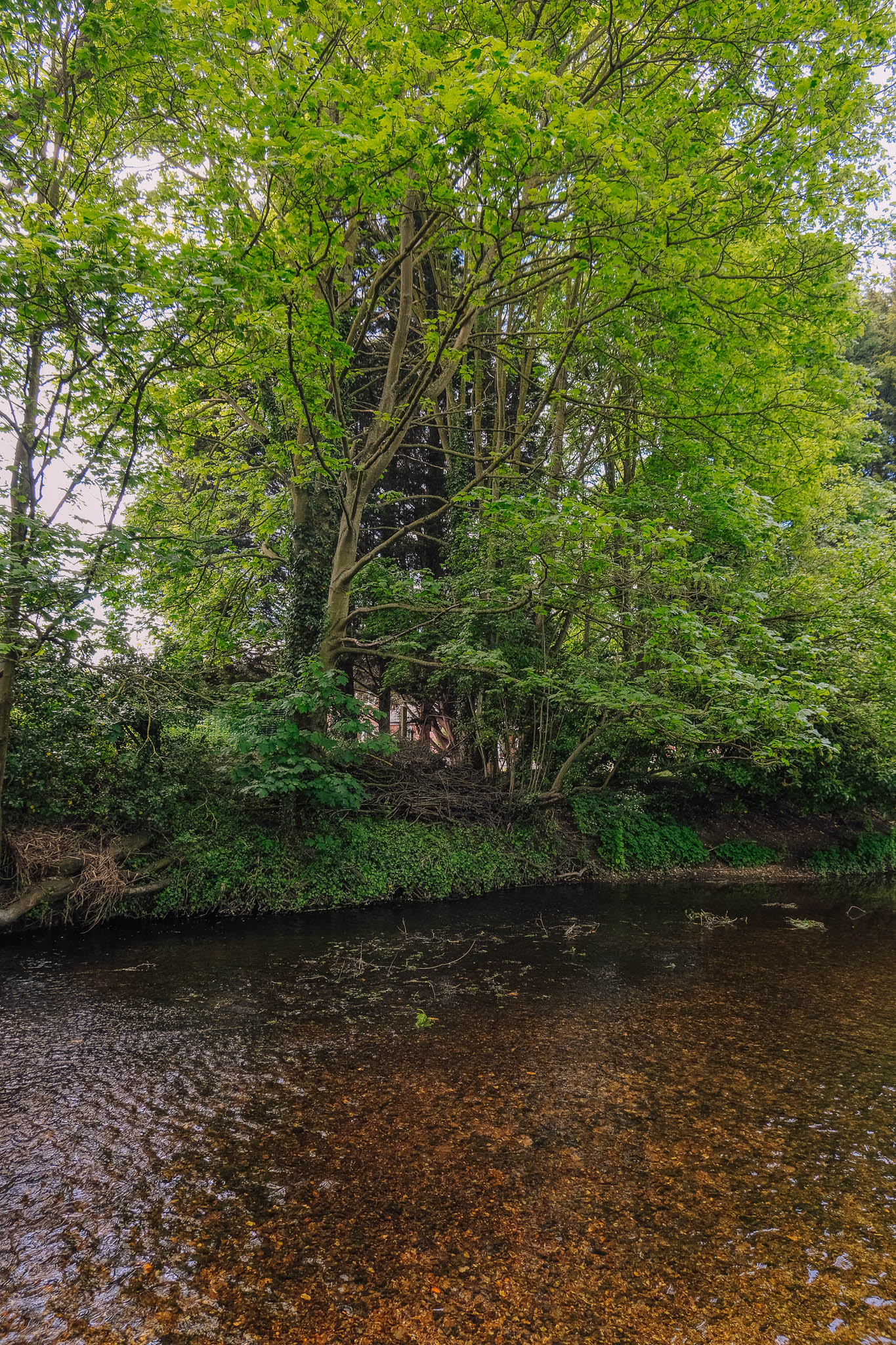
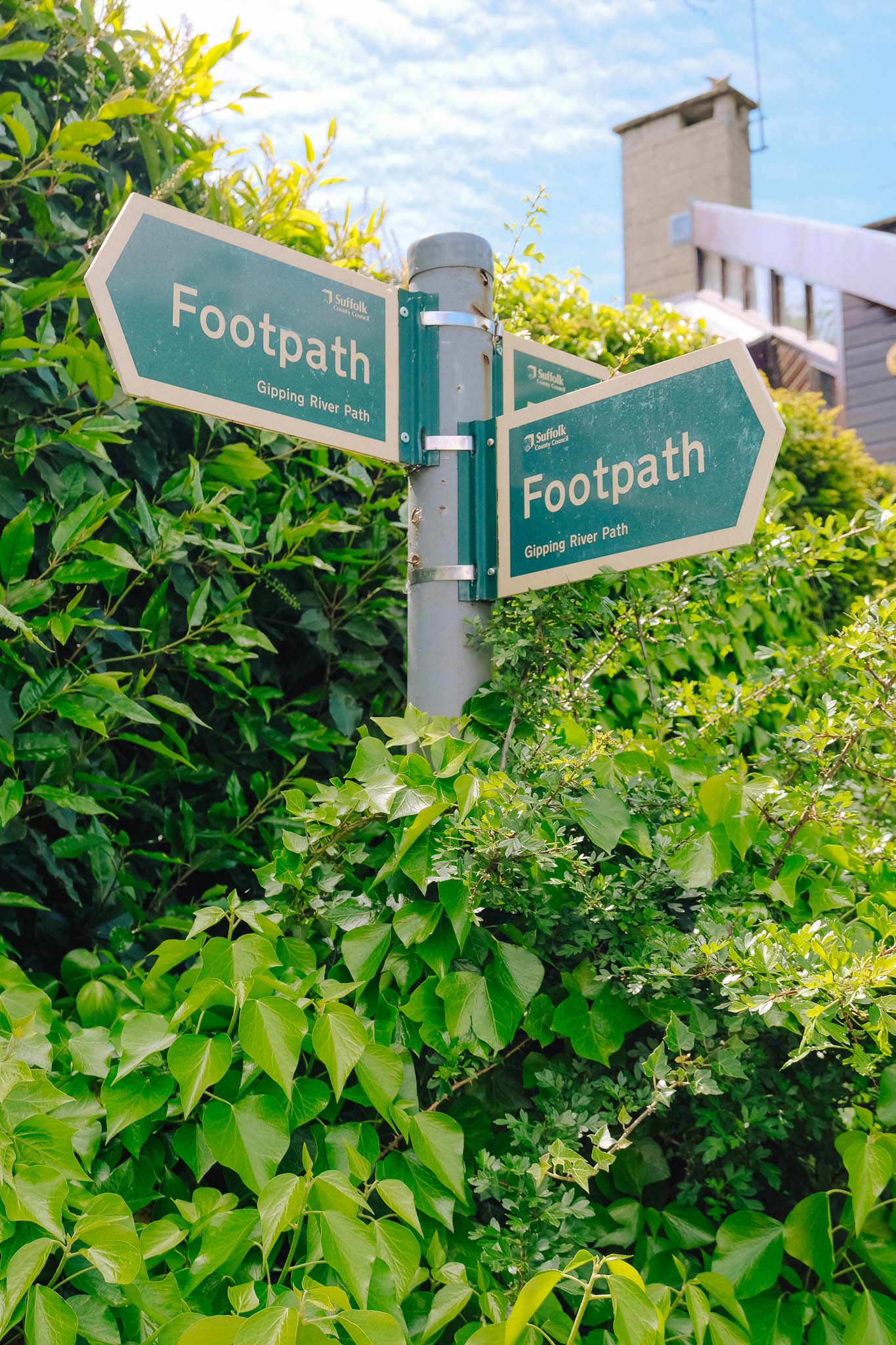
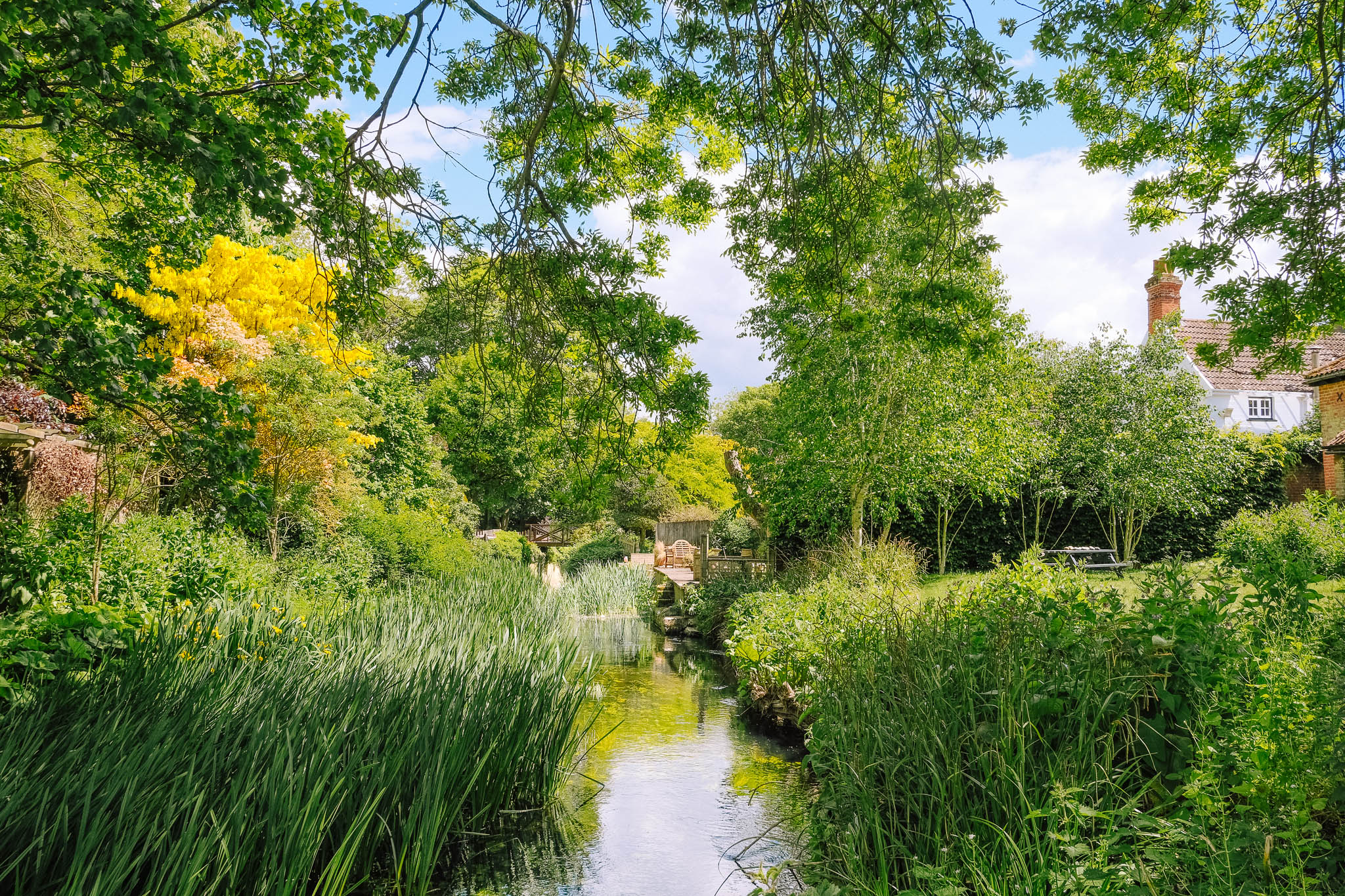
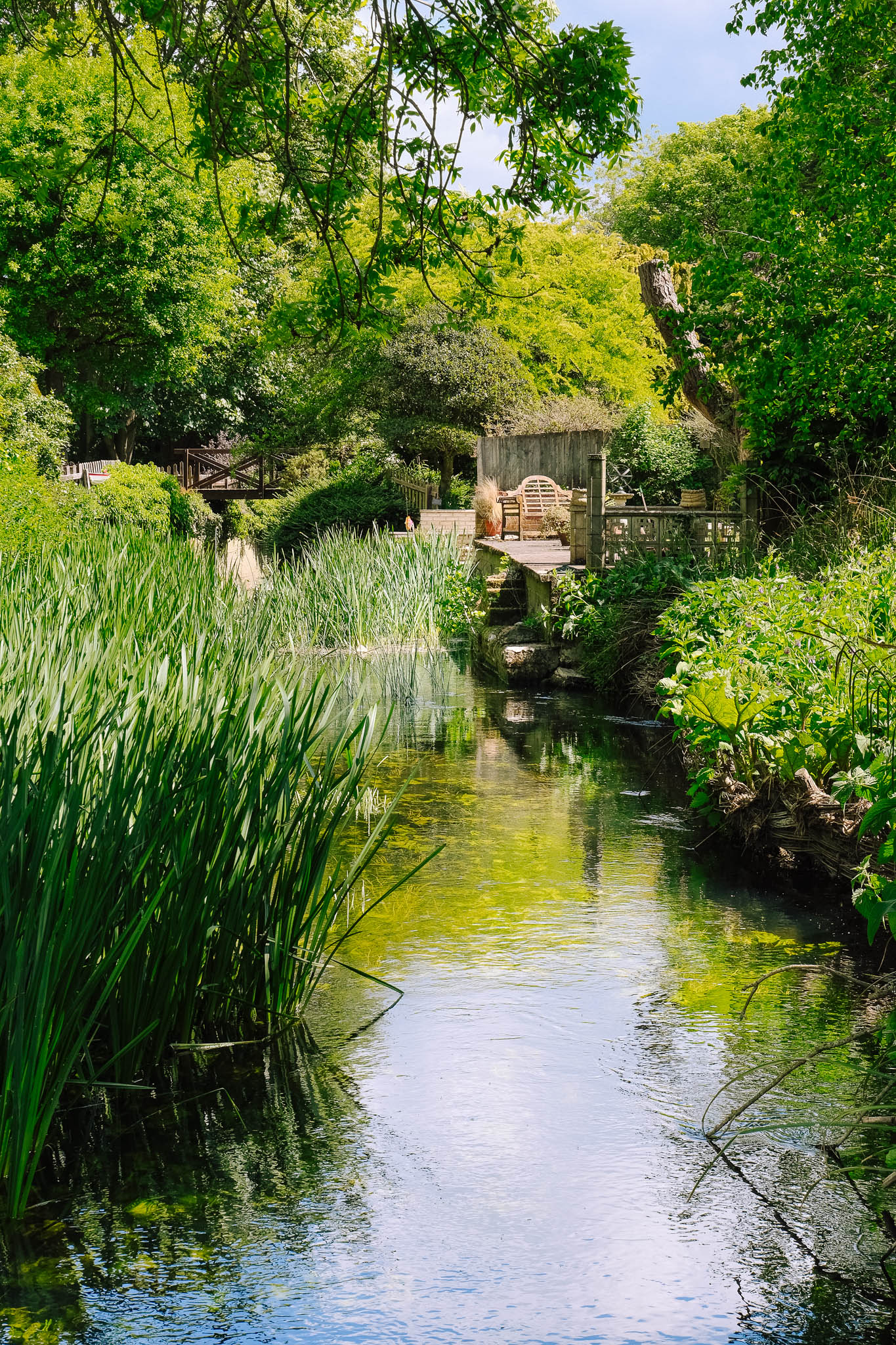
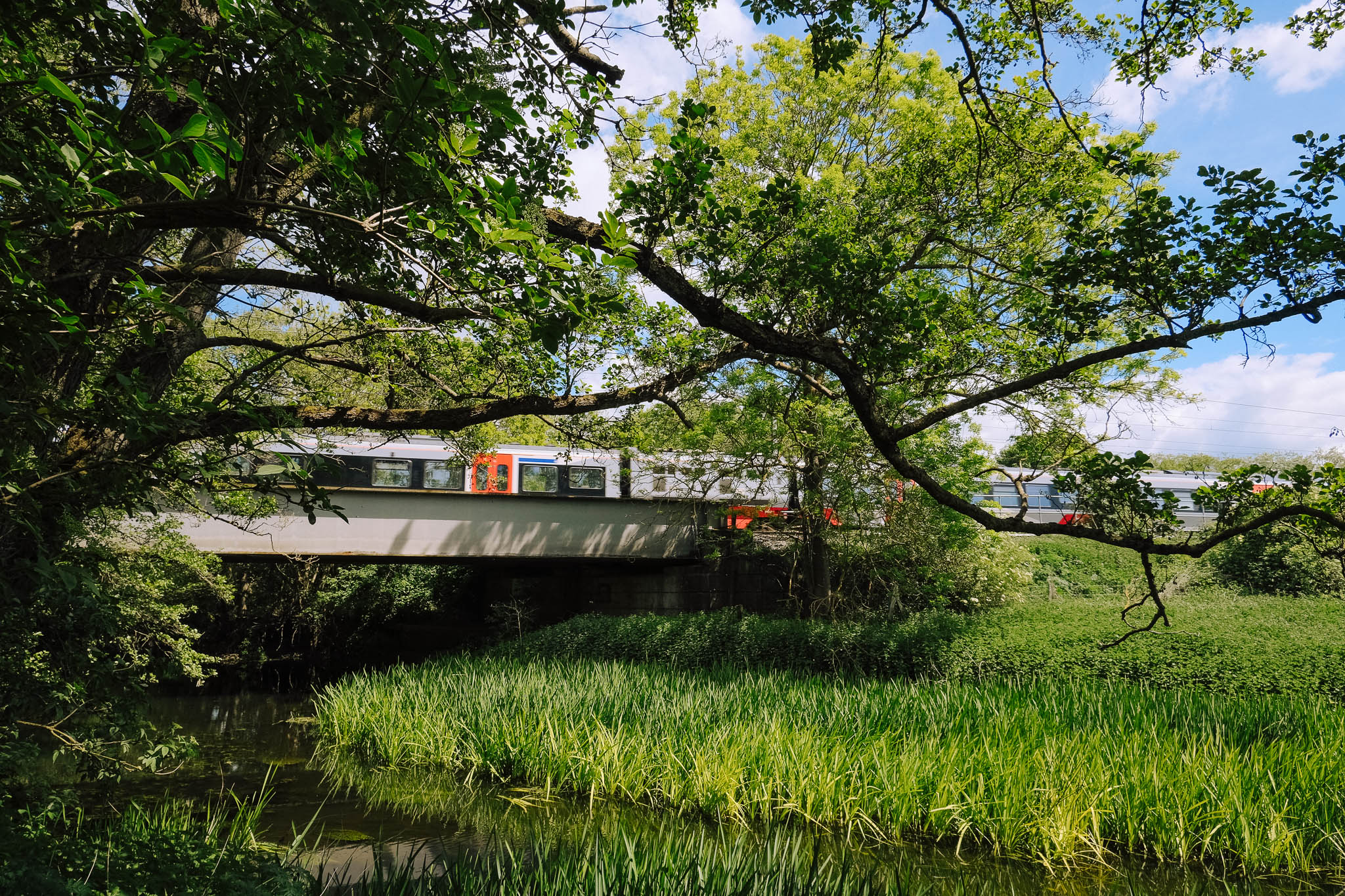
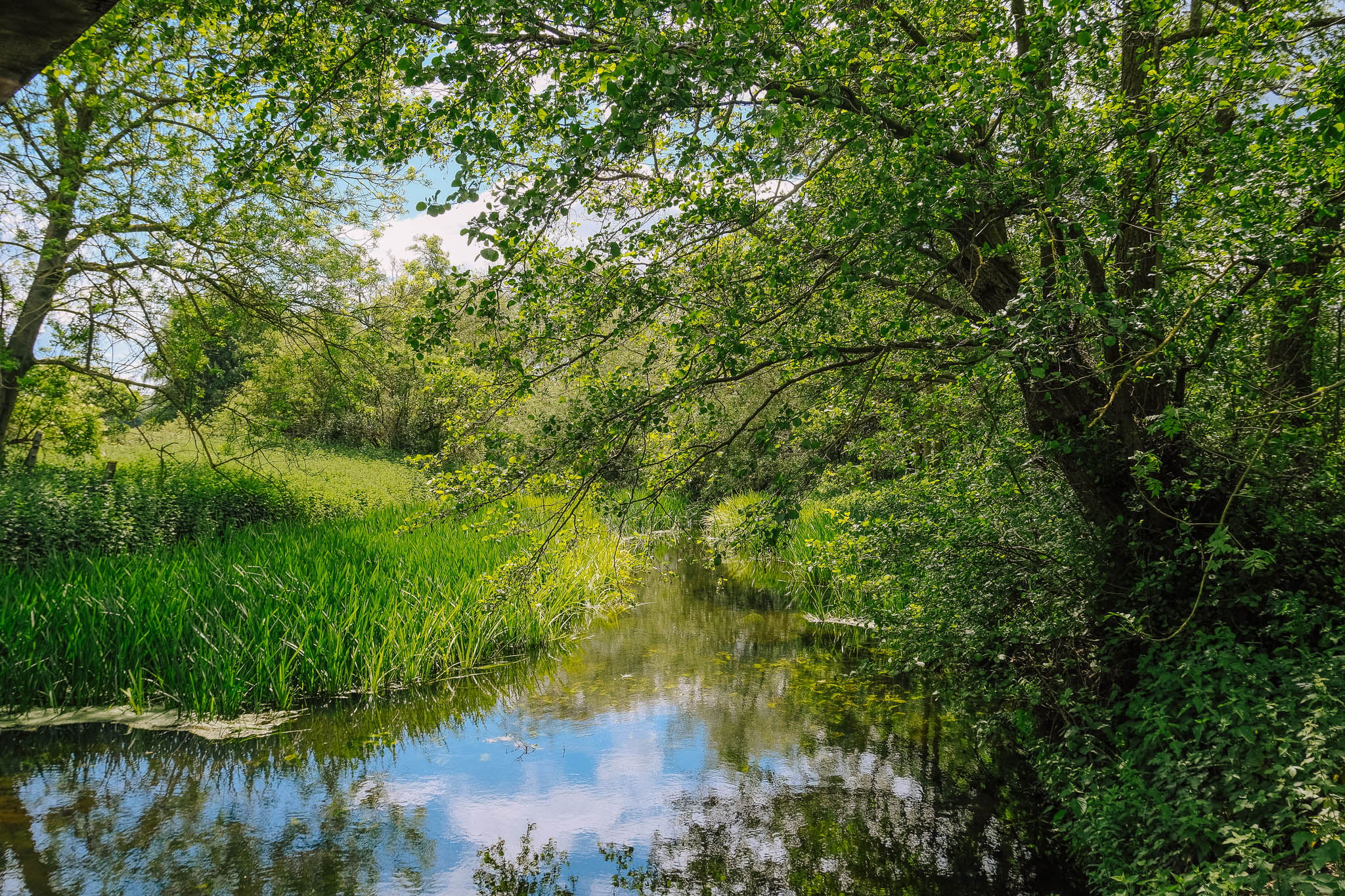
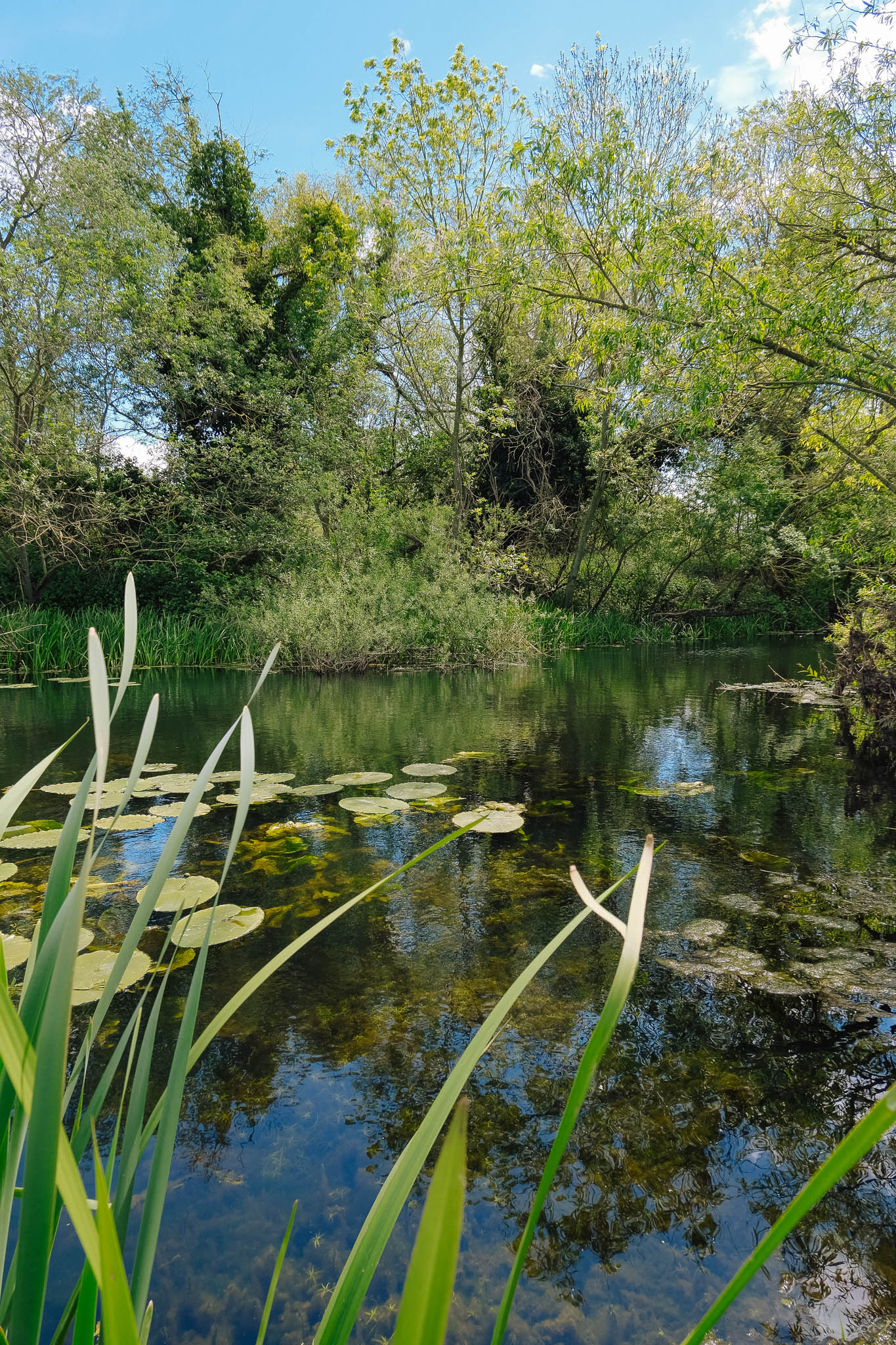
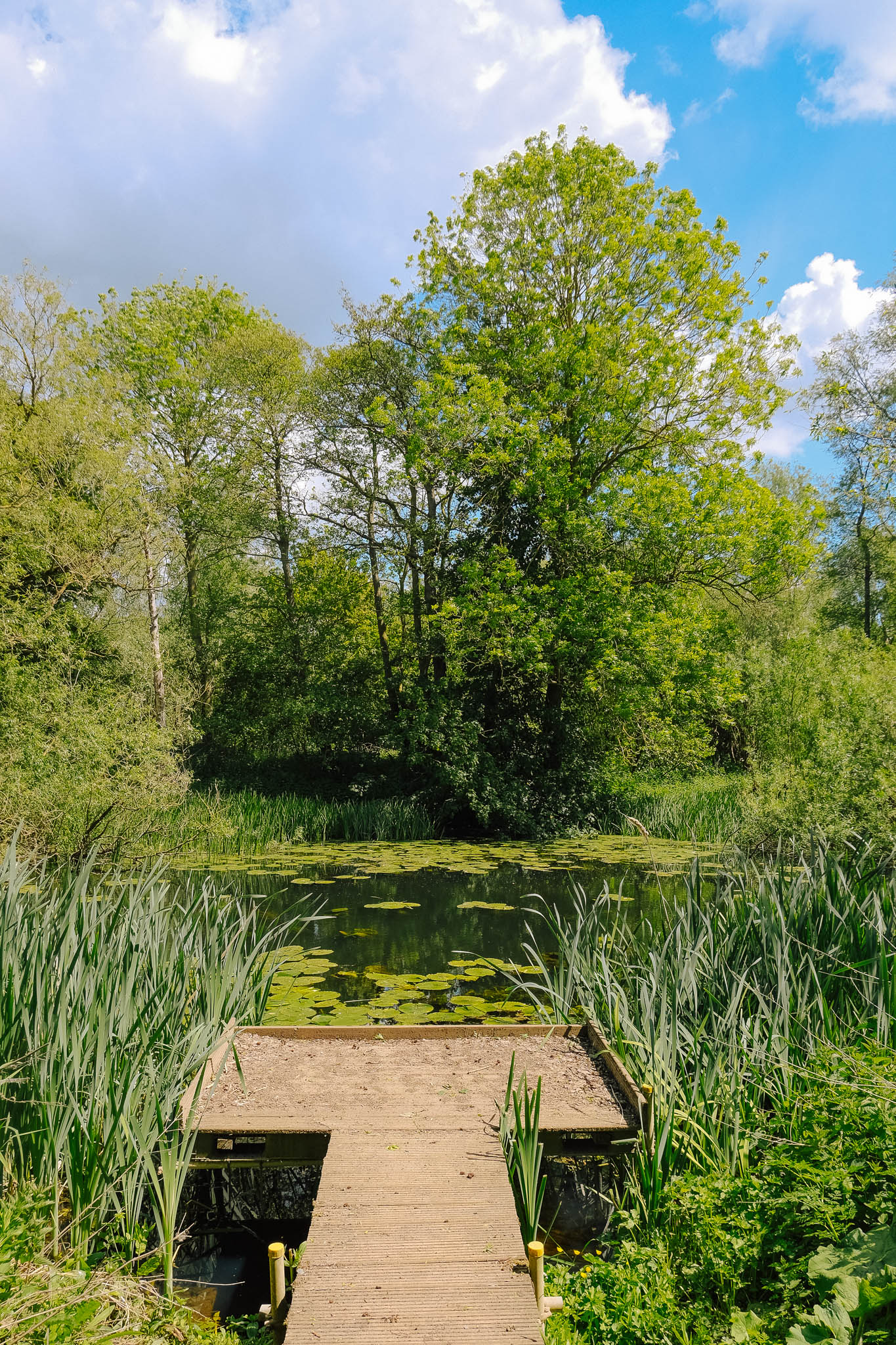
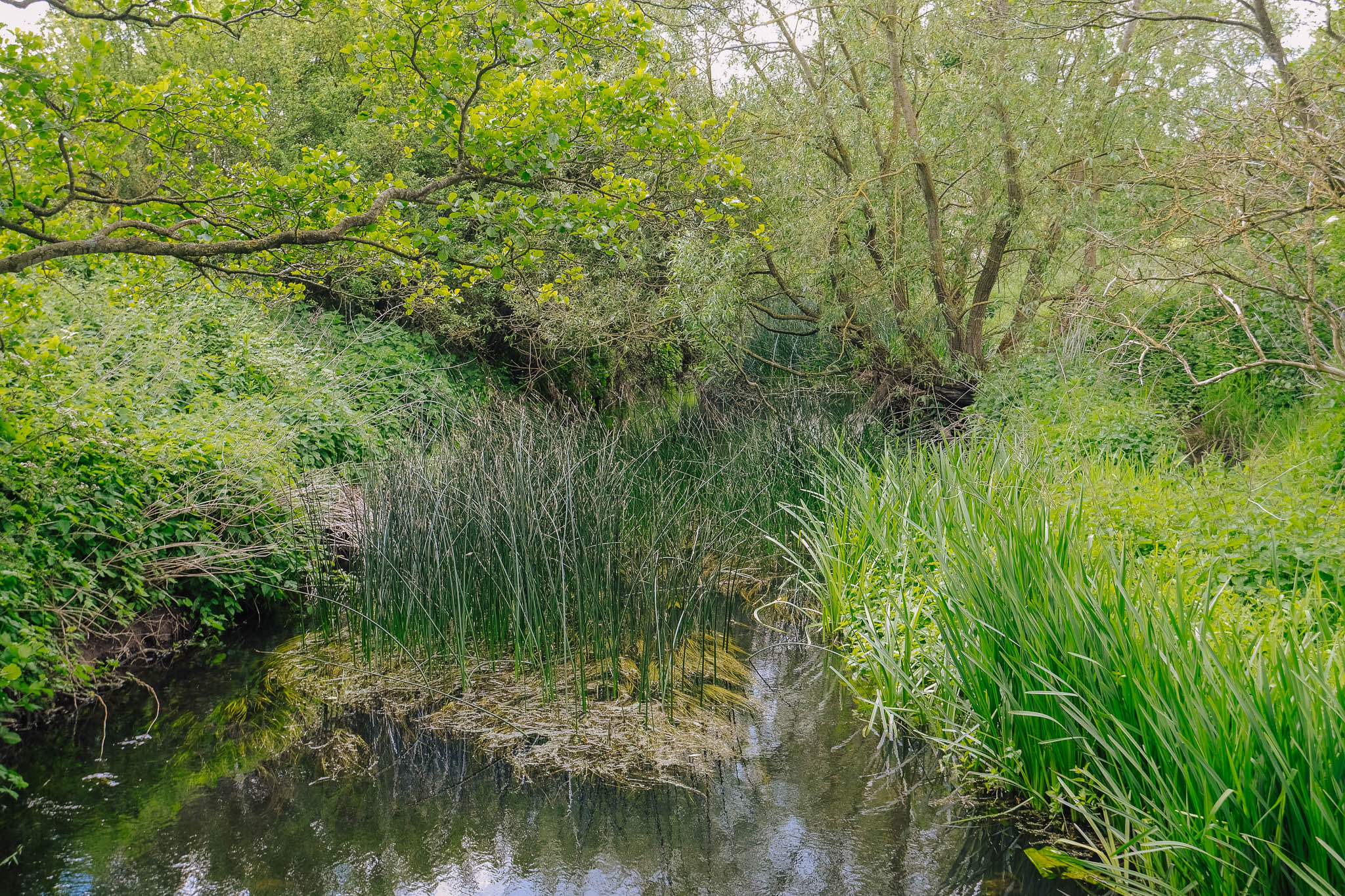
We officially kicked things off by heading down towards the River Gipping. Historically speaking, the Gipping isn’t just a pretty face; it’s the source of the River Orwell. Back during the Industrial Revolution, it was transformed into a canalized navigation network so people could float things up and down Suffolk without getting stuck in the mud. Today, it’s mostly used by ducks who clearly don’t pay taxes.
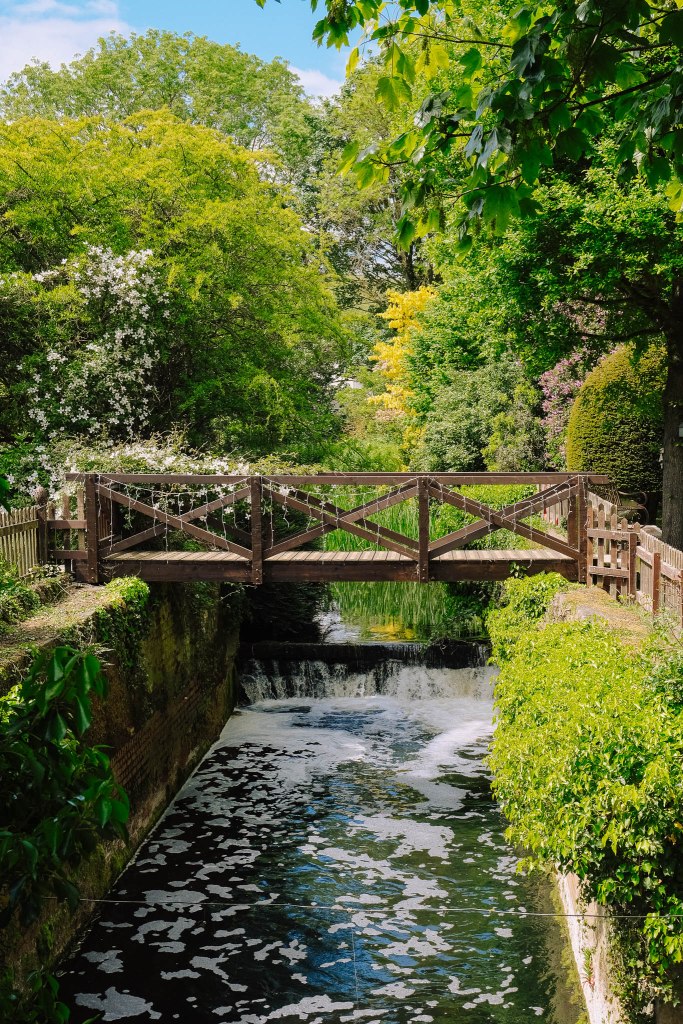
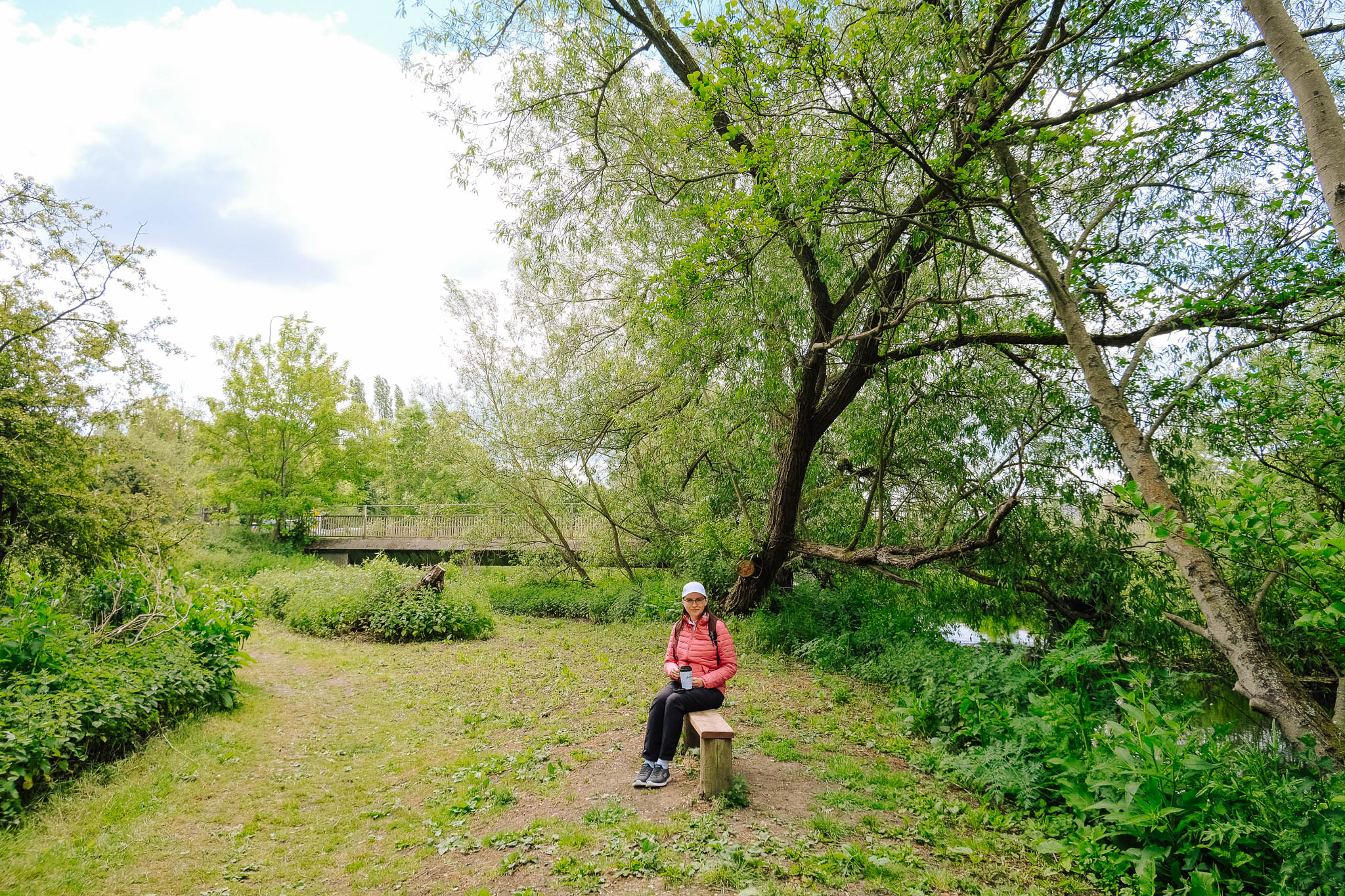
We followed the river toward Great Blakenham, crossing a series of tiny, charming pedestrian bridges. These bridges are engineered exactly wide enough for humans, or three very determined squirrels, but absolutely not wide enough to pass someone else without an awkward, mid-air side-shuffled dance of politeness.
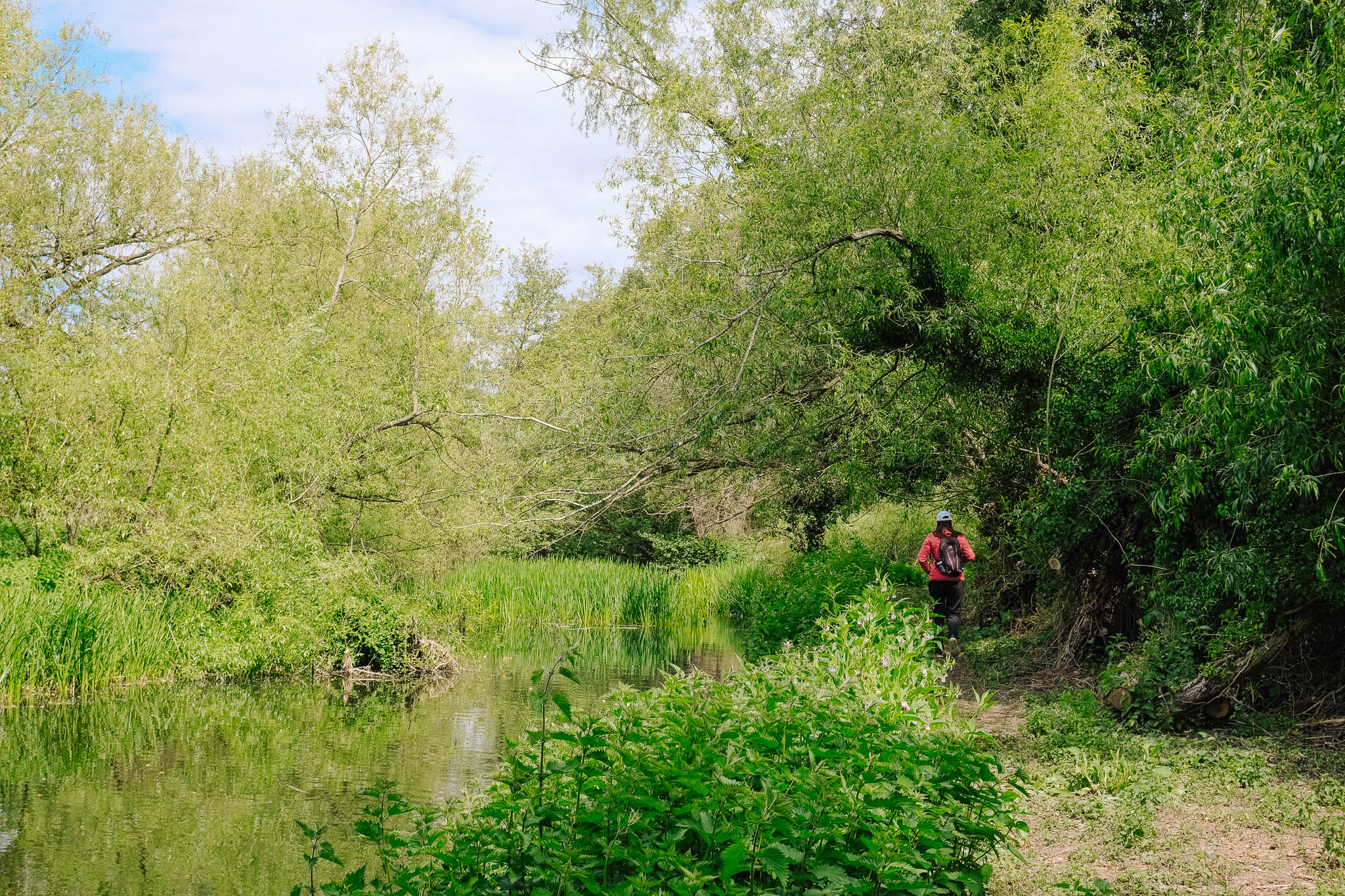
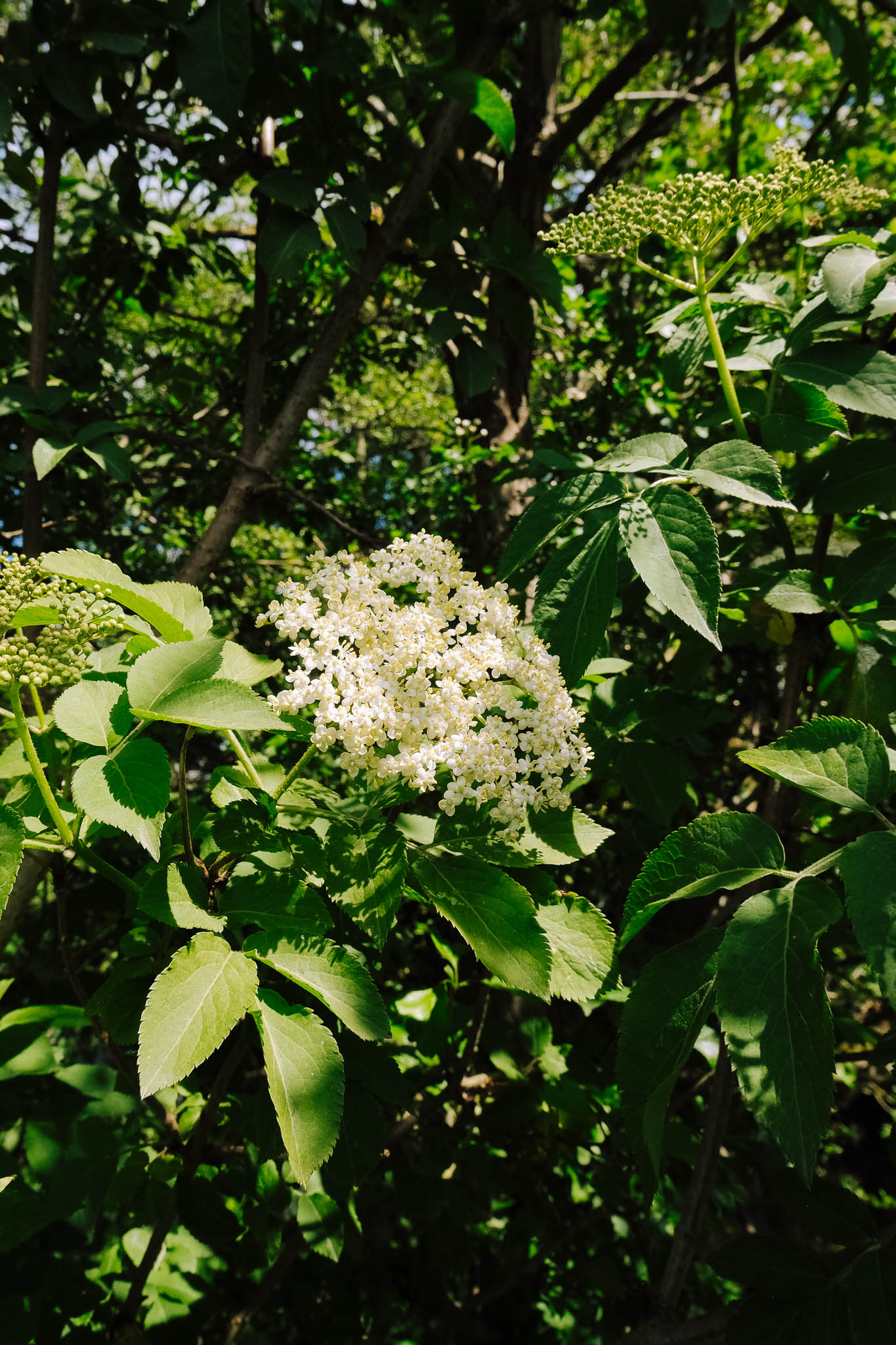
🦆As we ambled along the banks, the local flora decided to put on a show. The elder-flower bushes were out in full force, smelling incredibly fancy—like a high-end gin and tonic exploded in the hedgerow. The resident ducks gave us a look that was 10% curiosity and 90% “you look like you’re lost and your packed lunches are unguarded,” before vanishing into the undergrowth. Not to be outdone, a handful of hyperactive squirrels began racing up nearby tree trunks, presumably acting as the fox’s lookouts.
Lock Covert to Shamford Mere (The Great Obstacle Course)
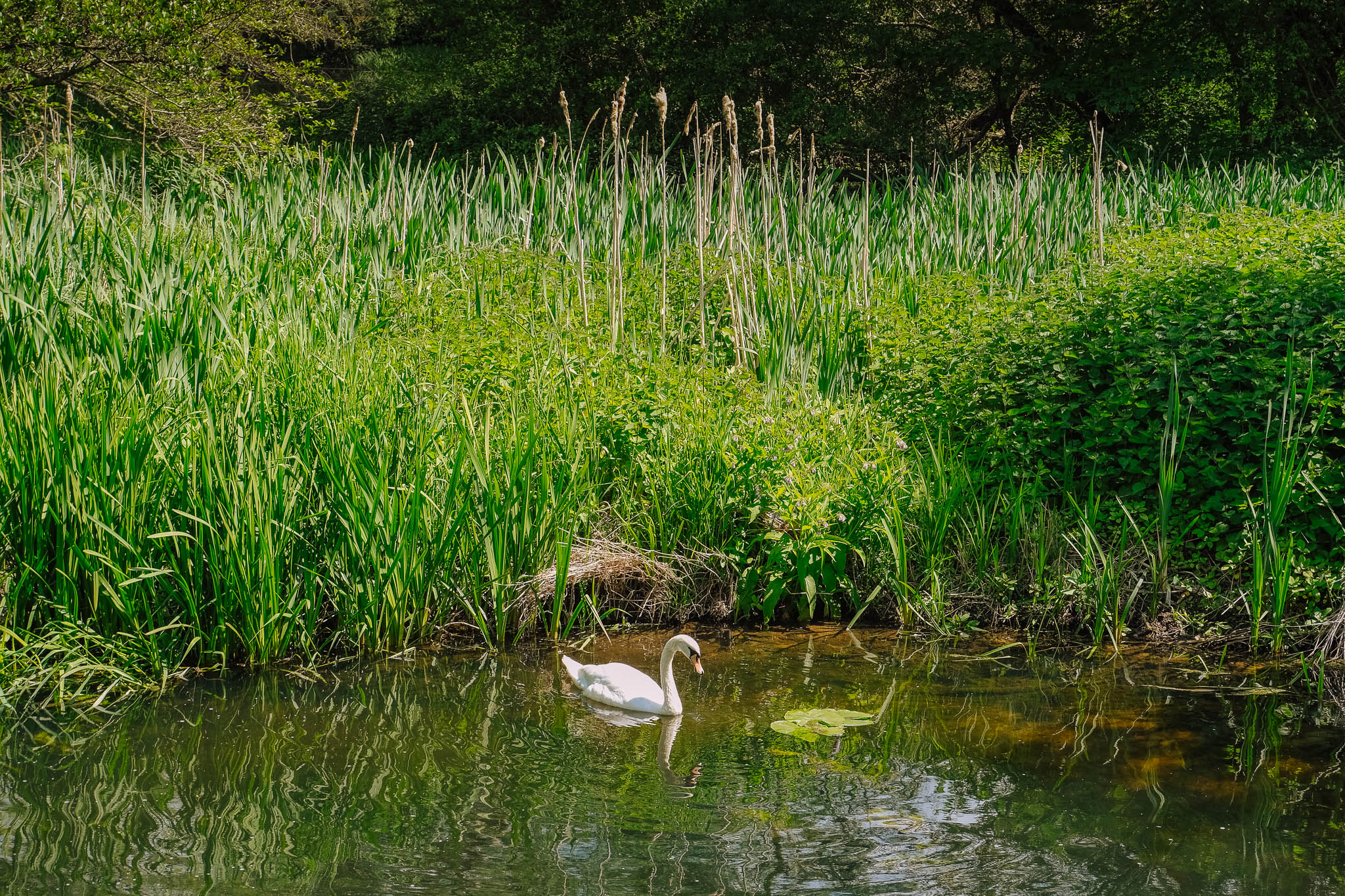
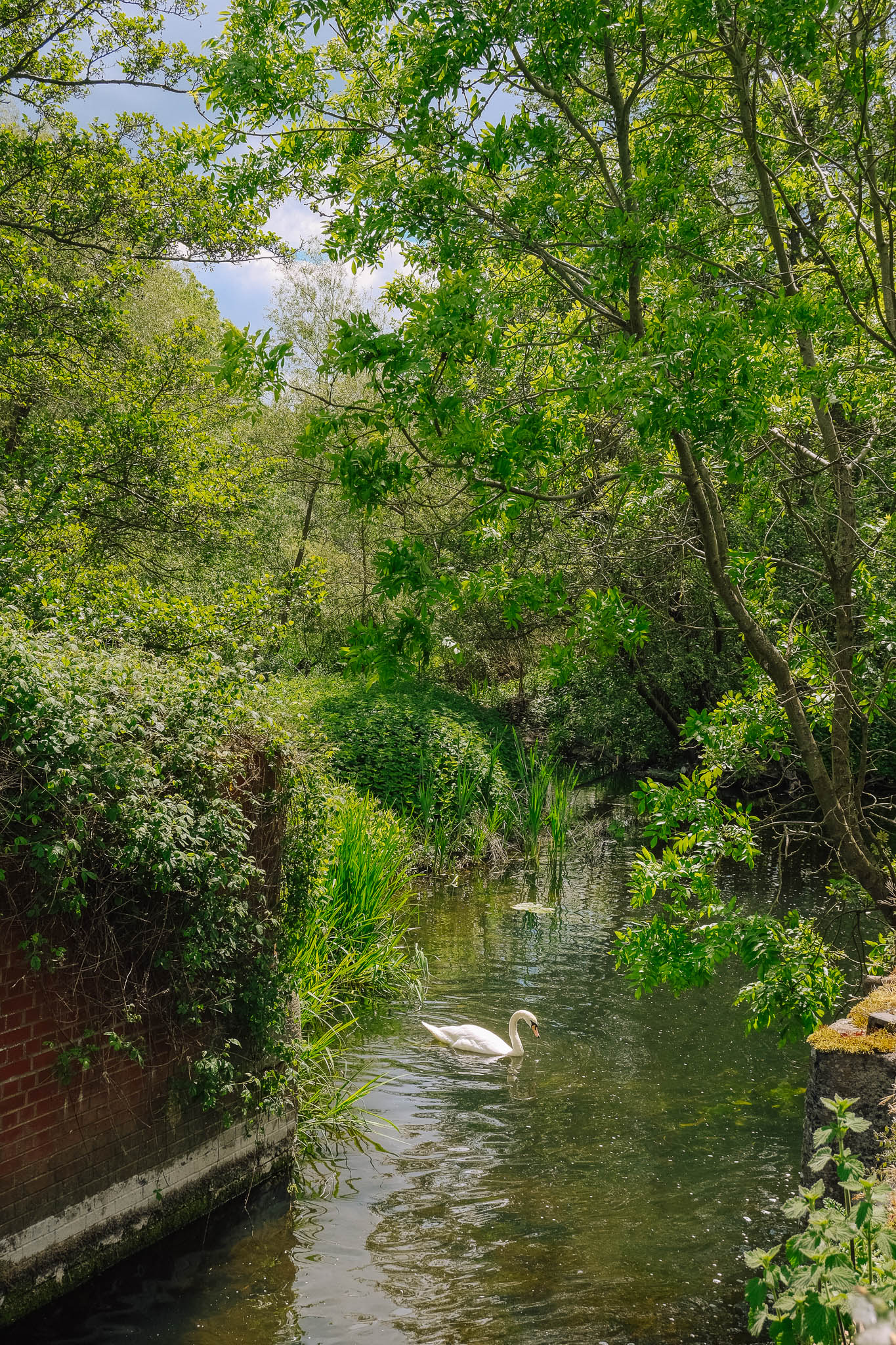
🦢 Leaving the casual stroll behind, we pushed onward past Lock Covert towards Baylham. This is where the landscape began to morph from a gentle river walk into an ancient historical drama. We, on the other hand, were too busy staring at the local wildlife. A majestic, glorious swan was floating down the river, looking incredibly elegant—We gave it a very respectful, very wide berth.
We soon arrived to Sharmford Mere, at this point, our path met the true beast of modern Suffolk: the A14. To continue our loop, we had to cross directly under this roaring concrete monument to internal combustion. The transition from peaceful Roman riverbanks to the industrial echo of passing lorries was a bit of a shock to the system, but we made it through without accidentally becoming part of the undercarriage of a delivery truck.
Three Churches and a Sea of Purple-Blue
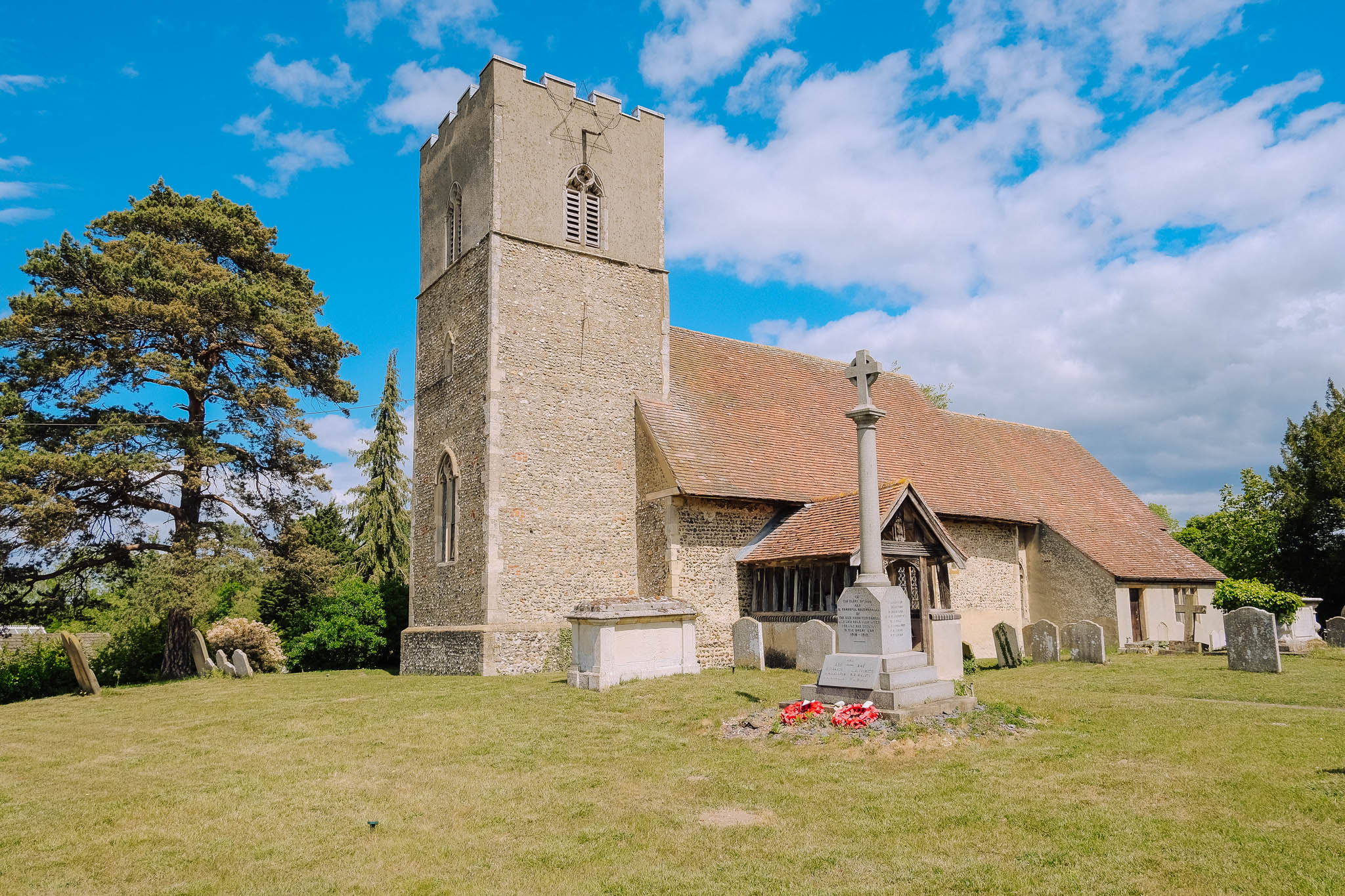
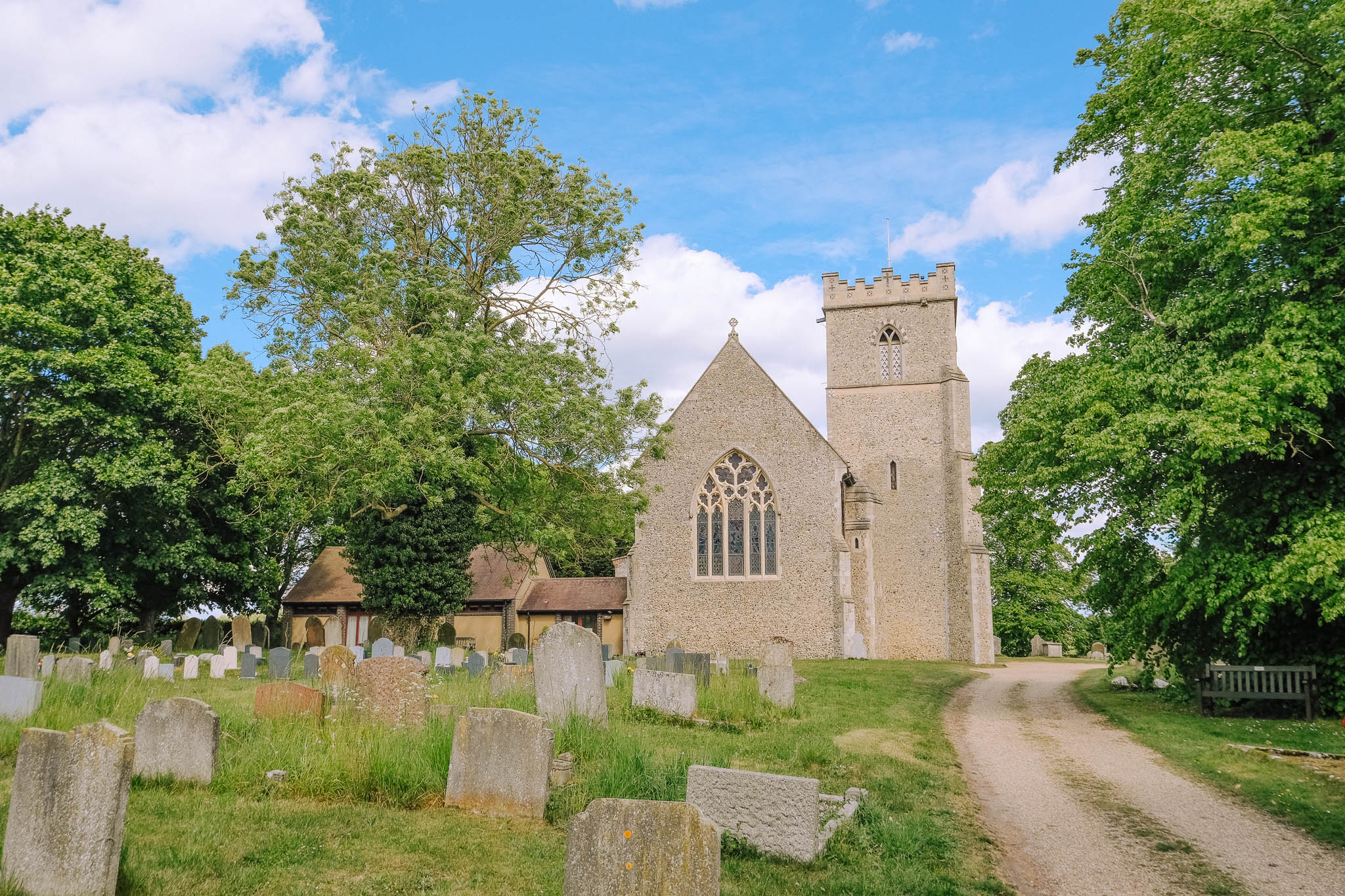
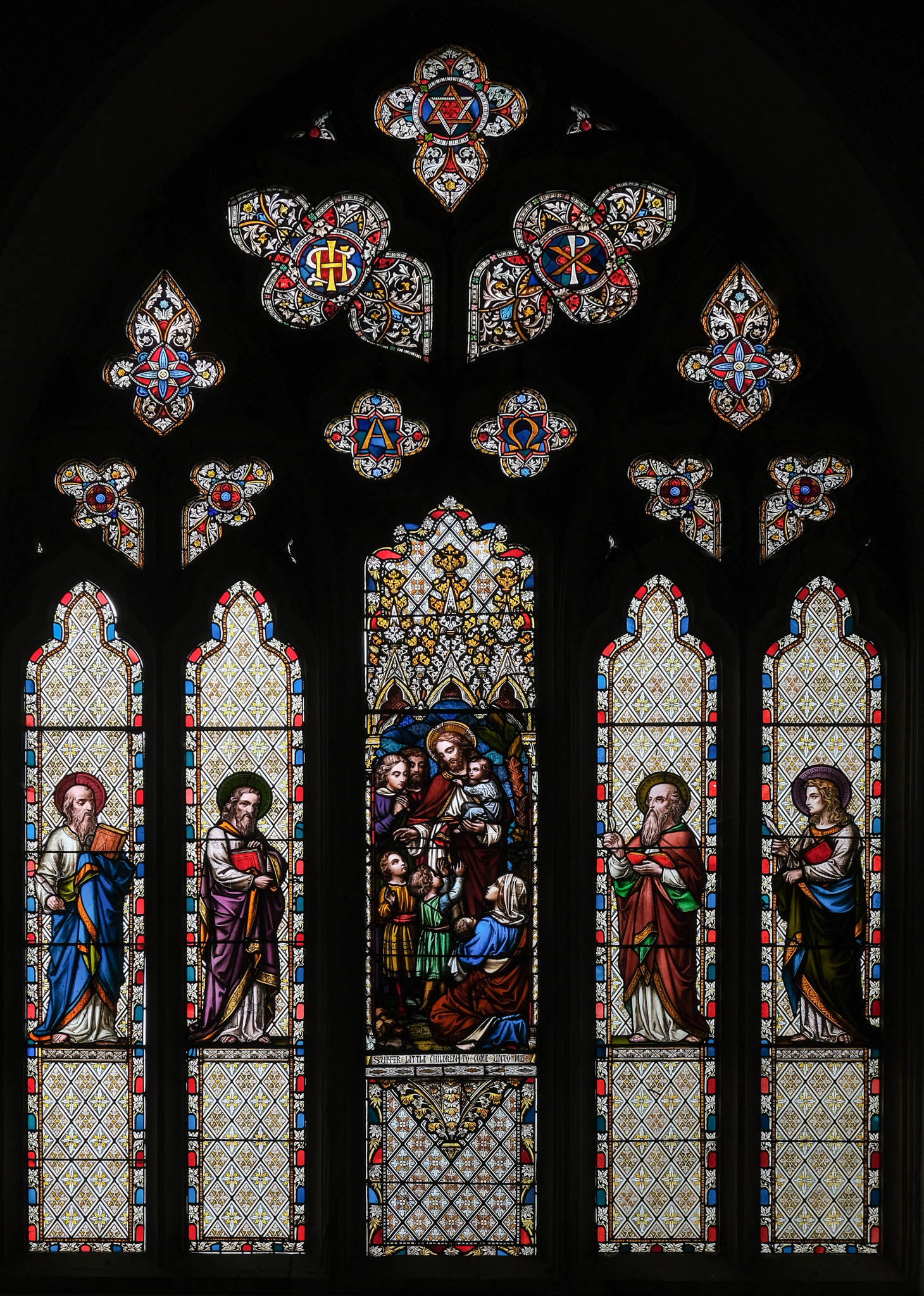
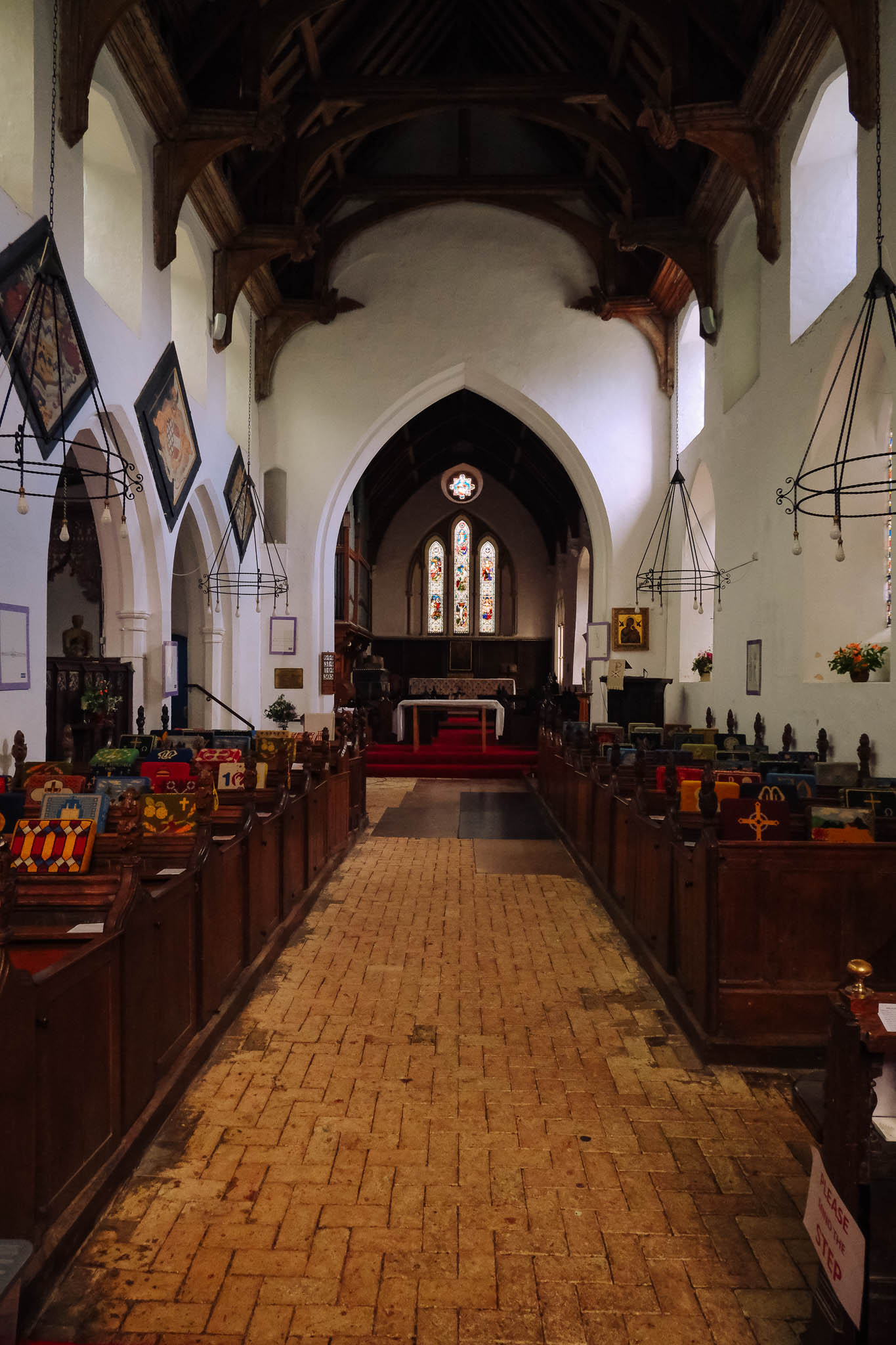
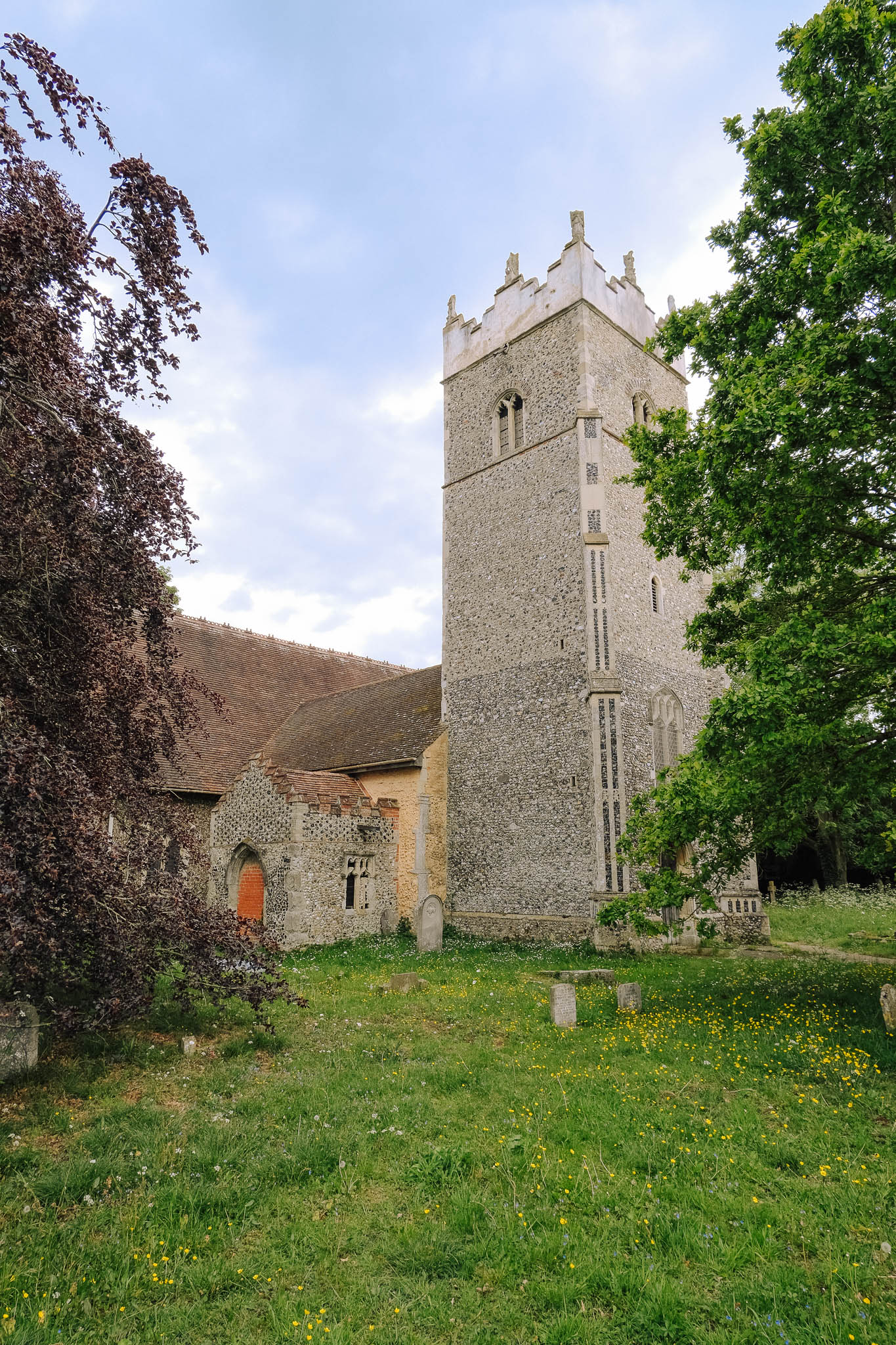
Emerging from the concrete underpass, we crossed the Old Norwich Road and set our sights towards Shrubland Park and Sandy Lane. Now, we need to talk about the spiritual density of this hike. We managed to hit three distinct churches in a single day. Between these we felt thoroughly holy. If walking past historic stone churches burns off sins, we definitely earned a free pass for whatever pub food or snacks we consumed later.
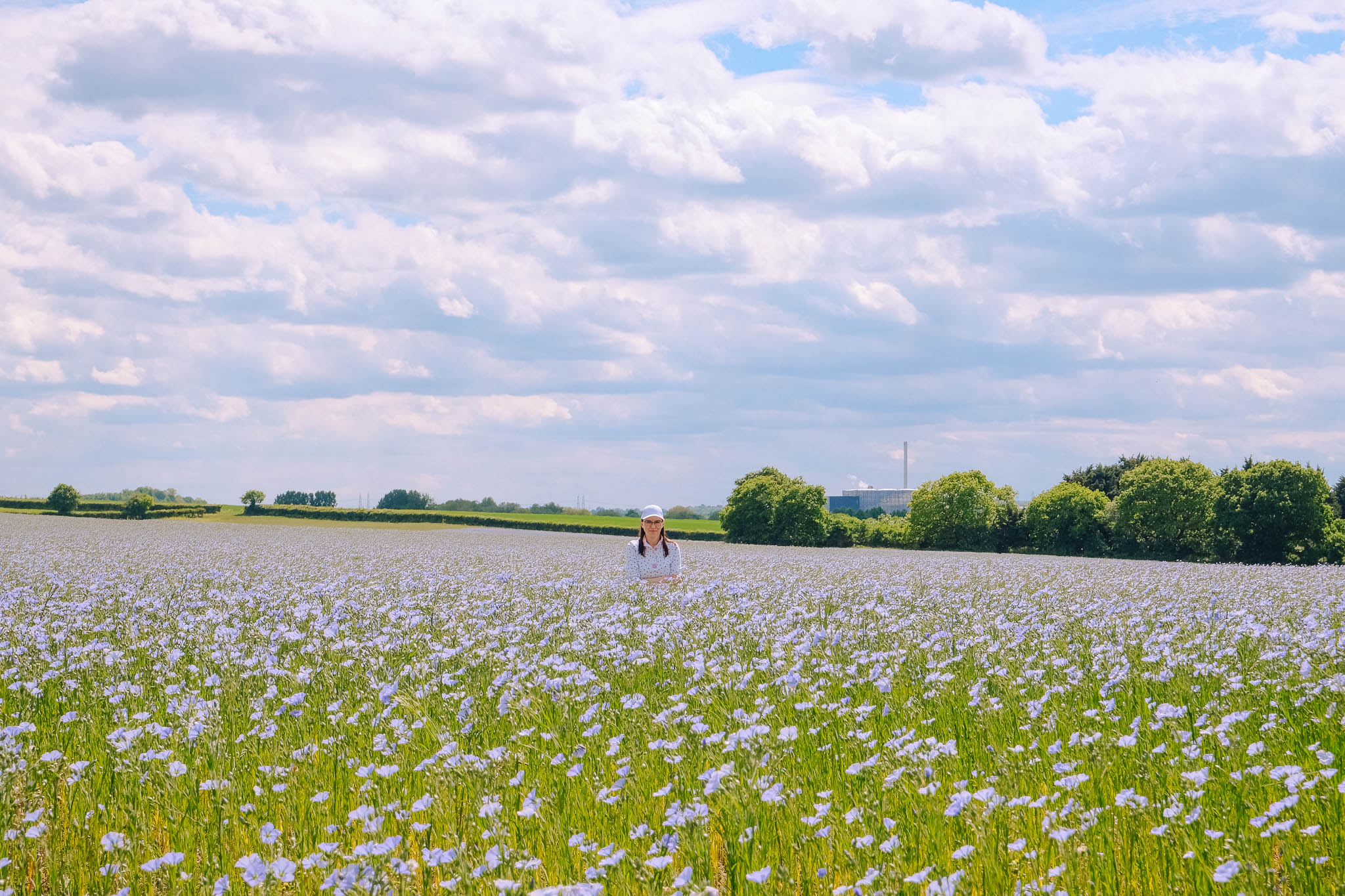
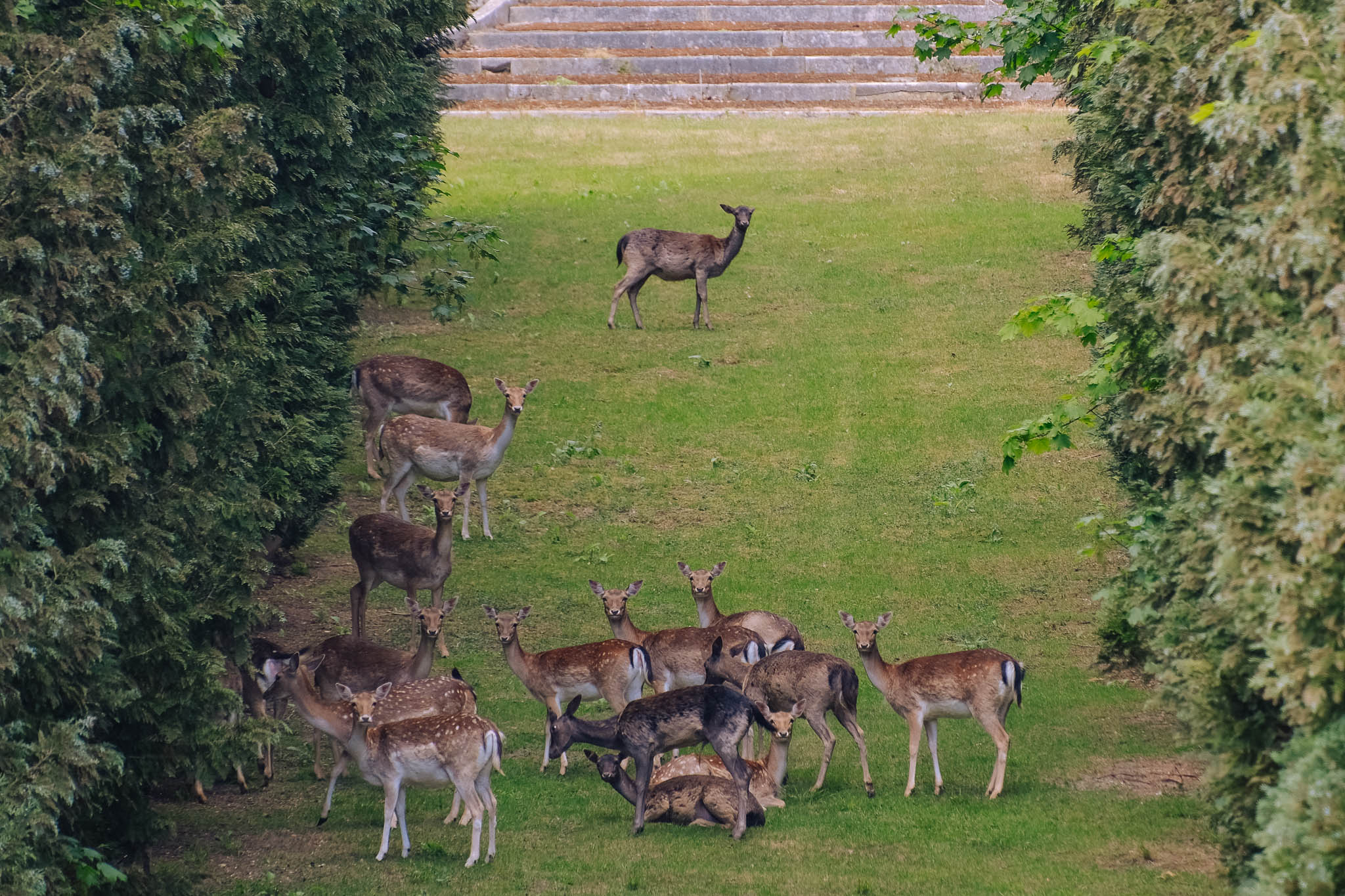
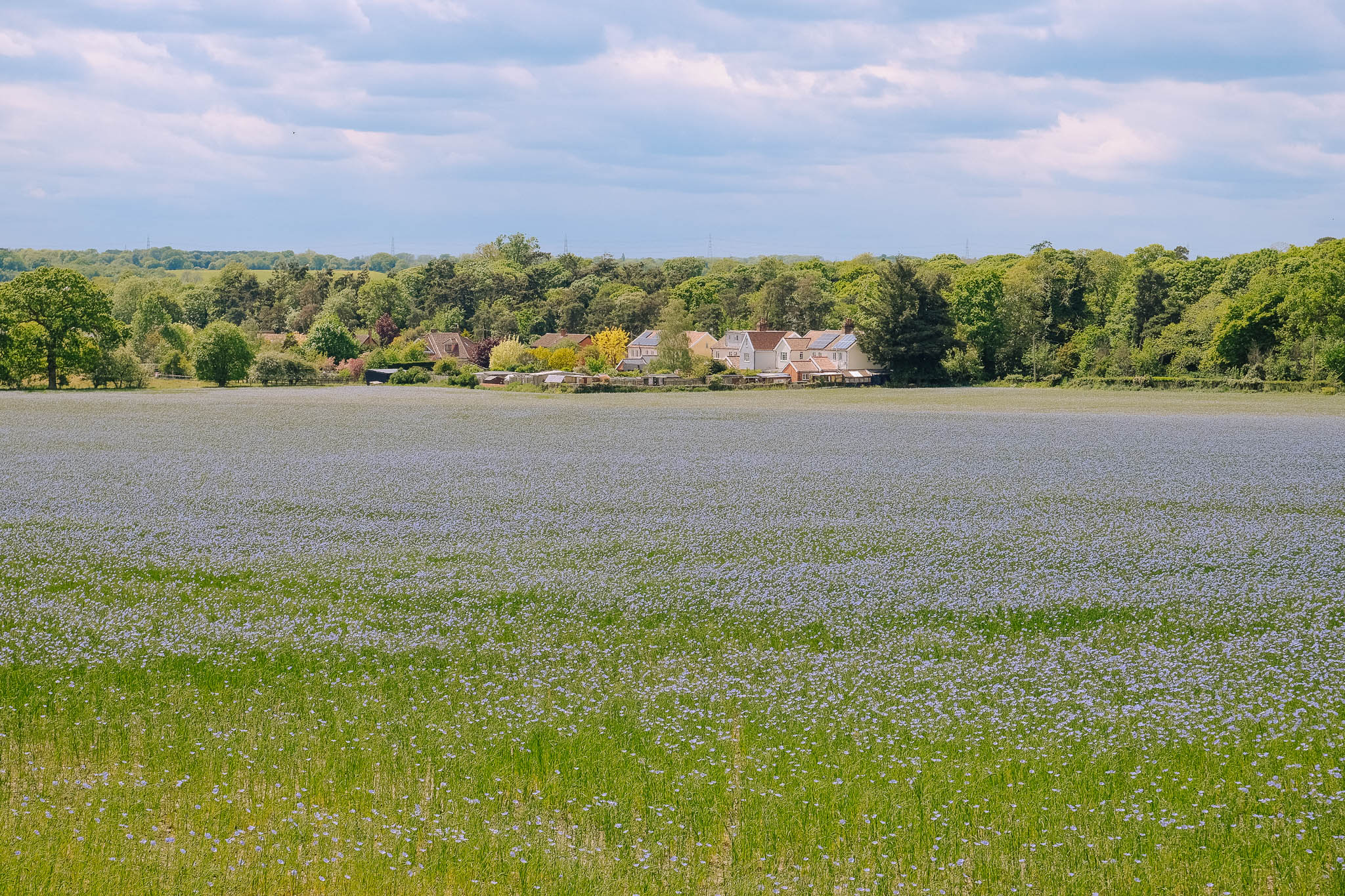
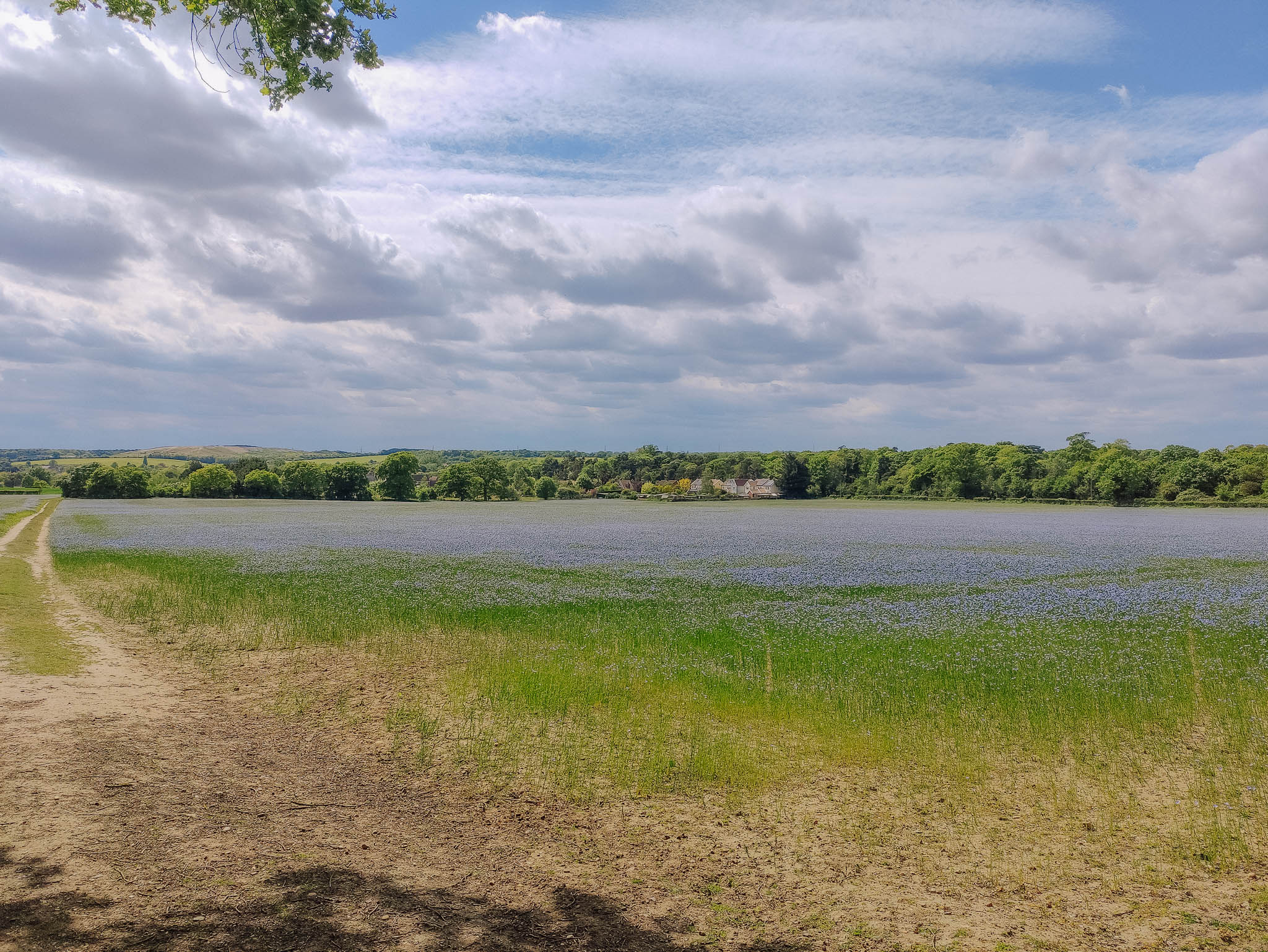
🦌 Shrubland Park itself is famous for its grand 18th-century hall and magnificent terraced gardens, which were originally inspired by Italian villas. At least that’s what others say as we didn’t manage to get close at all, it was closed, we could hear live music playing from the hall area, but the gates were closed. We suddenly ran into a small family of deer near The Vista . They paused, looked at us with big, poetic eyes, and then bounded off into the woods with an effortless grace that made us feel intensely clumsy by comparison. Never mind, we did find the next best thing: an absolute sea of linseed flowers. A whole field of it.
The Linseed Phenomenon: Linseed (or flax) is famous for its brilliant, shimmering blue-purple flowers. The fields are incredibly temperamental—the blossoms often open fully only in bright morning sunshine and can drop by the afternoon. We timed it perfectly.
The view was completely breathtaking. Imagine a massive, rolling landscape blanketed entirely in a vibrant, electric blue-purple hue, sitting right beneath that crisp Suffolk sky. It looked less like a real agricultural crop and more like a glitch in the matrix where someone forgot to paint the fields green. We stood there for a good ten minutes just soaking it in, trying to take photos that would inevitably fail to capture how stunning it actually was in real life.
The Sandy Lane Slog Home
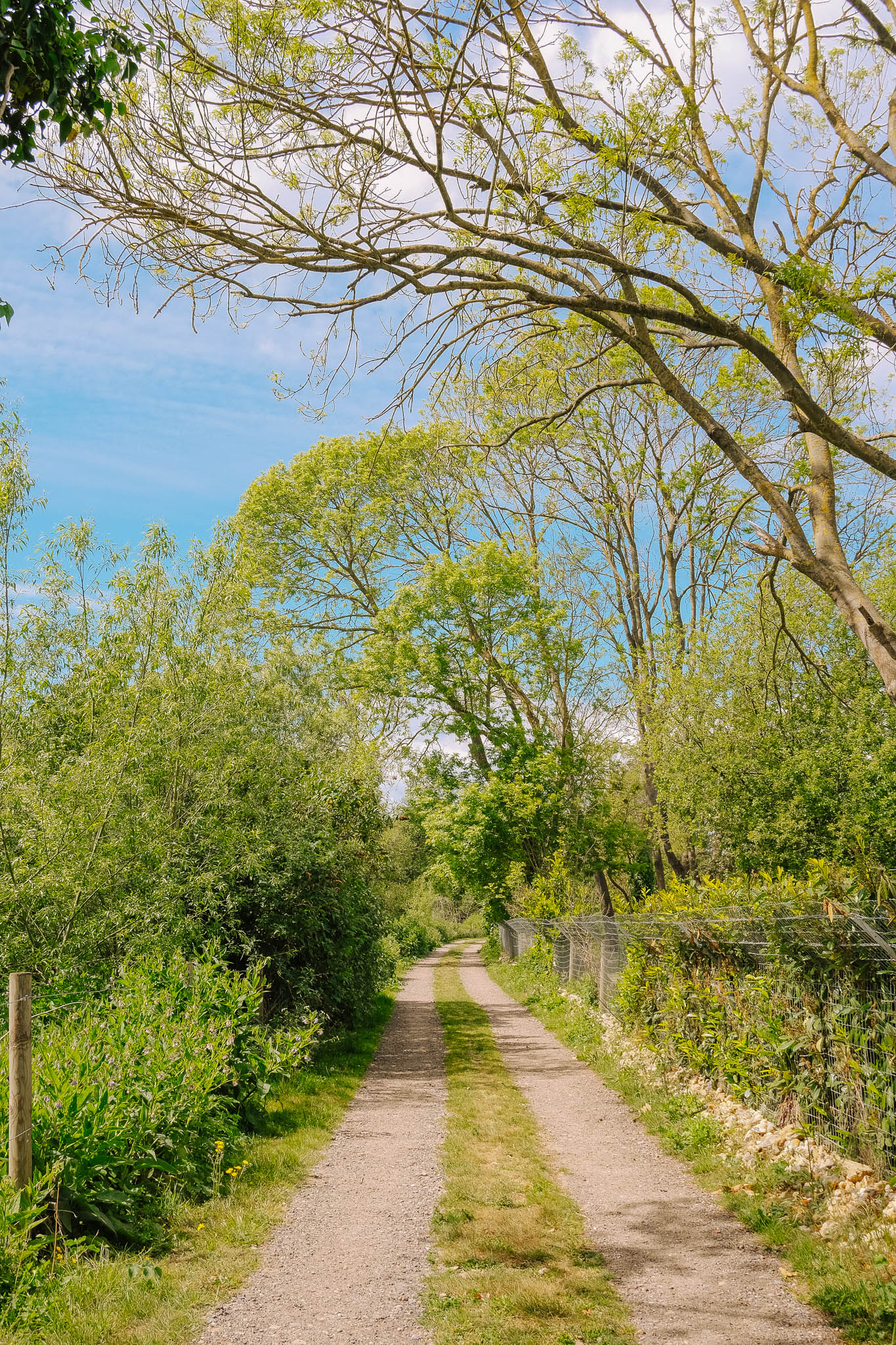
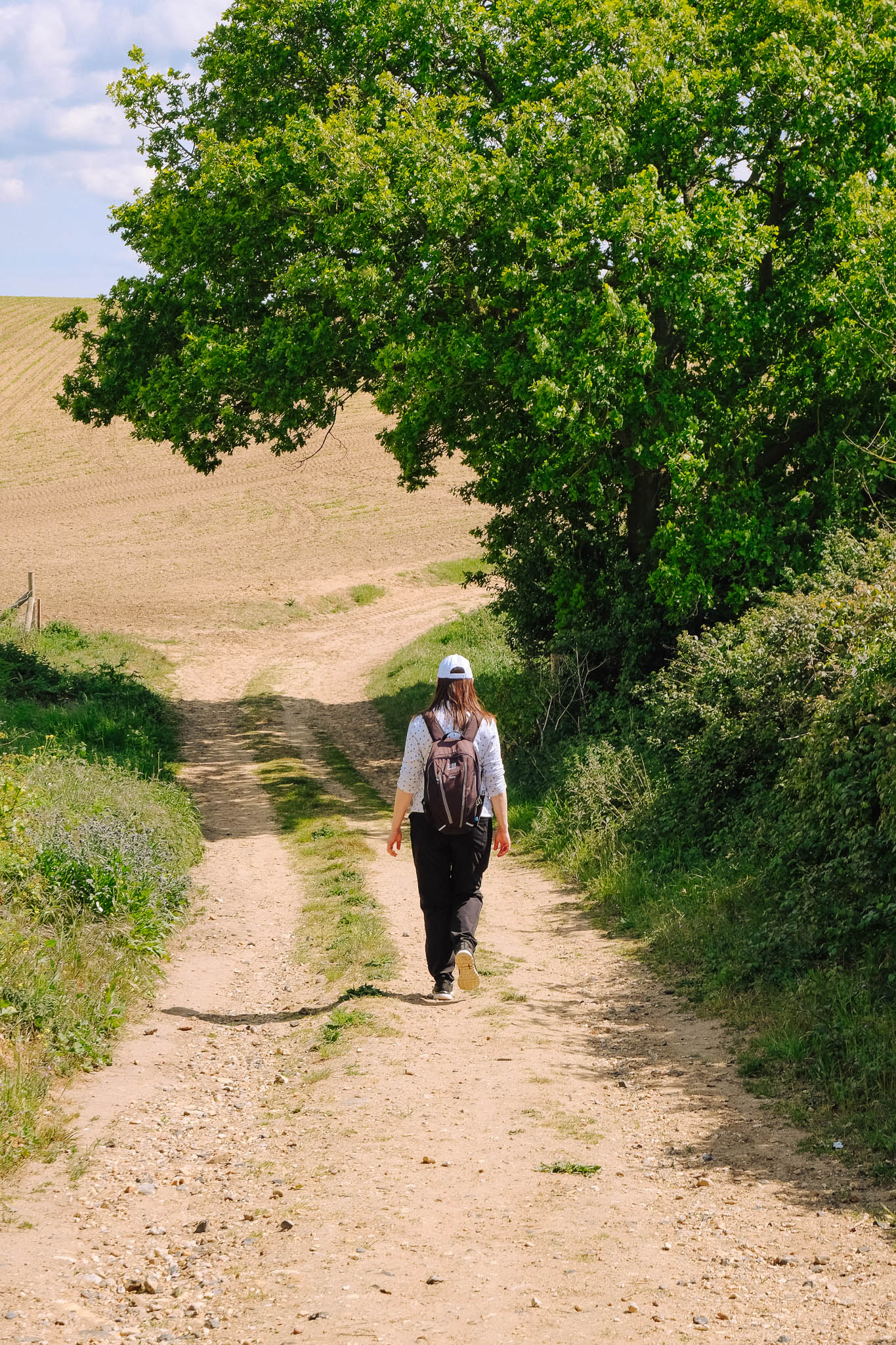
With our eyes full of blue flowers and our boots full of dust, we continued on Sandy Lane for the final leg back to Claydon. Sandy Lane is exactly what it says on the tin: sandy, straight, and a brilliant test of calf endurance. By this point, our feet were beginning to calculate the exact distance remaining using a complex mental equation of Steps × Ache = Proximity to Tea. But looking back at the loop we’d just conquered, every single meter was worth it.
🥾 We made it back to Claydon tired, dusty, and thoroughly impressed by what Suffolk has hiding right in its backyard. From Roman heritage and grand industrial canals to curious foxes, dancing swans, a family of deer, and fields of brilliant purple linseed, this 12.9 km loop proved that you don’t need to travel to the ends of the earth to find a great adventure. You just need a sunny day, a good pair of shoes, and the willingness to walk underneath a motorway to see what beautiful secrets are on the other side!
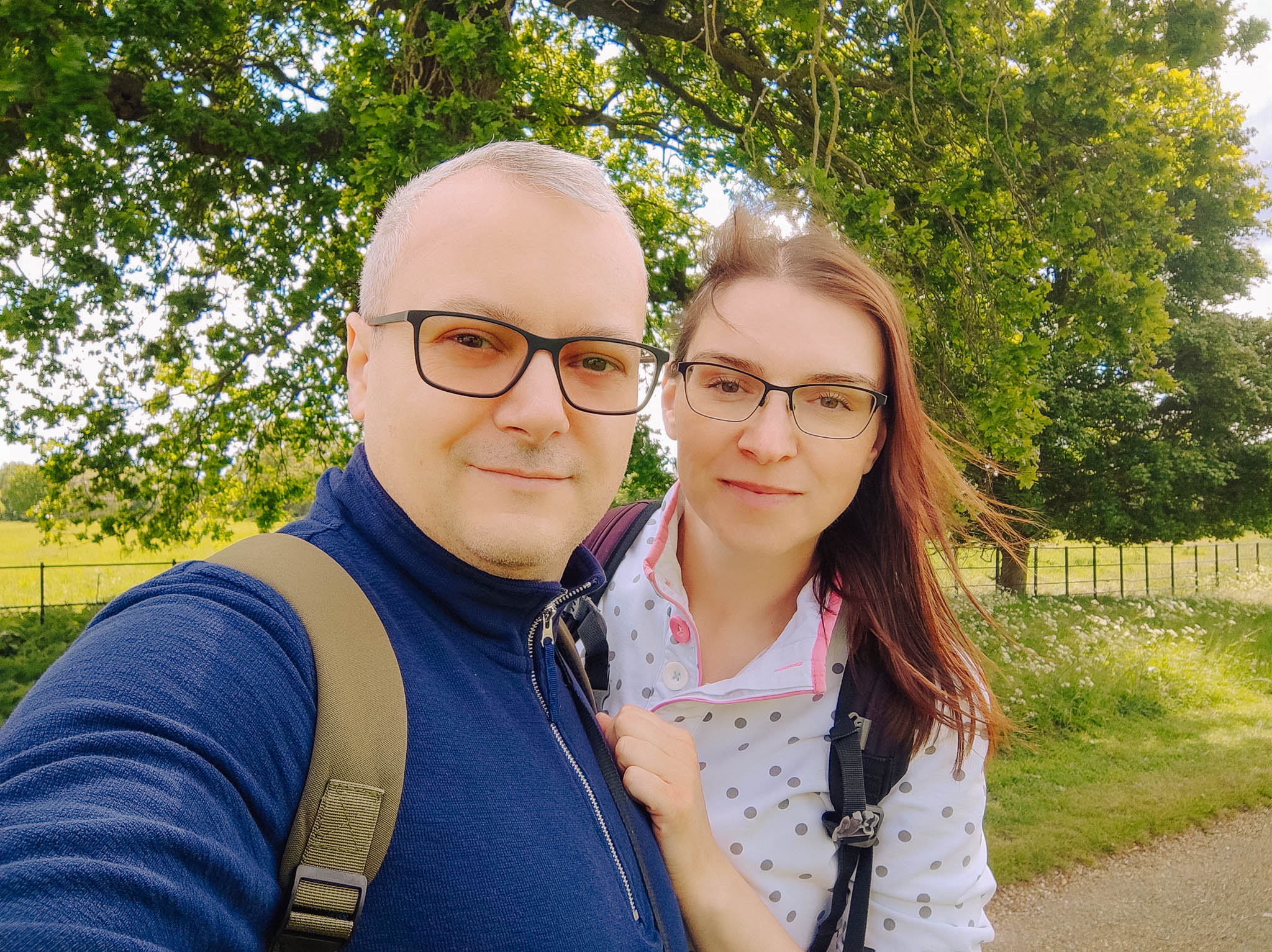
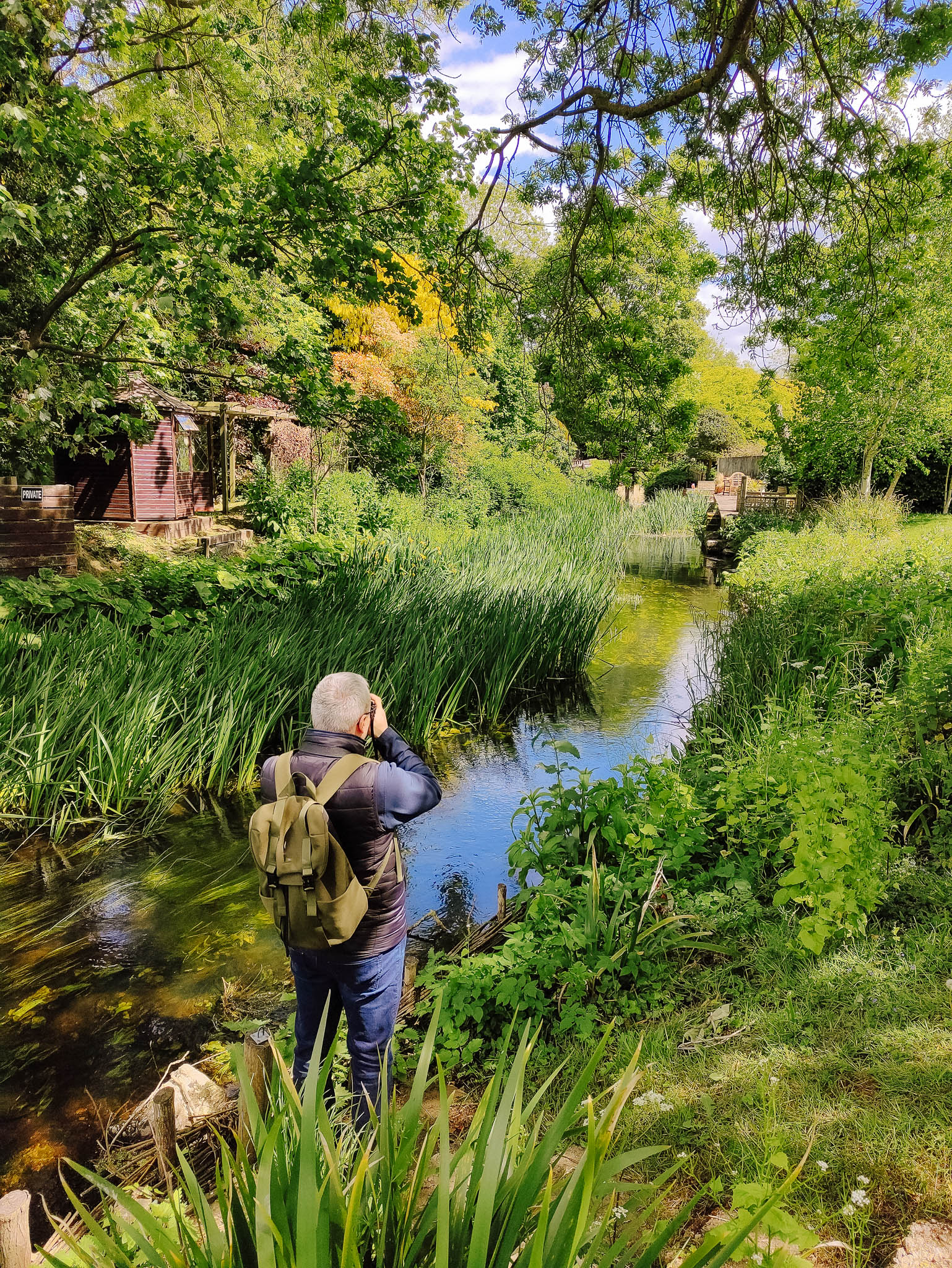
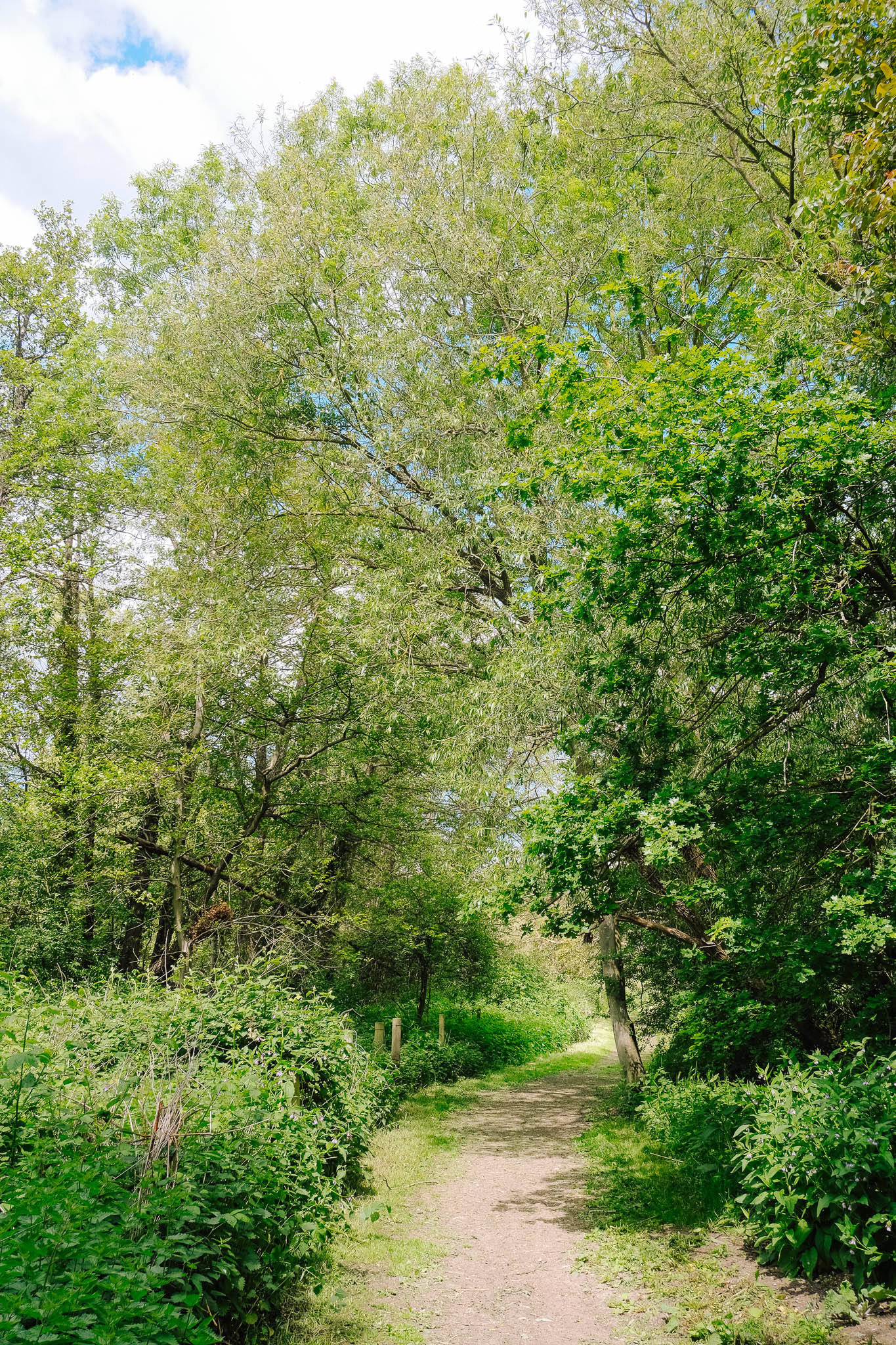
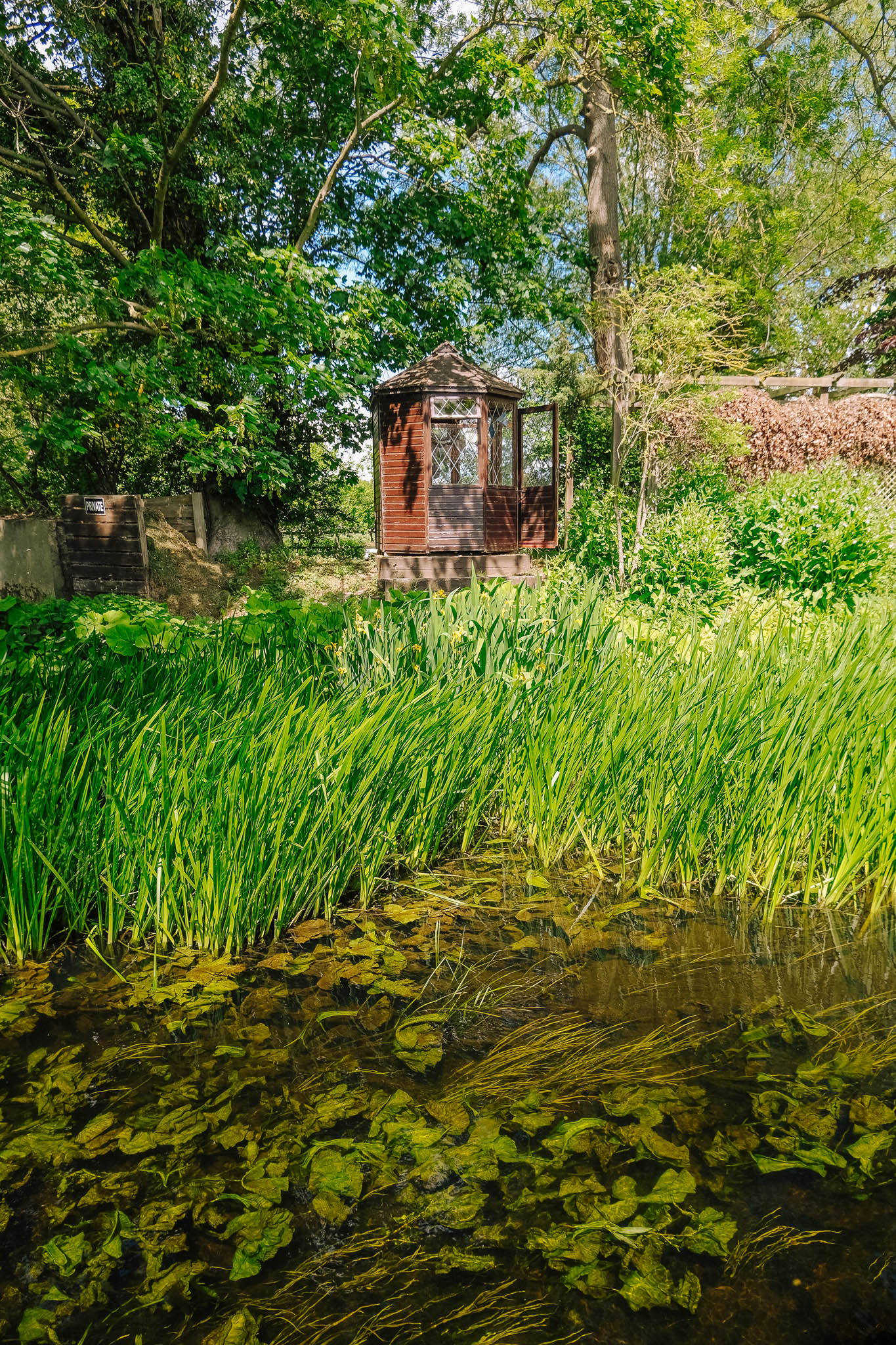
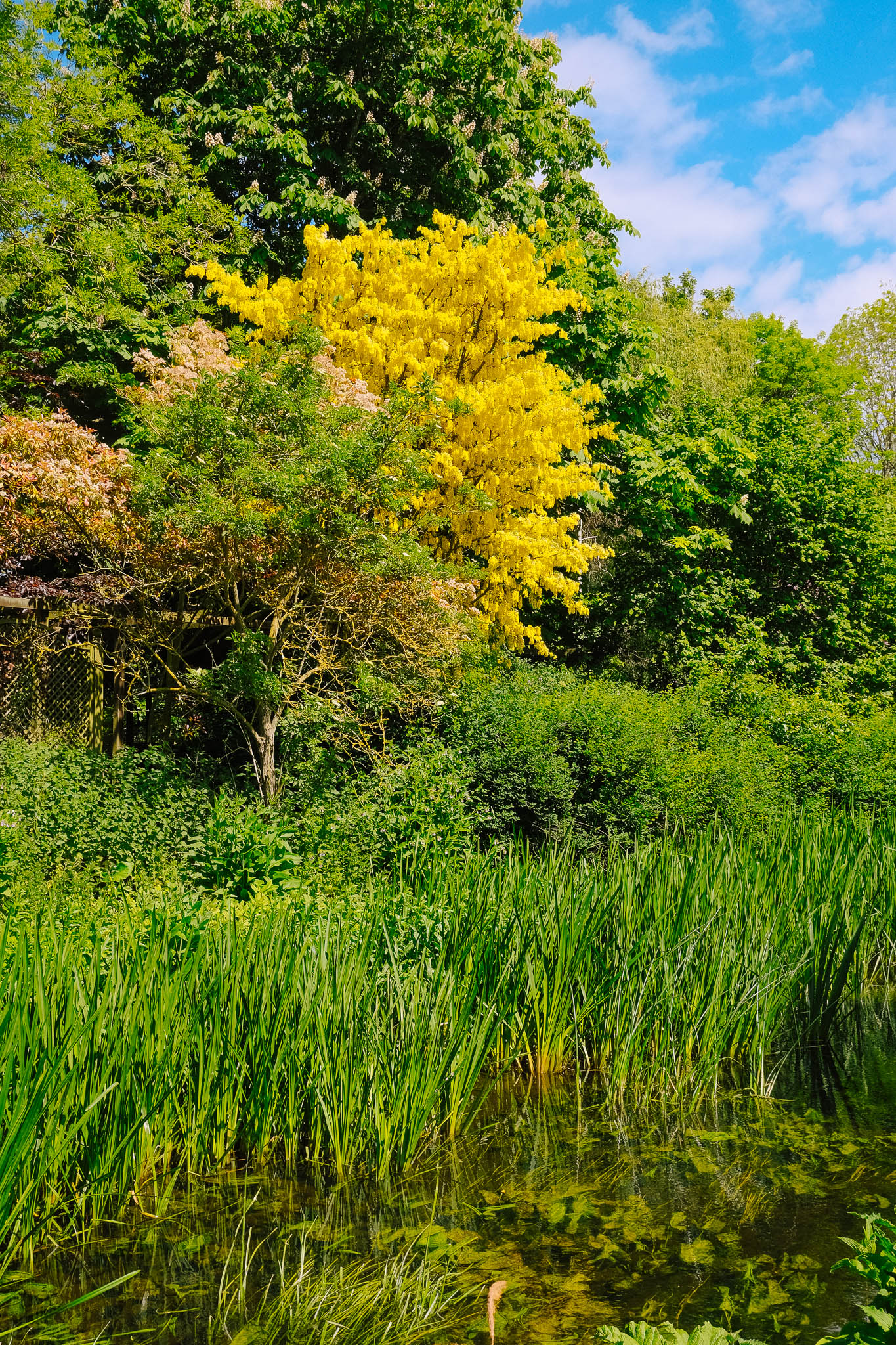
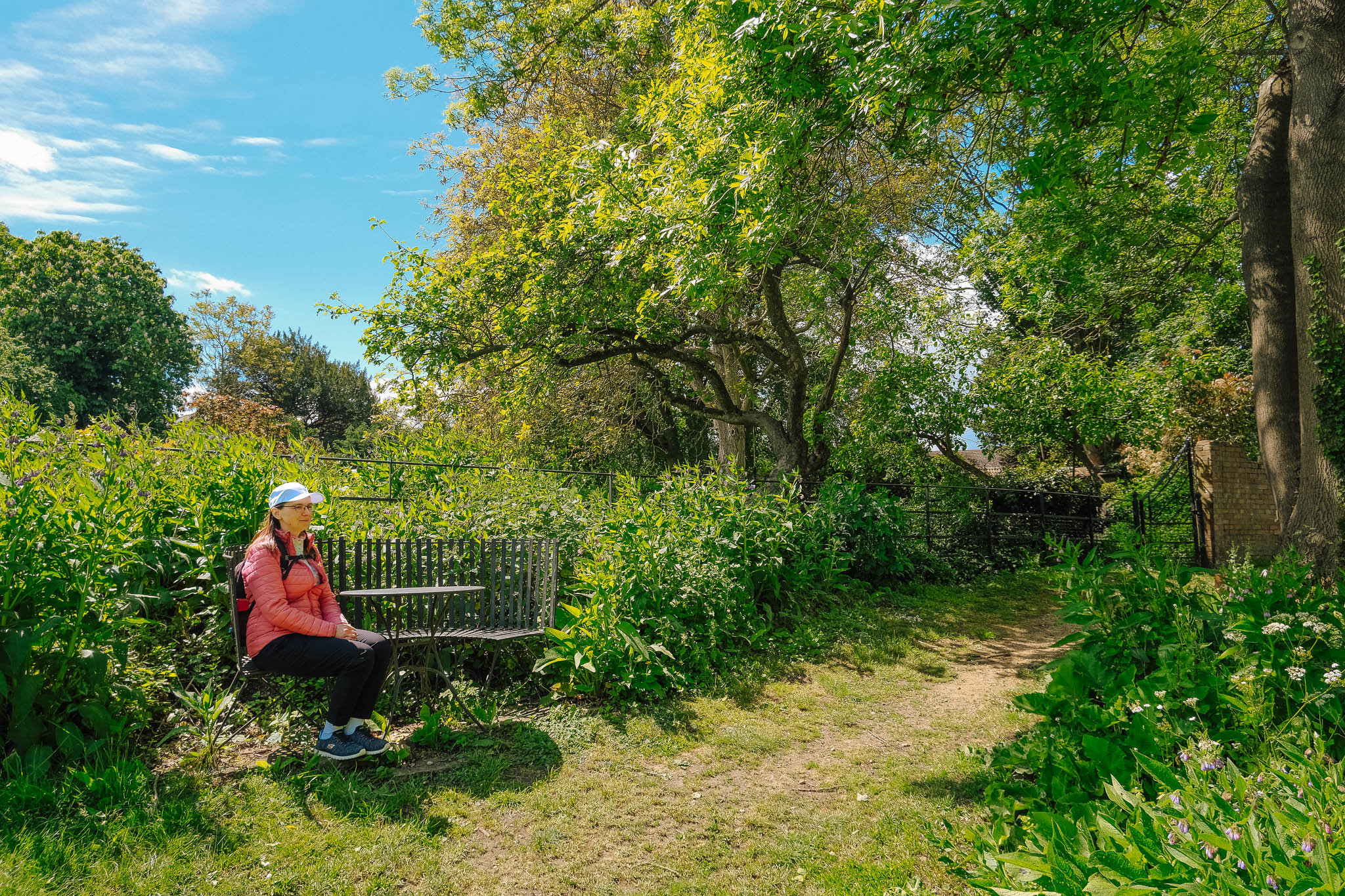
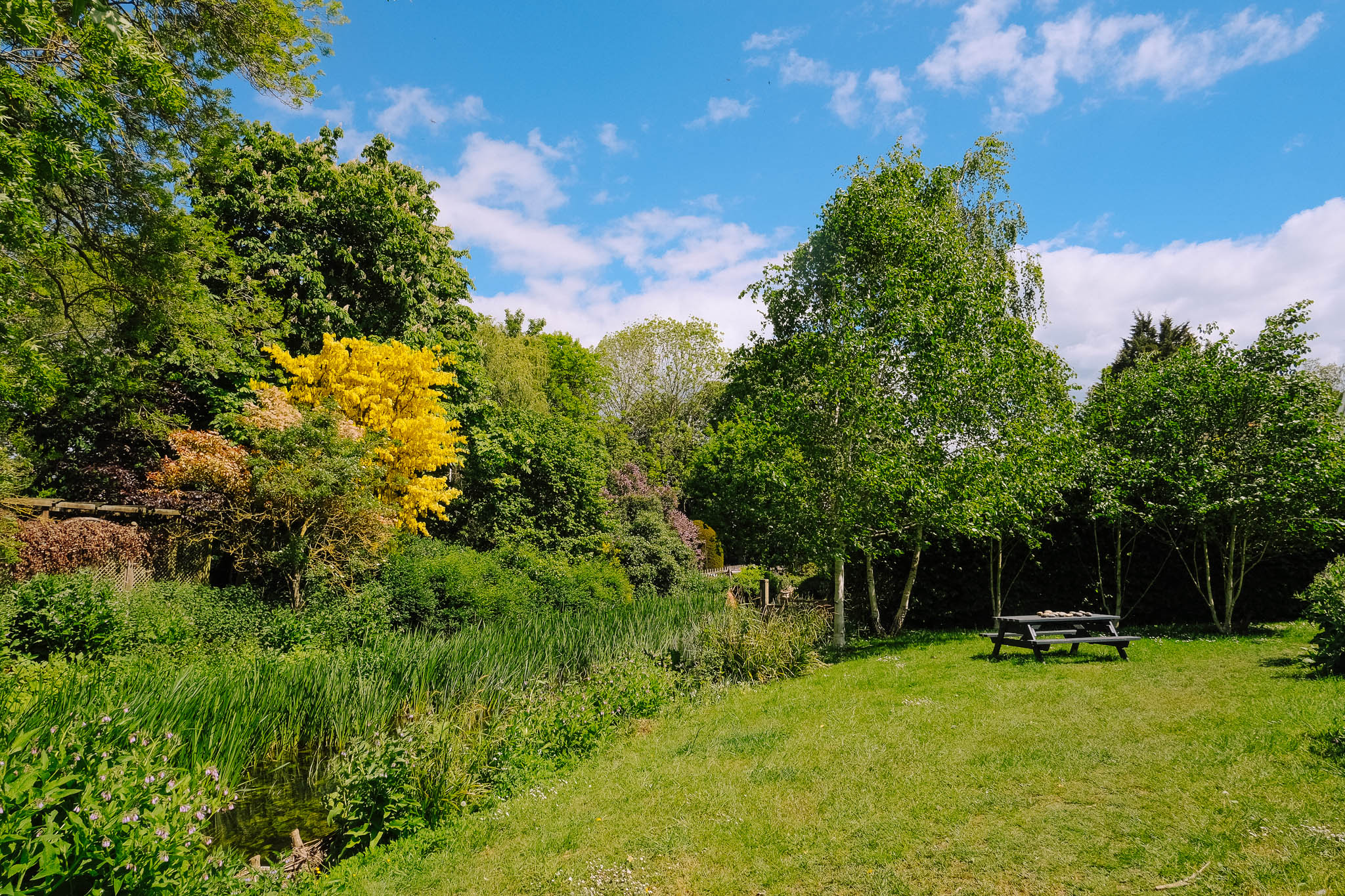
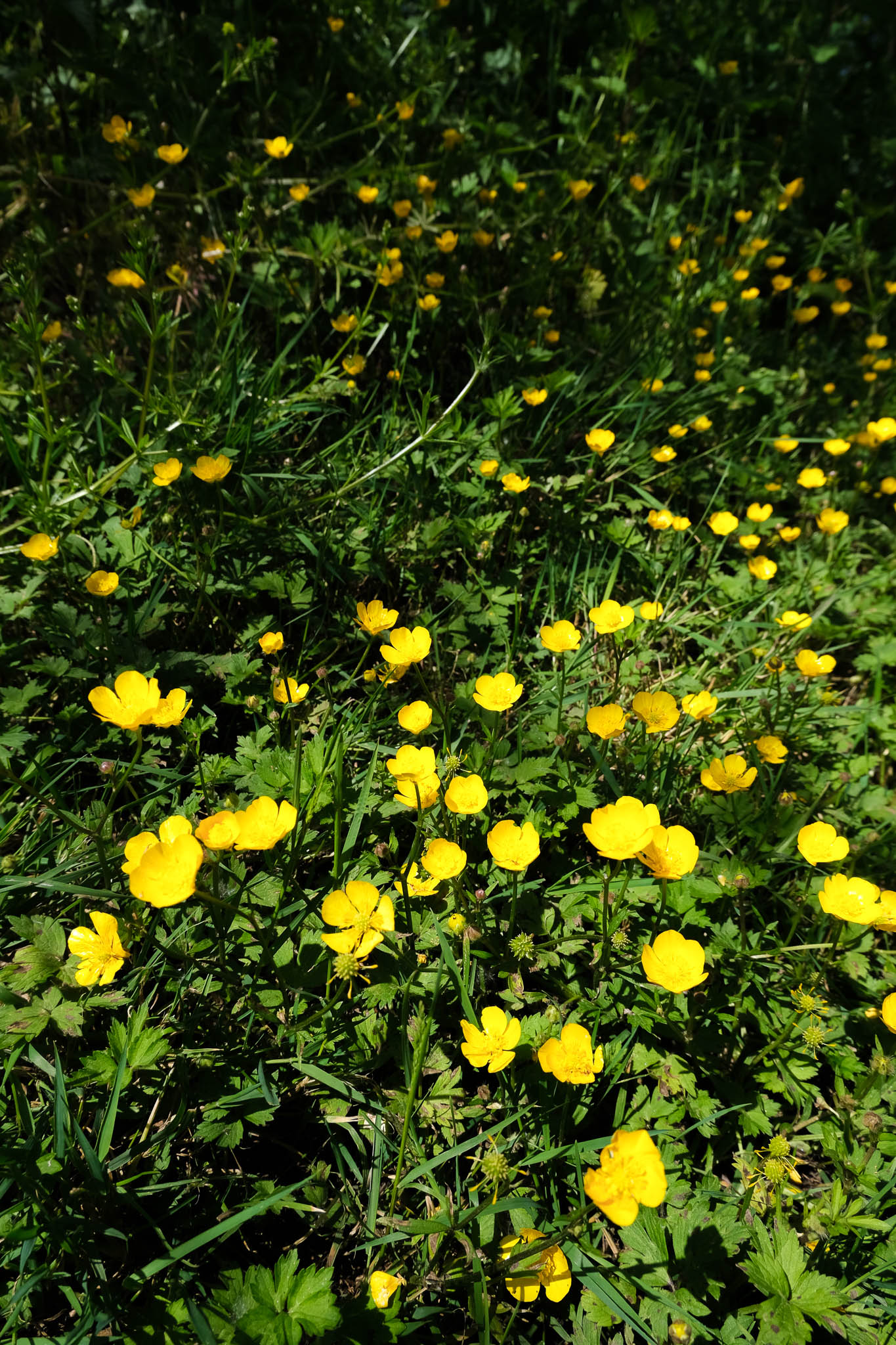
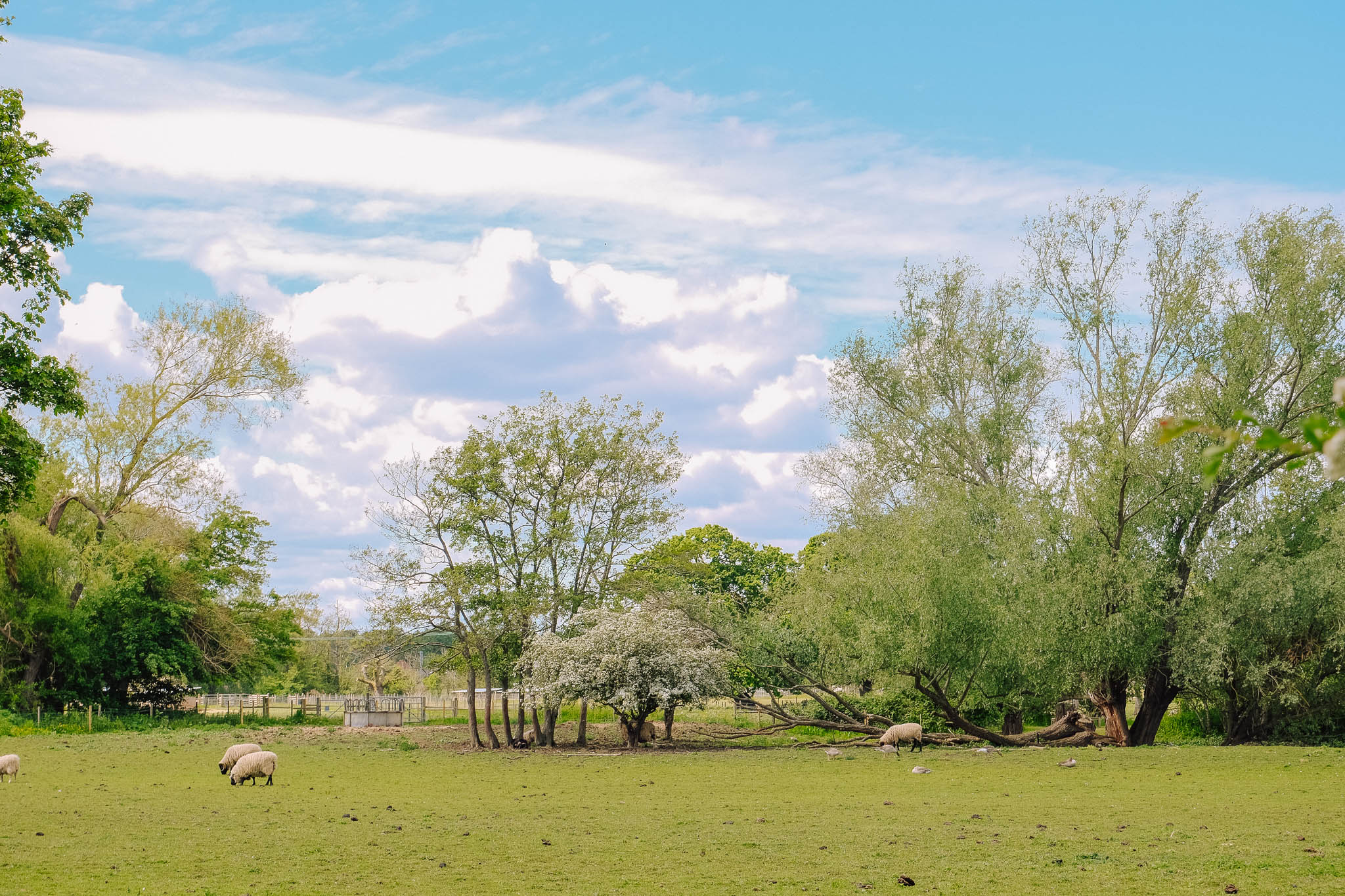
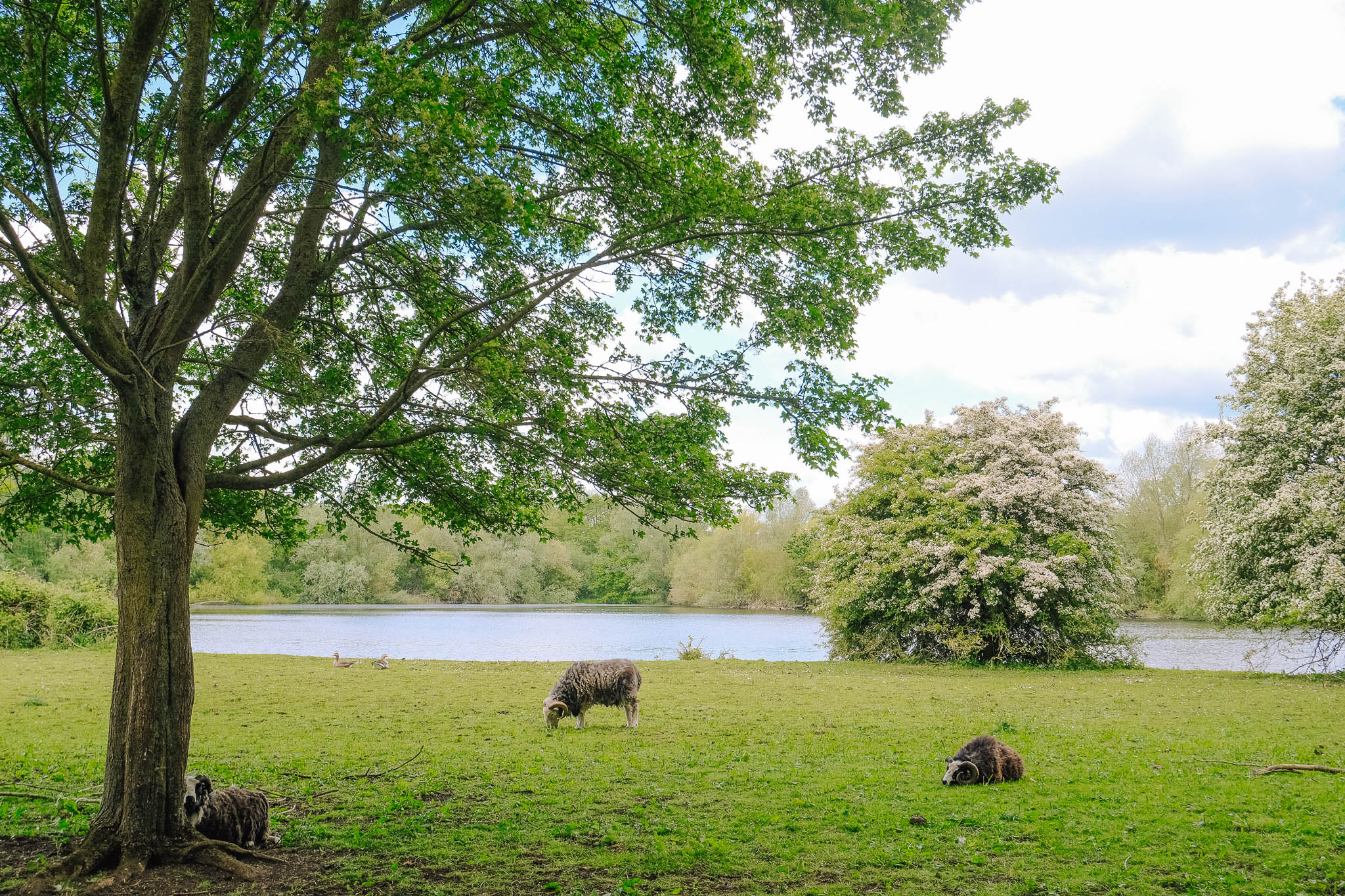
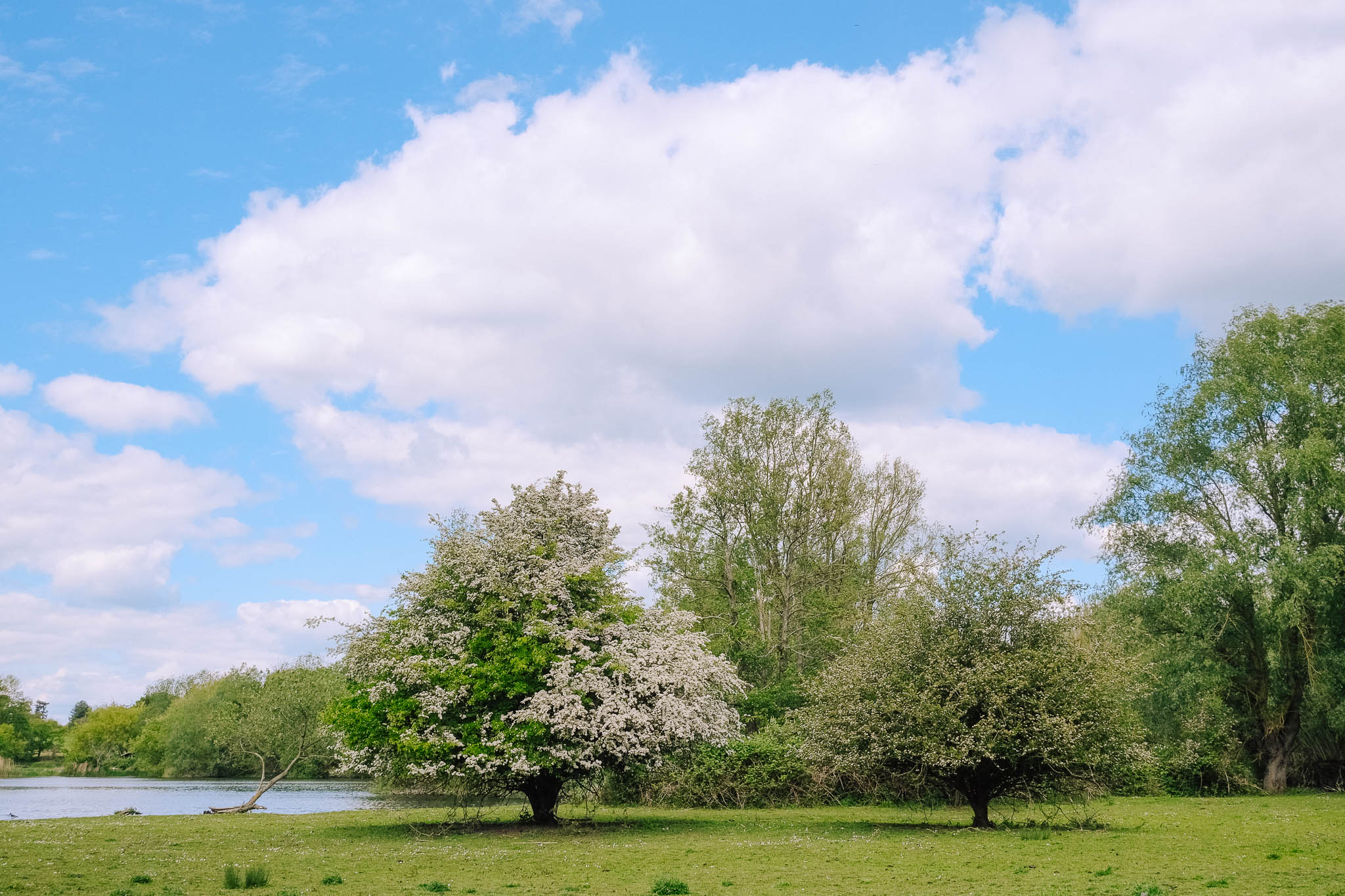
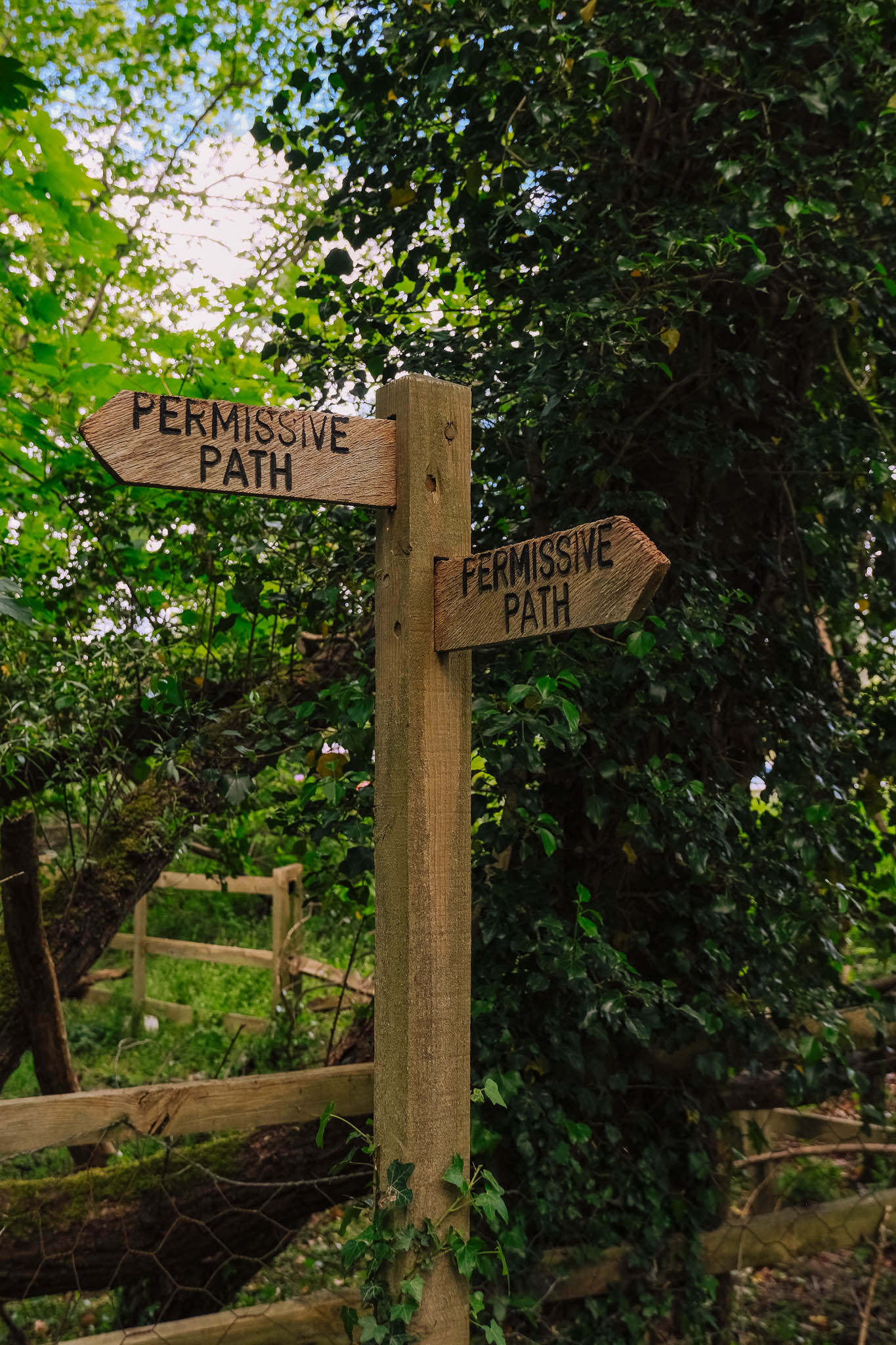
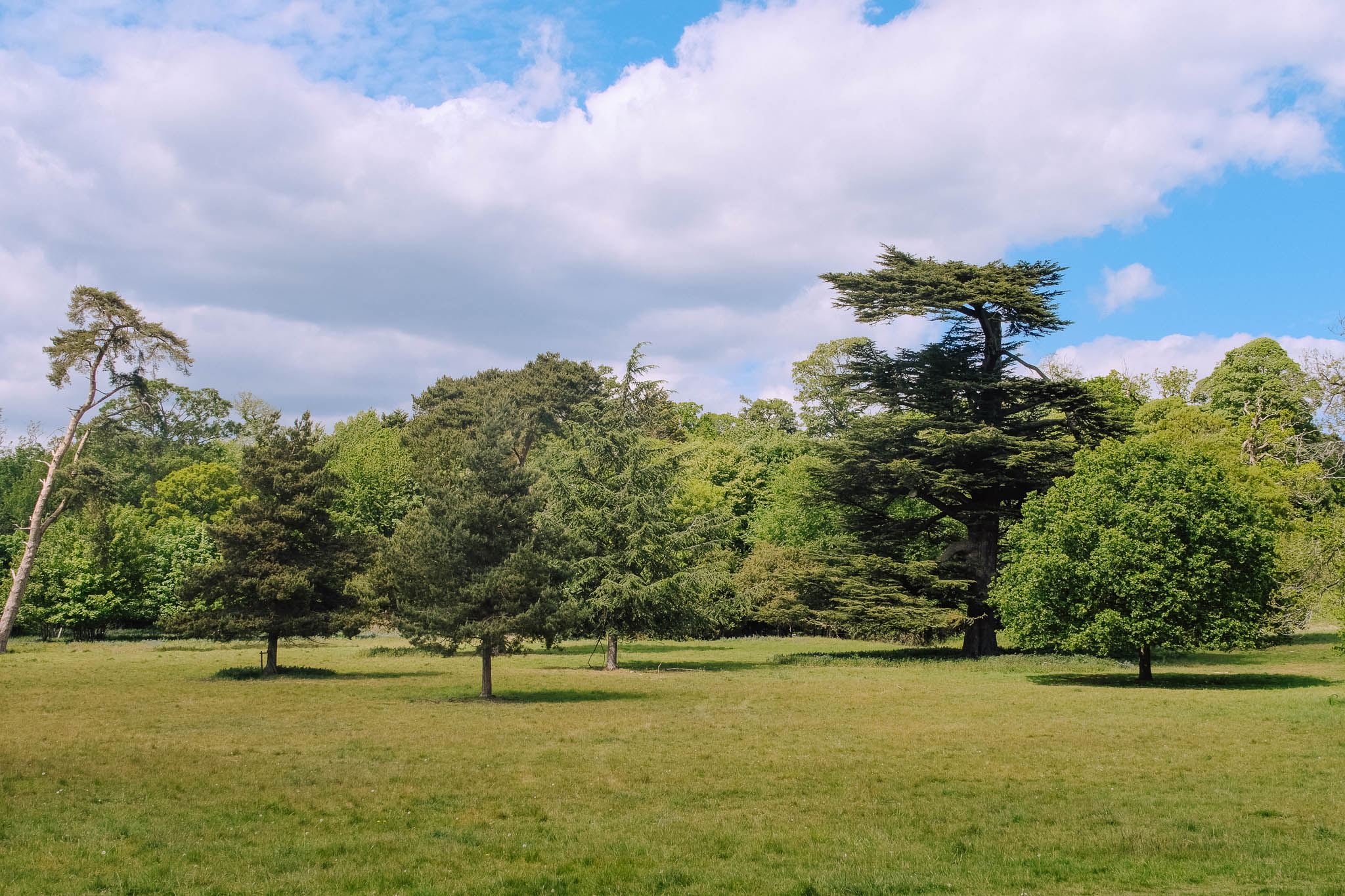
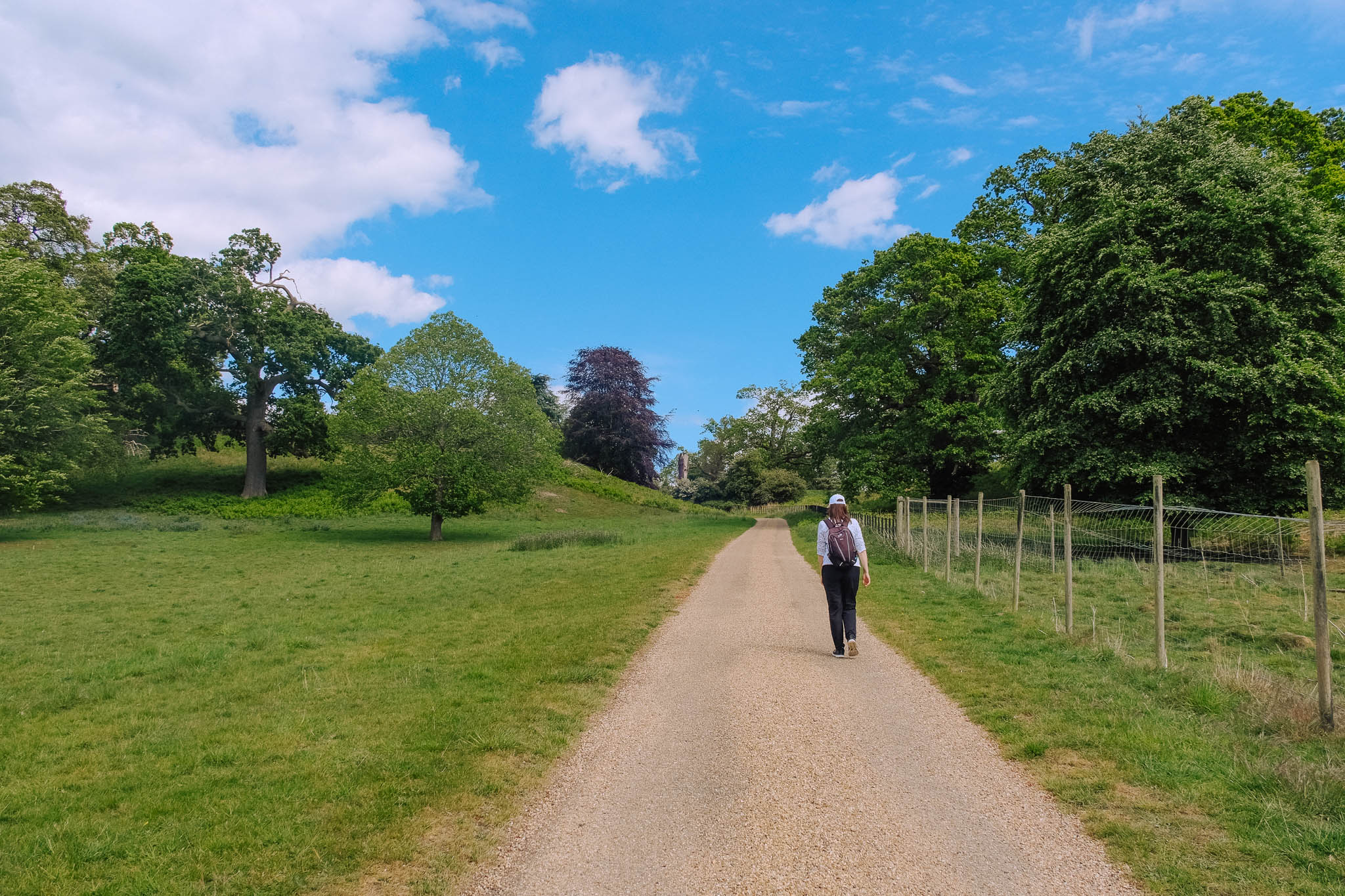
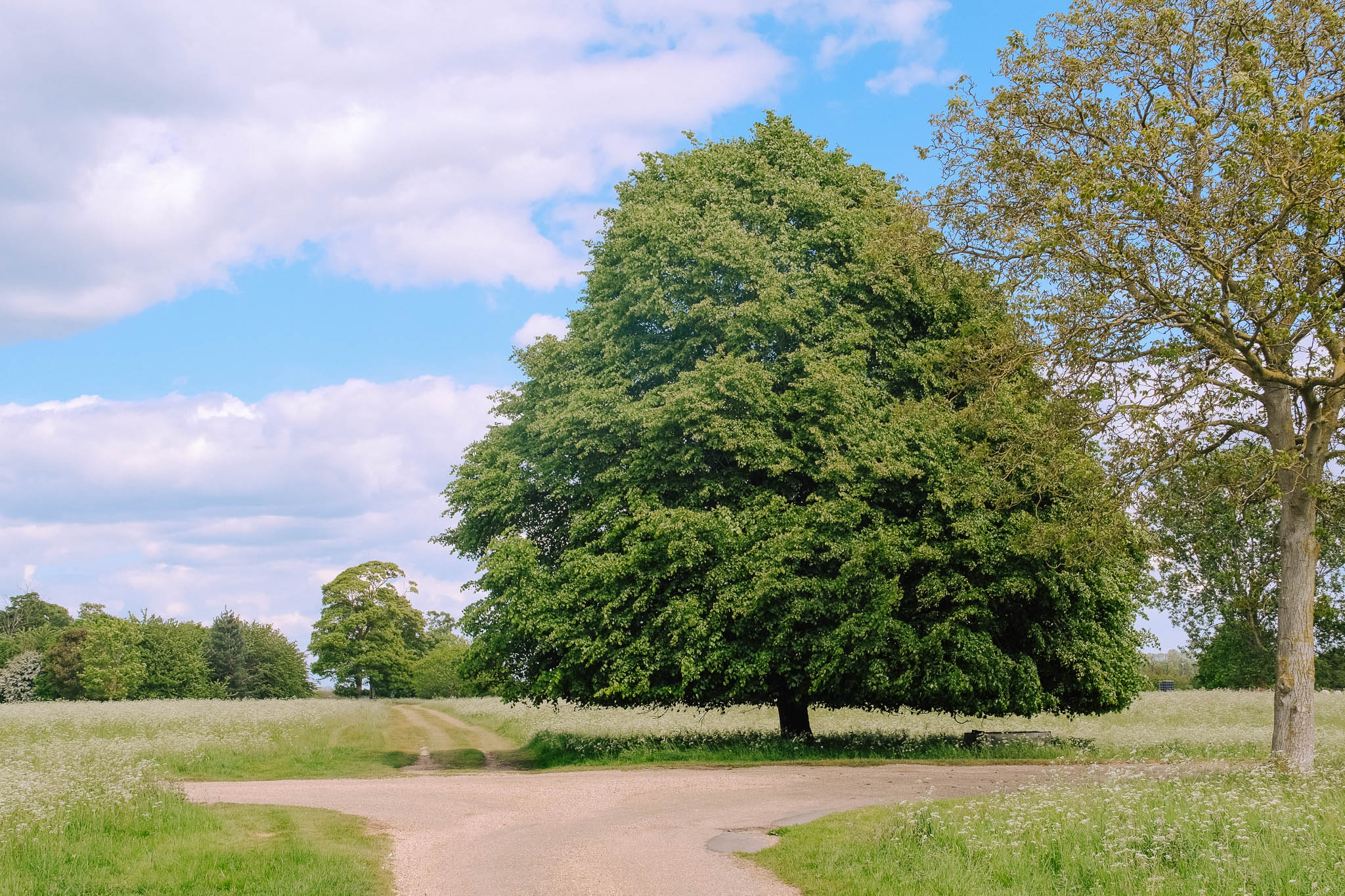
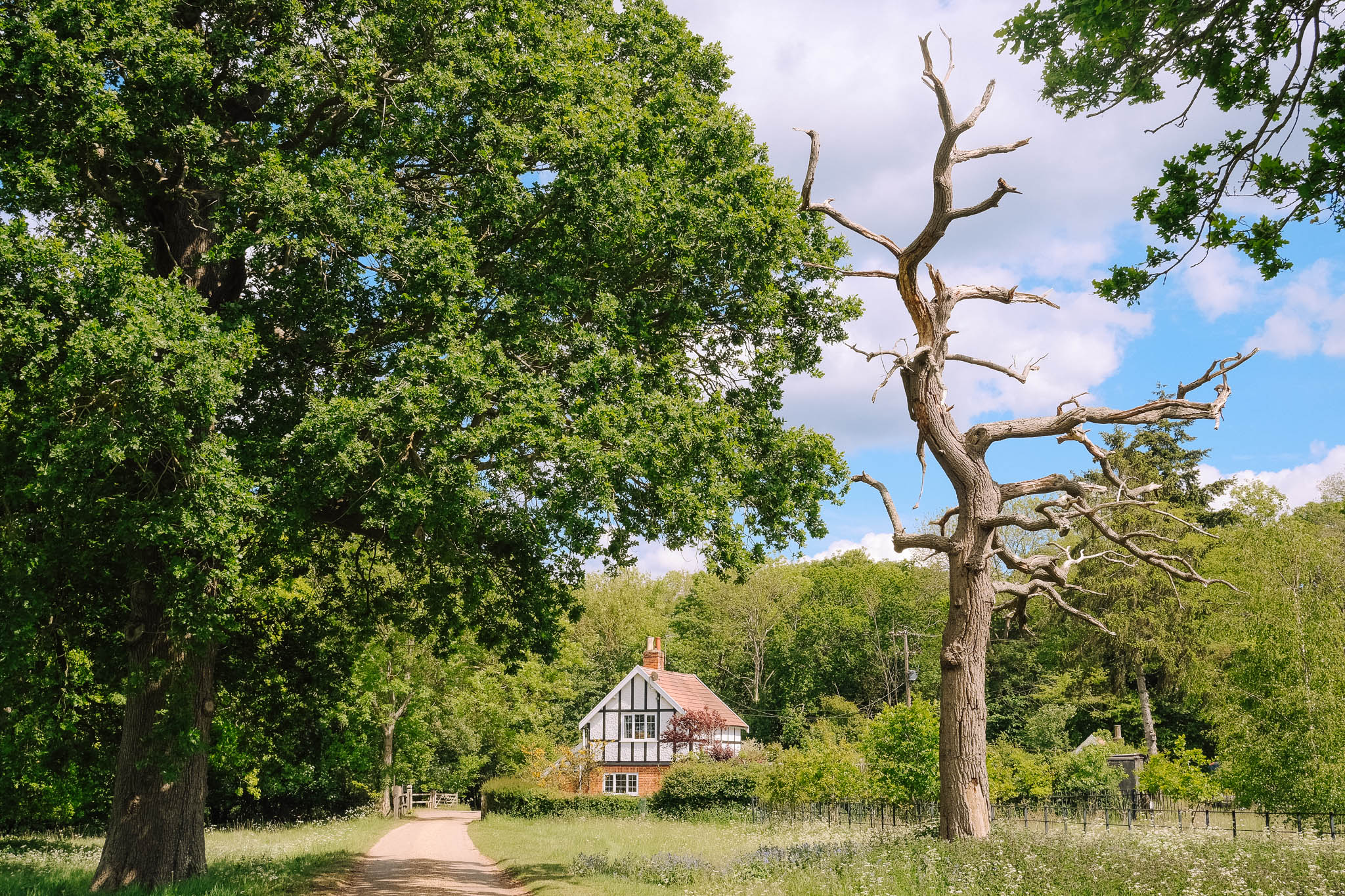
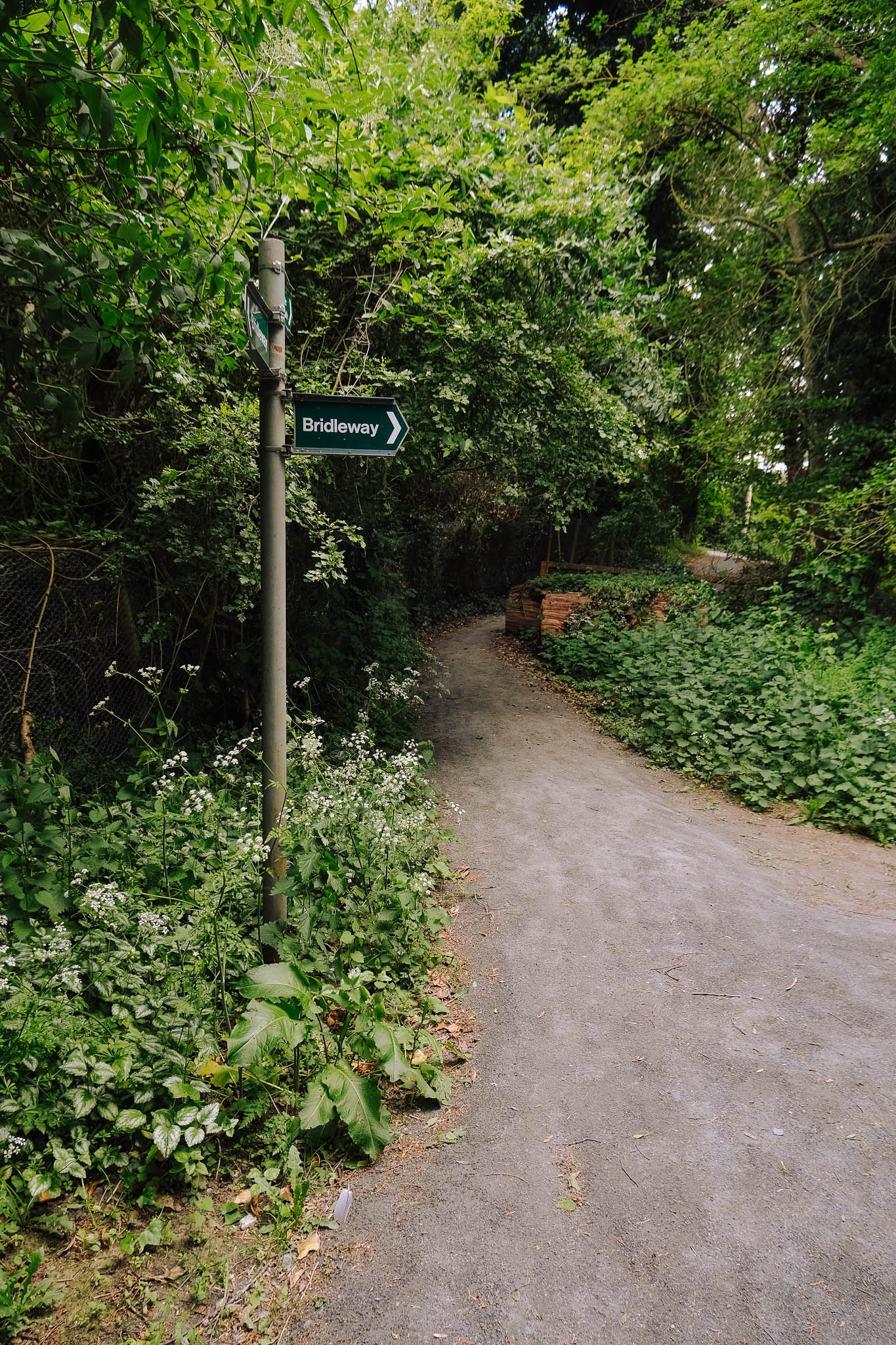
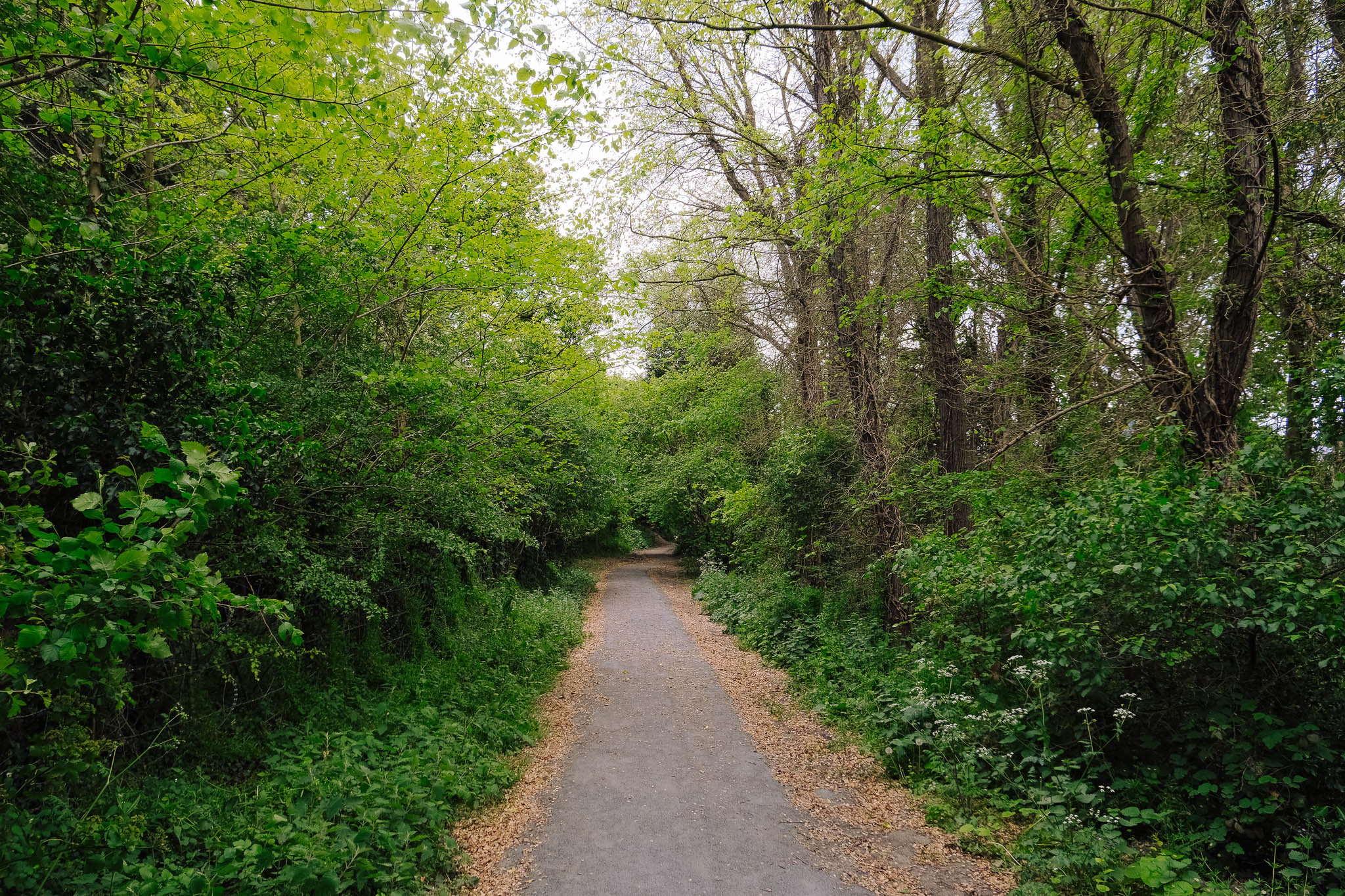
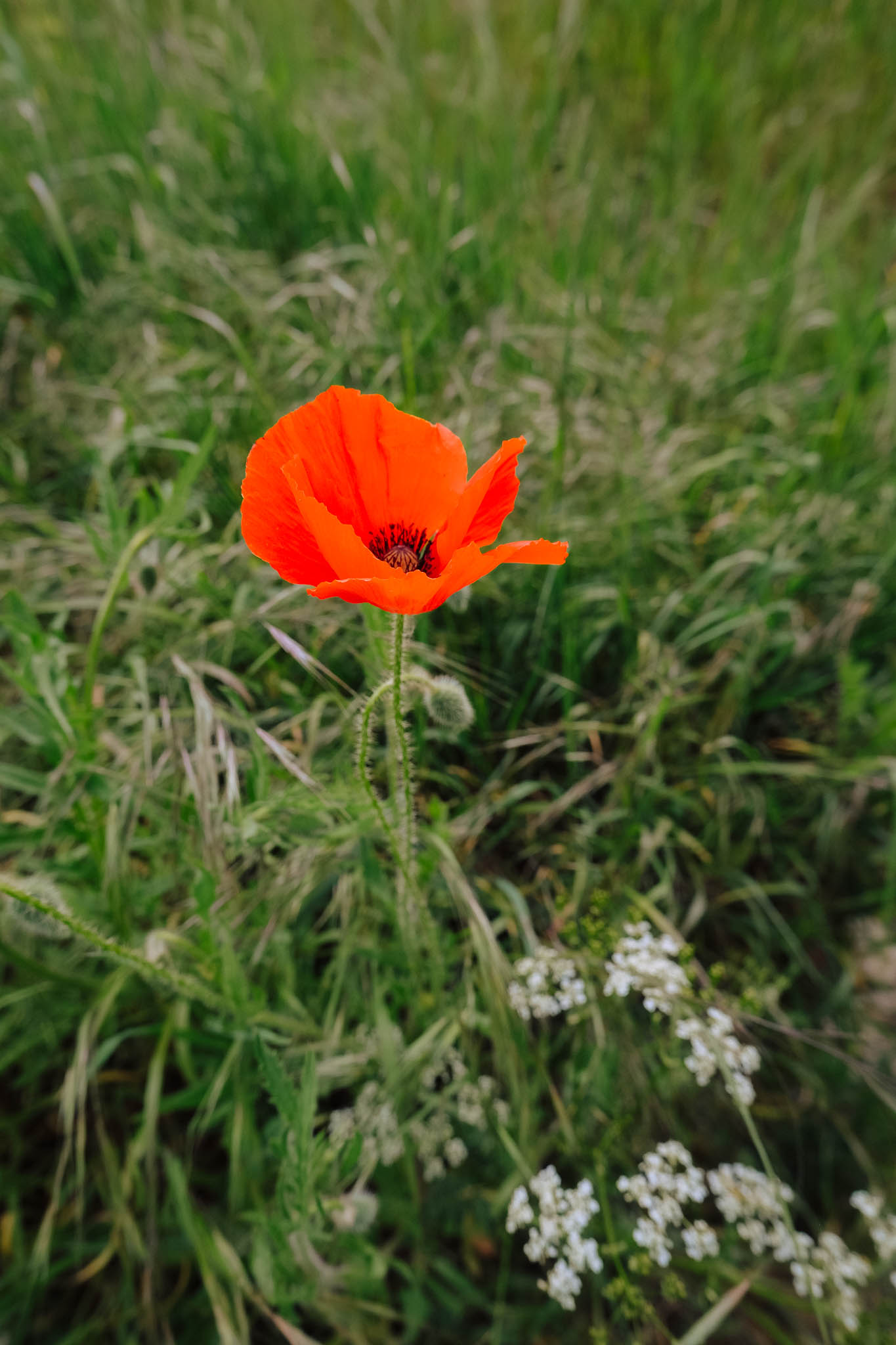
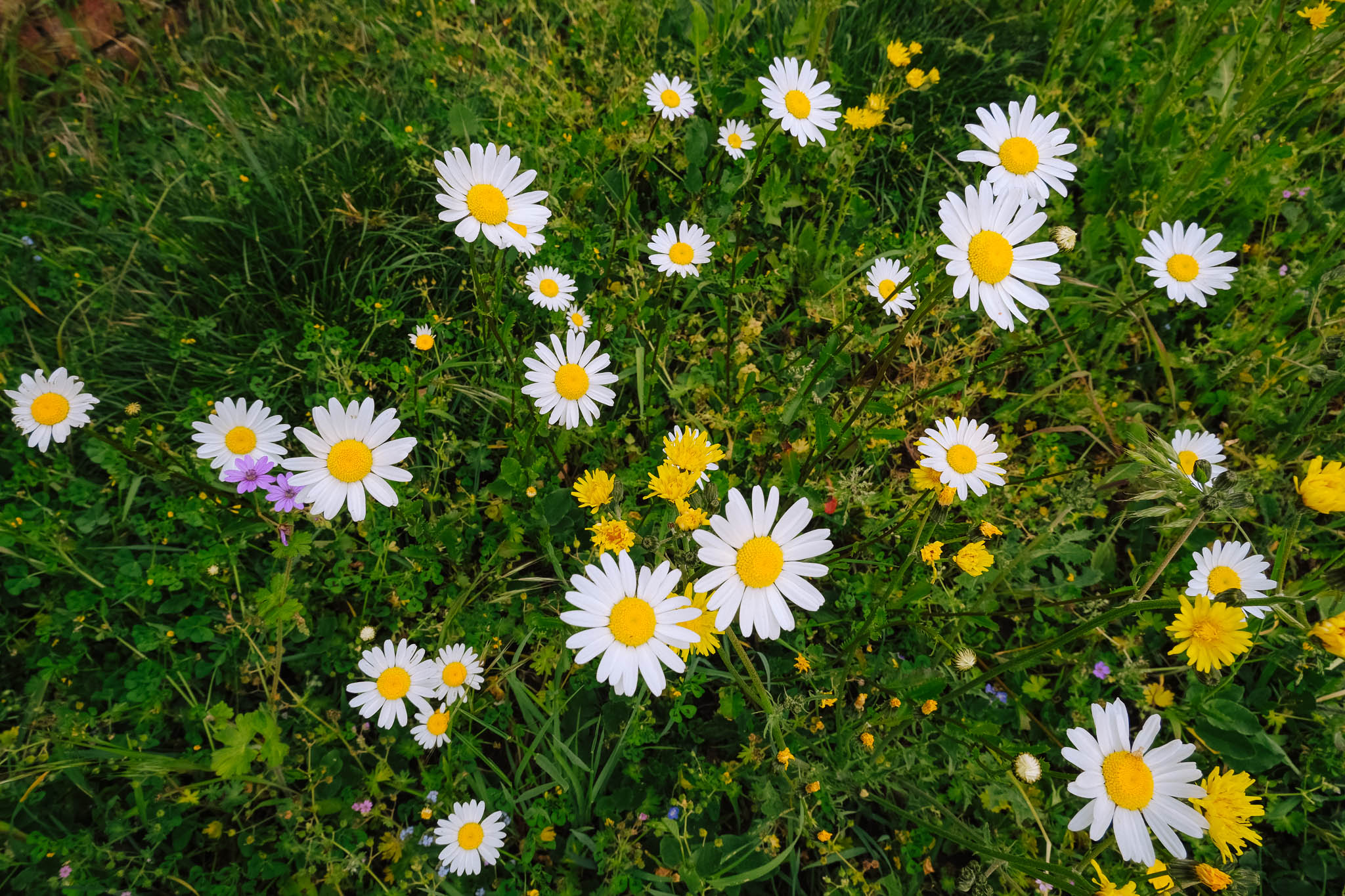
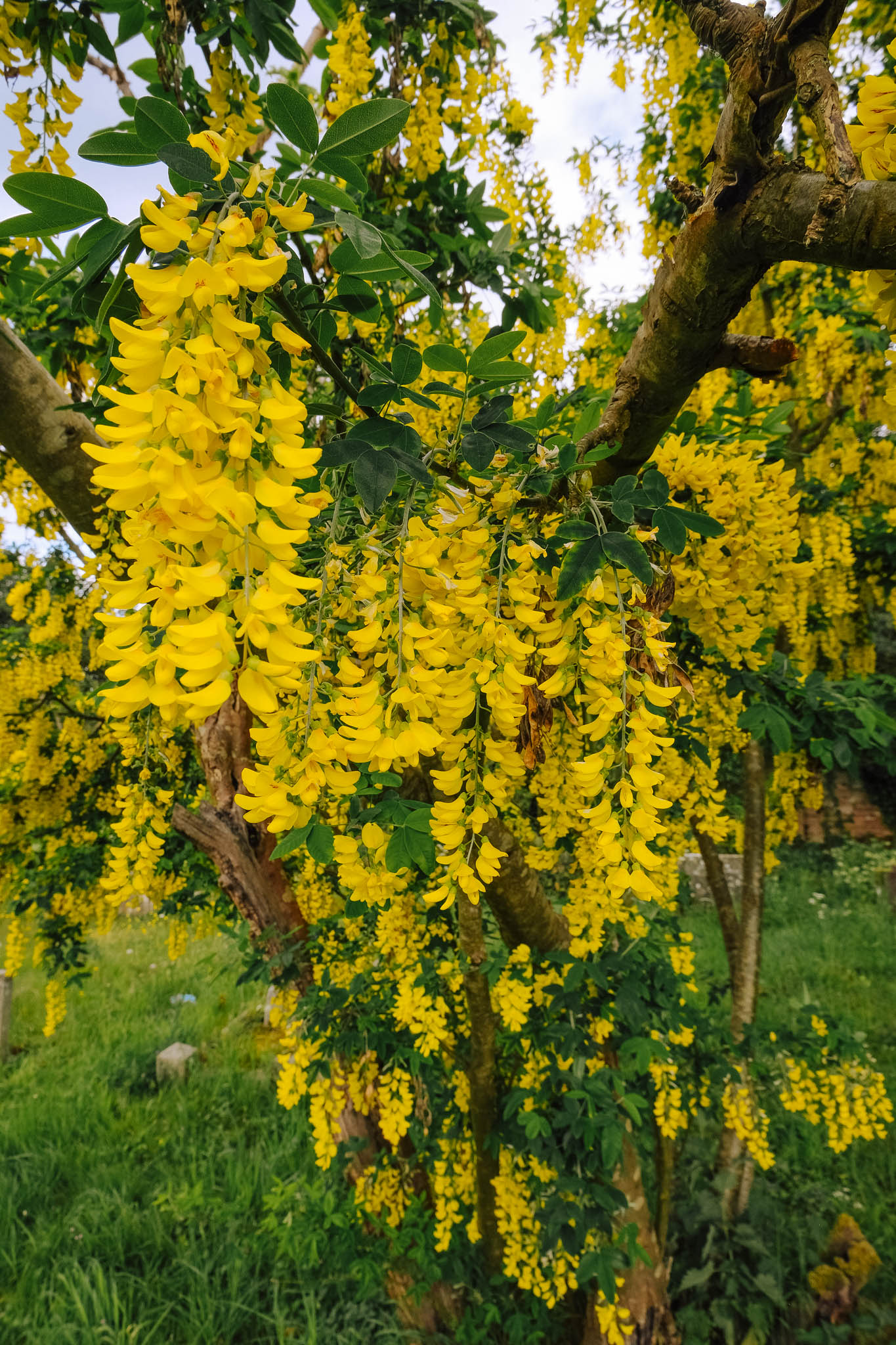
Here are some photos, click to see them in larger format, scroll through.


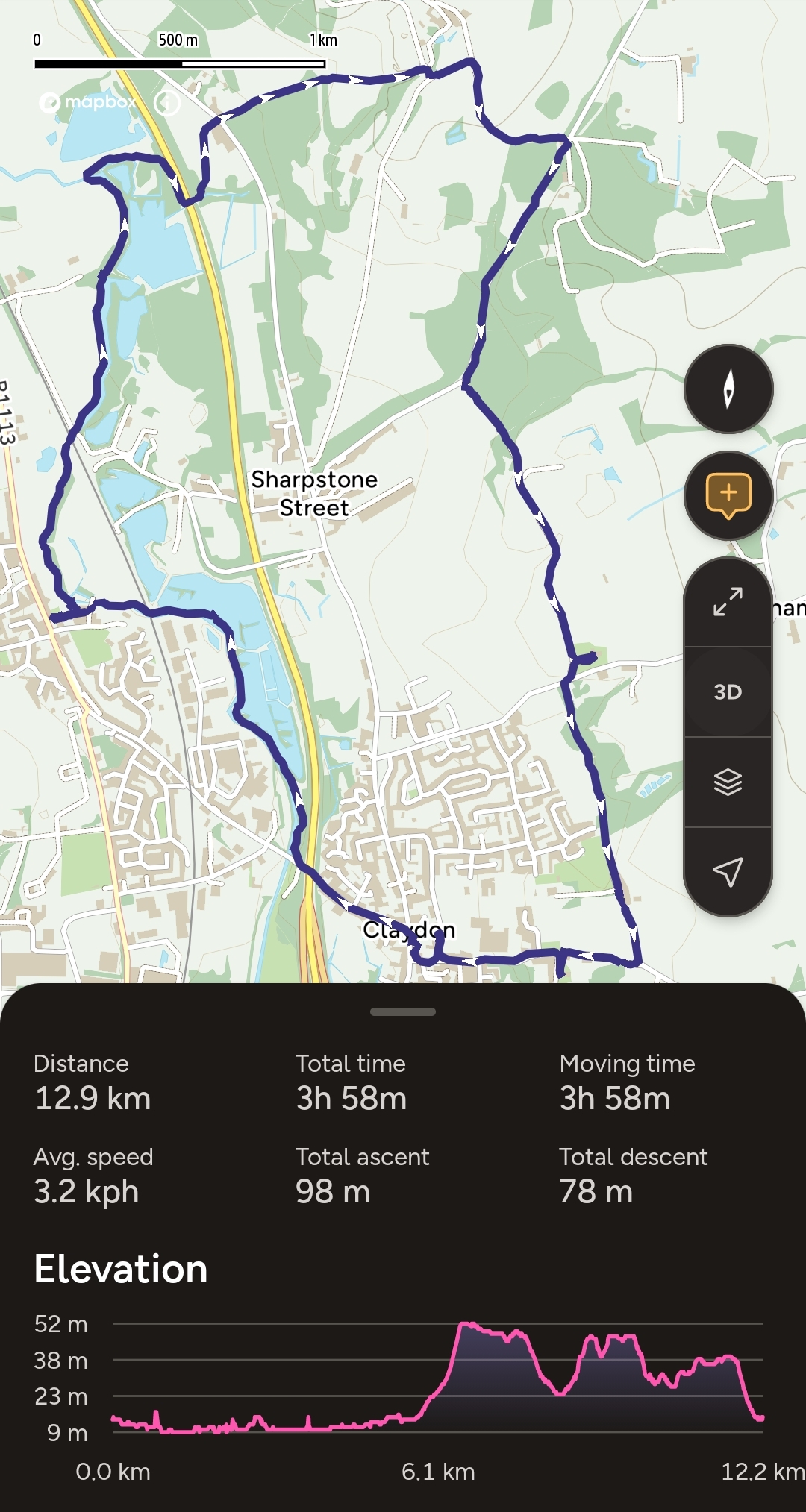
Here is a map of today’s walk:
LikeLike